
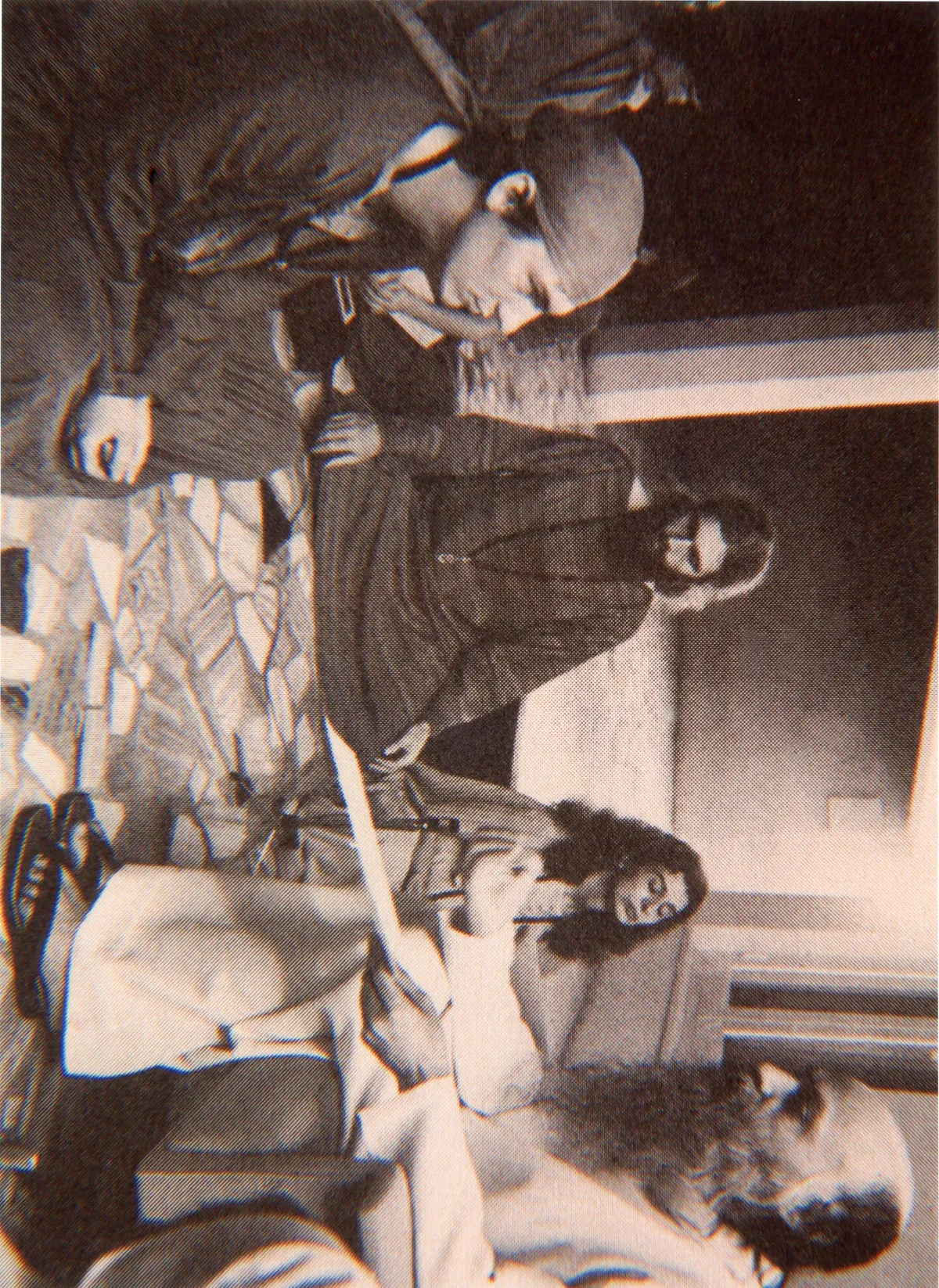
Some people find peace by being very still, others by dancing and singing until they become quiet inside; Osho blends both so everyone reaches the same calm.
From the Discourses
Passages where Osho speaks to this question — each links to the complete discourse.
Osho, in the previous talk you said that prayer is the practice of the extrovert and meditation the practice of the introvert. Then, in today’s extrovert age, people should be led to the practice of prayer. Yet you lead a movement of meditation! In what way is your new meditation method related to both introvert and extrovert personalities? Please shed light on both.
Certainly, meditation has been the journey of the introvert and prayer the journey of the extrovert. But there can be thousands of paths of meditation, and thousands of forms of prayer. Nor is it that the forms of meditation known so far exhaust the possibilities; and it is not that the methods of prayer discovered till now cannot be surpassed. The method of meditation I speak of is, in a very deep sense, a synthesis of both. What I call meditation is a joining of the two. In it, three parts are for the extrovert and the fourth part is for the introvert. If the extrovert does those three parts, he too will reach where the introvert reaches. And the introvert need not do the first three parts at all; from the very outset he can leap into the fourth. A process of meditation is possible in which a door…
OSHO, on the first day you said that karma-sannyas is the path of the inward-turned person, and desireless action (nishkama karma) is the path of the outward-turned person. But people find that sometimes they are extroverted and sometimes introverted. In this situation, please explain how a person can decide precisely whether he is inward-turned or outward-turned.
So the extrovert concludes, “Religion is not for me. My fate doesn’t include it. The mind never becomes silent; nothing reveals within; I simply can’t go inside. I must be suffering the fruits of past karmas.” Not necessary. You are suffering a misunderstanding. You haven’t seen clearly that you are extroverted. If you are extroverted, the religious form must be entirely different for you. You need a religion that can use your outward-running energy. For the introvert, meditation; for the extrovert, prayer. Notice: meditation and prayer are very different paths. Meditation is the religion of the inward-turned; prayer is the religion of the outward-turned. In meditation, even God has no place. Meditation means utterly alone—alone, and alone—reaching the point where only I am, nothing else remains. Prayer means God; not one, but two. Ultimately, prayer arrives where only God remains and I am not. The fruits are the same, but…
Osho, meditation is the solitary one’s flight—from the alone to the Alone. Devotion is the solitary one’s flight—to the Divine. Does devotion, like meditation, also begin with loneliness?
Extravert means: his God will be seen with open eyes. Introvert means: his God will be seen with closed eyes, within himself. There too is light. There too are no fewer moons and stars. Kabir has said: thousands upon thousands of suns—inside as well! As many moons and stars as outside. As much greenery as outside. The same vastness is present within as without. Outside and inside are balanced, in equal proportion. Do not mistakenly think: “How can such vastness fit into this small body? The vast is so big—out there it is vast; inside it must be small!” Do not think so. You have not yet gone within. Inside is just as vast—within, and within, and within! It too has no end. Just as you can go on and on outward and never meet a boundary to the universe—so too you can keep diving, and diving, and diving within,…
What is the difference between waiting for godot and waiting for god?
It is as if the sun has risen in the morning and you are sitting in your room with closed doors and windows, in darkness. Open the doors, you become available to the sun. The sun was already available -- just the meeting happens. You cannot wait for God. All waiting is for Godot. Godot means the one who never comes, who CANNOT come, whose arrival is impossible. And the only impossible thing is that which has already happened -- how can it happen again? You are alive, and you are waiting for life, Now, this is ridiculous. The real man of religion does not think in terms of God. He thinks in terms of life or, even better, of living -- because life can again become an abstract idea. Living, moment-to-moment living. In that very living, one knows what God is, because one knows who one is. Your idea…
Osho, what is the fundamental anguish of human life?
There is only one anguish: that a human being cannot become what he was born to be. There is only one anguish: that the seed remains a seed and does not bloom like a flower; that it cannot scatter its fragrance to the infinite winds; cannot converse with the moon and stars; cannot offer its colors to the sky; cannot be expressed. If the poem within the poet cannot be revealed—anguish. If the painter cannot paint—anguish. If the dancer cannot dance—if chains lie on his feet—anguish. Anguish means only this: that what we are meant to be—our innate nature and destiny—does not come to fruition, and we are forced to be something else. Then anguish is born. Then melancholy gathers over life. And all those countless people you see burdened with sorrow, living in a kind of hell—the reason is only this: each has come carrying the seed of becoming…