
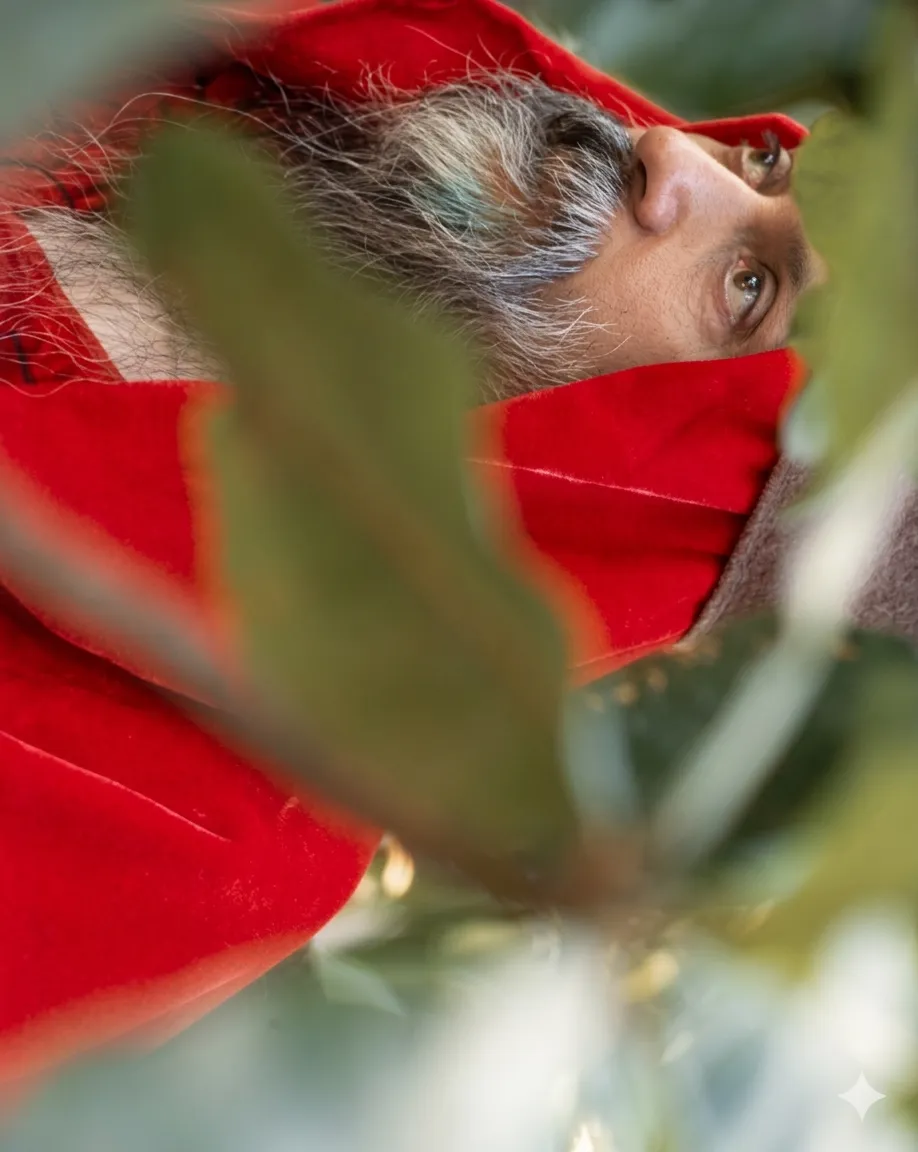
If feeling meek stings, it’s your ego wanting to prove itself; real meekness is knowing you have—and are—nothing, so there’s nothing to compete about.
From the Discourses
Passages where Osho speaks to this question — each links to the complete discourse.
A monk asked the buddha: what is most powerful and what is most illuminating? The buddha said: meekness is most powerful for it harbours no evil thoughts, and moreover it is restful and full of strength. As it is free from evils it is sure to be honoured by all. The most illuminating is a mind which is thoroughly cleansed of dirt, and which, remaining pure, retains no blemishes. From the time when there was yet no heaven and earth till the present day there is nothing in the ten quarters which is not seen or heard by such a mind. For it has gained all knowledge and for that reason it is called
When Buddha was alive, Ananda was listening so-so -- as you listen to me. You listen and yet you don't listen. You say, 'Okay. If I miss today, tomorrow I will be listening again, so what is the hurry? If this morning is missed, nothing is missed; other mornings will be following.' So he had listened half-asleep, half-awake. Maybe he was tired, maybe the night was not good and he had not slept. Maybe the journey was too long and too exhausting. And Buddha was saying the same thing again and again and again, so how long to listen? One starts feeling that one already knows. One starts feeling, 'Yes, I have heard this before, so what is the point? Why not take a little sleep? A little nap will be good.' But when Buddha was dying, Ananda must have been alert, utterly alert. He was really trembling -- the…
A friend has asked: Osho, is it possible for someone to live egoless in this ego-filled world and still be successful? Where everyone is full of ego, wouldn’t living egoless be like swimming against the current? Wouldn’t it bring obstacles, difficulties, failures?
Notice: even the egoist pays respect to the egoless. Even the politician comes and sits at a saint’s feet—this person has stepped out of the arena; one enemy less; he has left the fight; he has begun to flow with the current. So if you think that by becoming egoless you will flow against the current, you are mistaken. As an egoist you are already against life’s current. In egolessness you flow with life’s stream. Yes, you will go opposite to the egoists—but that will create no obstacle. Hindrance only comes if, even through egolessness, you still want wealth, prestige and position in the world. Then there can be trouble. It is said: An emperor was praying in a temple on New Year’s Day. He used to come on the first day of the year to pray. He was saying to God, What am I! The dust of your feet—worse…
Osho, I feel that I have nothing to lay at your feet, and this poverty is unbearable. Kirti has asked. Keep in mind what I was just saying: this meekness is also a form of ego. Do not think this meekness is anything very good; it is only the shadow of ego. What is the need to offer anything? What is the need to place something at my feet? Stay close to me and learn to be a zero—that is enough. Then everything has been offered. Just offer your ego—enough is enough.
In a Jain temple the talk goes on: “Jainism is the greatest.” No objection there. In a Hindu temple: “Hinduism is the greatest.” In the mosque: “There is no faith greater than Islam.” These discussions go on within their own boundaries, and everyone present nods—because they are all Muslims, or all Hindus, or all Jains. But try to see this truth: everyone says the same thing. If donkeys and horses could speak, they too would say the same: “None greater than us.” I have heard that when Darwin propounded that man evolved from apes, there was an uproar among humans. It didn’t sit well—they were hurt: “We evolved from apes!” They had always thought God created them; suddenly the paternity changed! From God to ape—what a switch! Where God—and where an ape! Humans were angry; none was ready to accept it. But I have heard, there was a great uproar…
Question: OSHO, WHAT IS THE PLACE OF SURRENDER IN YOUR RELIGION? I do not teach the ego, hence I cannot teach surrender, because surrender is nothing but the subtlest form of the ego. Surrender is not against the ego, it is in fact an act of the ego. Who surrenders? And by surrendering, who becomes humble? Who becomes meek? It is the ego standing upside down. It makes no difference whether the ego is standing on its legs or on its head. In fact it is more dangerous when it is on its head because then you will not be able to recognize it. Jesus says, "Blessed are the meek," but what is meekness? "Blessed are the humble," but what is humbleness? Can a man who has no ego be humble? How can he be humble? Who will be humble?
Osho, in the general feeling about the ego, it seems as if one is an egoist or egoless. One moment it feels there is ego; the next moment it feels egoless.
Yes, yes, that’s how it goes. That’s how it goes. In fact, all our thinking is in degrees. It’s like this: at 98 degrees we say, “This person is perfectly fine,” and at 99 degrees we say, “There’s a fever.” 98 is also a “fever,” but it is the normal fever. At 99 it becomes abnormal. Then when it returns to 98, we say, “All right, normal again.” There is still fever—meaning the same fever that everyone has. As long as it is where everyone else’s is, we call it normal; just a little this side or that, and trouble starts. It is the same with the ego. It is our fever. As long as it is at the same degree as in everyone, we say, “He is perfectly humble, a good man.” If, compared to us, his degree goes to 99, we say, “He seems very egoistic.” If it…