
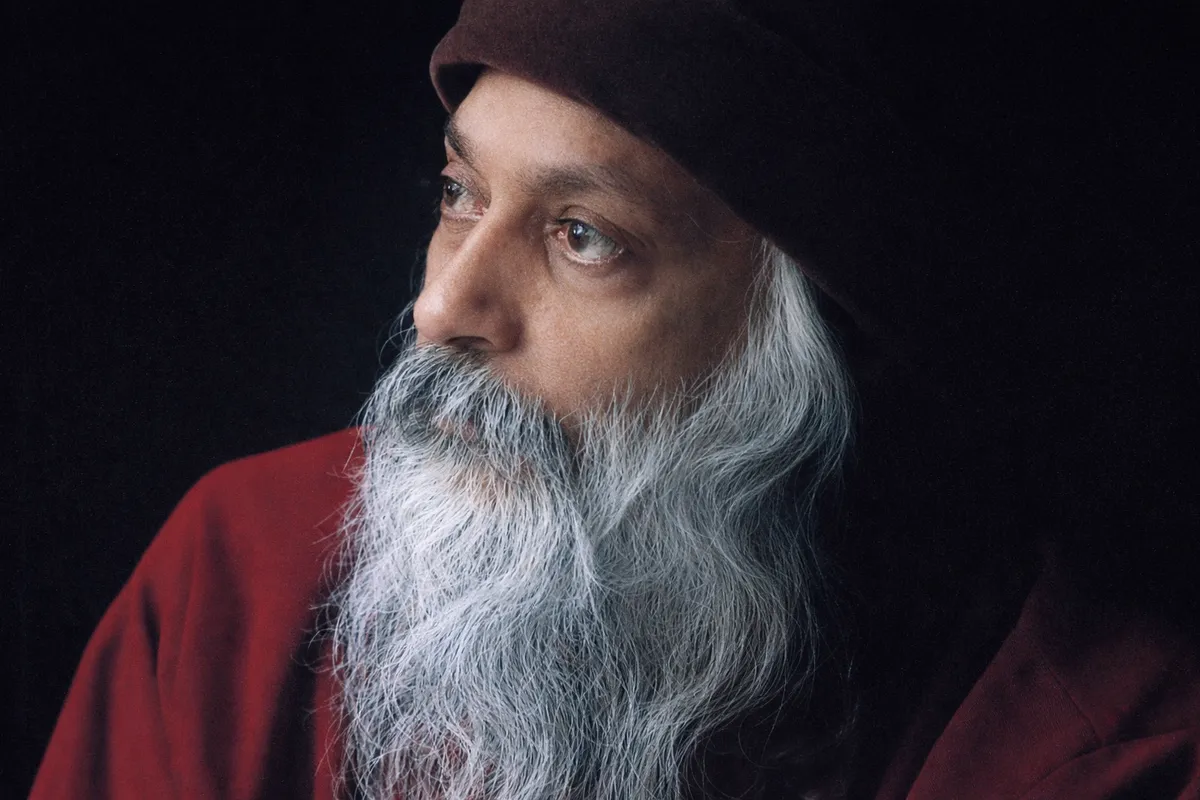
Wanting God is trying to grab the sun; thirsting for God is opening your window and waiting for the sunlight to enter.
From the Discourses
Passages where Osho speaks to this question — each links to the complete discourse.
Osho, you say the same thing in countless ways. But when I listen to you, it feels as if I am hearing it for the first time. And I feel so much joy that I don’t feel like going back home. What should I do—what can I do—so that I can just keep listening to you!
You will feel as if you have been made to rise out of season, before time—as if you were not yet to go and yet had to go. And if you go in that way, your home will become even more desolate than before. I do not want to make your home desolate; I want to make your home a temple. I want that when you go home, your home’s new form is revealed. I do not want to tear you away from home, from the world, from family life. That is the newness of my sannyas: I do not want to sever you from the world; I want to join you to the world in such a way that your connection with the world becomes a connection with the Divine. Let the world no longer be a barrier between you and the Divine; let it become a means. If…
Osho, the other day you said that for union with the Lord the thirst must be utmost intense and at the same time patience must be boundless; are these two states not incompatible?
Then too, that “thirst” is not thirst, it is lust. You are mistaken again. Then it is your greed. Just as you want to acquire other things of the world, you also want to acquire God. As you have seized other things and clenched your fist around them, you want to show the world: Look, not only is a big car in my fist, God is too. Not only a big house, not only wealth—God also has been tied to my post; he too is enlisted in my service. Then what you are calling thirst is not thirst; it is greed, it is lust. What is the difference between thirst and greed? In thirst, you burn and the ego melts. A moment comes when in the fire of thirst you become utterly empty. The ego melts away completely. In lust, the ego grows, becomes stronger. The more lust is gratified,…
Osho, with birth there is hunger, sleep, thirst—but not the thirst for God!
A religion-opposed, benumbed society That thirst, that hunger, is within all of us from birth, yet it does not awaken. There are many reasons. The biggest reason is simply this: the vast crowd around us has no such thirst. And if it arises in someone, he suppresses it, because it feels like madness. Where everyone around is consumed by the thirst for wealth and fame, the thirst for religion looks like insanity. Those around become suspicious: “Has he gone off his head?” The person presses it down. It cannot rise, it cannot wake; suppression comes from all sides. And the world we have made leaves no place for God—for, as I said, it is dangerous to leave room for God; we have left no room for him. A wife fears that God might enter her husband’s life—for with God’s arrival the wife may be eclipsed. The husband fears God might…
Osho, you say, “As He wills, let us become mere instruments; whatever role in life we have been given, let us fulfill it.” But letting what happens happen—i.e., flowing along with the body, mind, and ego—gives rise to suffering. So should we keep applying the principle of instrumentality even in relation to the body, mind, and ego, and go on suffering? How do we solve the riddle between the principle of instrumentality and the continuous reality of suffering?
That supreme bliss is beyond both pleasure and pain. It is neither like night nor like day. It is twilight. The sun has set, night has not yet come; the light remains—very gentle, sweet, non-aggressive—that is twilight. Morning has come, the sun is not yet risen, the night has gone—such is the twilight. One who abides in that twilight—that is what we call prayer. That is why Hindus call their prayer sandhya. Sandhya means one who has stopped in between the dualities, who has found the truce between the two. Between pleasure and pain, love and hate, victory and defeat, night and day, life and death—one who has found the pact and stands in that concord. Seek that interval of conjunction. Krishna says, it is simple to find. If you cease to be the doer, you will find it instantly. It is only through your doer-ship that you keep missing.…
Question: Second question: Osho, is abhipsa enough for the Lord? But if it is the kind of abhipsa Farid pointed to—if within you, truly without any greed, having seen the futility and meaninglessness of life, having looked through all its experiences, a clear sense has dawned that here there is nothing else worth attaining, nothing else worth knowing; that it is Truth one must know, that unseen which sustains all; because only by knowing That will we find the ultimate rest—otherwise this scramble will go on and on; we have gained all and, having gained, seen that nothing is really gained, the hands remain empty—if from such understanding a tongue of flaming fire rises within you; or in the satsang of a Buddha the contagion of his thirst infects you, provokes you, sets you ablaze, fills you with urgency, gives birth to a fire of longing—viraha—then abhipsa is sufficient.