
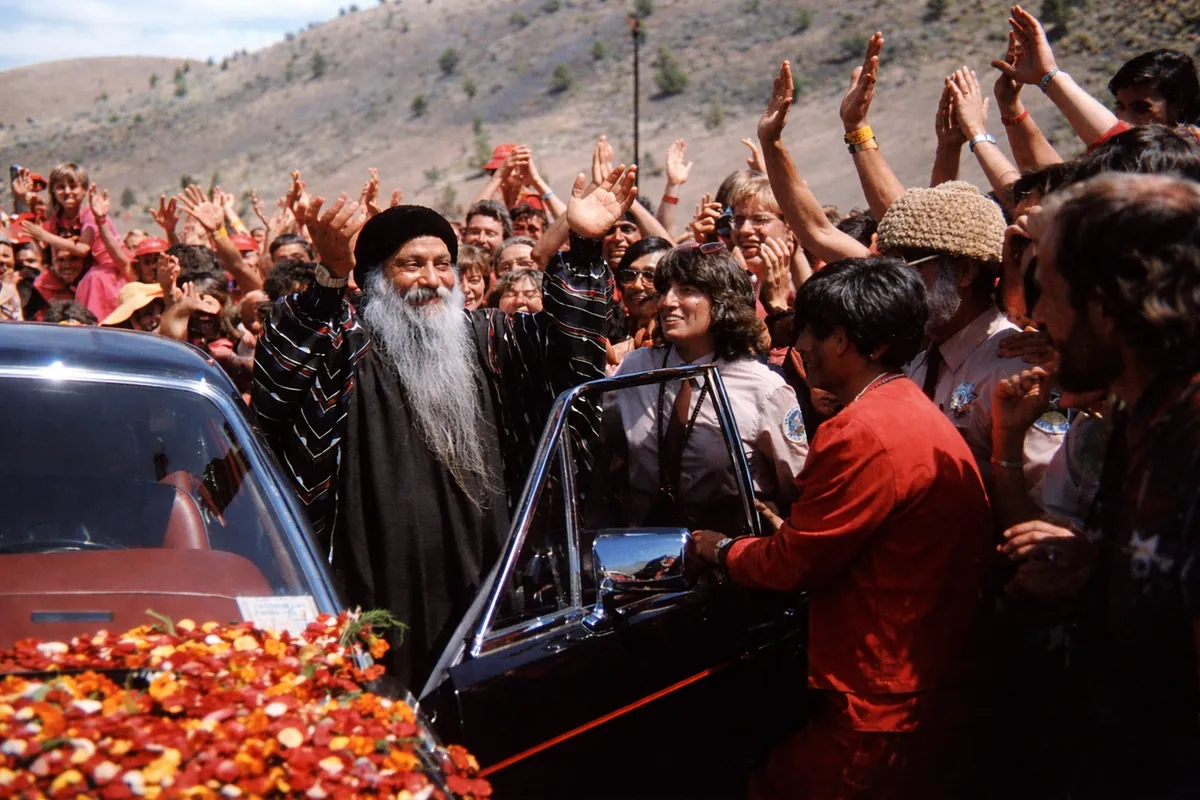
Love with strings says “I give so you give me,” which traps and hurts; love without strings says “I just give,” which feels free and happy—and, strangely, more love comes back on its own.
From the Discourses
Passages where Osho speaks to this question — each links to the complete discourse.
A friend has asked: What is the difference between love with attachment and love free of attachment? Also, please speak about the inner distinctions of sex, love, and compassion.
When we ask, it becomes difficult for the other to give. When we ask, the other feels something is being snatched. When we ask, the other feels dependent. When our demand encircles them from all sides, they feel imprisoned. Even if they give, it is out of compulsion; joy disappears. And what is given without joy is withered, dead. Even if they give, it becomes a duty, a burden—“I must give.” And love is so tender, so delicate, that at the very notion of duty it dies. The moment the thought arises, “I must love—he is my husband, she is my wife, he is my friend, so I must love”—the very life-breath that made the bird fly departs. What remains is a dead bird whose wings can be set in place but cannot fly. That which flew was freedom. Duty has no freedom; it is a load, a sense of…
Osho, as I feel, love has been very confusing. Personally, sir, I feel society has confused the term “love” with attachments. To me, attachment is the outcome or by-product of human need. May I ask you what love actually is?
Love liberates, makes the other free, allows the other to be a person. Attachment turns the other into an object and possesses so totally that it refuses to recognize that the other has a soul: If I say yes, then yes; if I say no, then no; if I say day, day; if I say night, night! Attachment says, “Only I am; you be erased.” Husbands have made wives into objects, wives have made husbands into objects. Lovers make each other into objects, and the moment an object shows a little movement, a little independence, attachment turns into enmity and pain. Love is a state of consciousness, not a relationship. Attachment is a relationship. And wherever there is relationship, there is need; we relate in order to fulfill a need. Love will, of course, relate—but it is not a relationship. As I said, the lamp’s light falls; if you pass…
You said that love can make you free. But ordinarily we see that love becomes attachment, and instead of freeing us it makes us more bound. So tell us something about attachment and freedom.
Right now you are not. When you say, "When I love someone it becomes an attachment," you are saying you are not, so whatsoever you do goes wrong because the doer is absent. The inner point of awareness is not there, so whatsoever you do goes wrong. First BE, and then you can share your being. And that sharing will be love. Before that, whatsoever you do will become an attachment. And lastly: if you are struggling against attachment, you have taken a wrong turn. You can struggle. So many monks, recluses, sannyasins are doing that. They feel that they are attached to their house, to their property, to their wives, to their children, and they feel caged, imprisoned. They escape, they leave their homes, they leave their wives, they leave their children and possessions, and they become beggars and escape to a forest, to a loneliness. But go and…
Osho, how can we know whether what we feel for someone is love or attachment?
Deepika, If it is love, the question will not arise at all. If the question arises, it is attachment. It is like someone asking, “Is it light or darkness? How can I know?” If you have eyes, such a question does not arise. Only if you have no eyes can it arise. Only a blind person can ask, “Is it light or dark? Is it day or night?” The blind must ask; he has no eyes of his own and must depend on the eyes of others. Love is the eye of the heart. Love is the heart opening like a lotus. When the flower of love blossoms, it is impossible not to know. It has never happened otherwise; such is the law of life. When the flower of love blooms, you know—inevitably. Even if you try to hide it, you cannot. Not only will you know; others too, who…
Osho, what is attachment? Why do we become so attached to things, ideas and persons? And is there freedom from attachment?
“So do one thing,” she told the courtesan. “I will pay you whatever you ask. Go to him at midnight. He meditates at midnight—has done so for thirty years. I want to know whether meditation has happened or not before I die. His hut door is only latched; no one ever goes there. Open it and go in. Whatever he says, notice every word and tell me. Go and embrace him—then come back and report. Before I die, I want to be sure that my service was not in vain.” The courtesan went. She opened the door. The monk was startled. He opened his eyes—he had been sitting in meditation—and shouted, “You wicked woman! Why are you here? Get out! What need have you to come at midnight?” But his tongue faltered; his body trembled. The woman had taken her money; she went right in. He cried, “Stay back! Why…