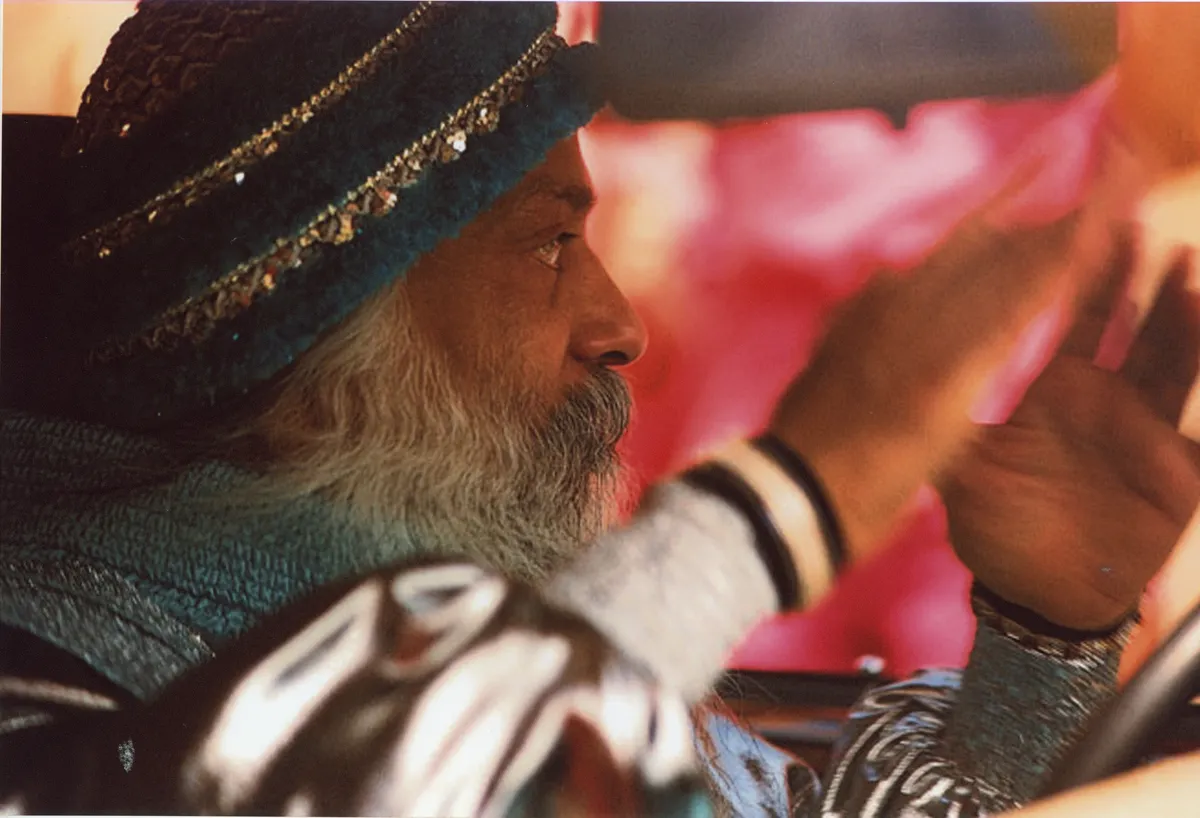
Explore Osho’s teachings across key topics such as meditation, love, ego, and awareness. Each topic contains structured questions, quotes, and insights derived from discourses.
Liberating oneself from mental afflictions such as lust, anger, greed, and attachment requires a mindful release from rigid patterns, embracing the freshness of each moment while exploring diverse perspectives, ultimately allowing the transient nature of existence to dissolve possessiveness and reveal the power of choiceless awareness.
In a world where true bodhisattvas emerge not as clergymen but as compassionate friends, their presence, love, and understanding navigate the thresholds of life, fostering awareness and nurturing conscious communities that allow awakening to flow effortlessly from heart to heart.
Insistence embodies the ego's relentless urge for reality to align with its rigid expectations, yet true spiritual living flourishes in the absence of such demands, inviting life to unfold with grace, where love and awareness replace conflict with effortless spontaneity.
In the spirit of Osho's teachings, the saga of Sheela becomes an irrelevant echo, urging seekers to transcend past distractions and embrace the vibrant, living inquiry of the present moment, where true understanding unfolds.
In the spirit of Osho's teachings, the article invites a fearless, unfiltered expression that dissolves repression and unveils authenticity, allowing inner silence to flourish; through this meditative catharsis, one becomes transparent and open to the profound truths of existence.
Buried rage towards men for historical injustices only perpetuates wounds, stifling the feminine intelligence; true liberation lies not in revenge but in alchemical transformation, where hurt becomes love, reclaiming the wise, healing essence of the witch through awareness and meditation.
In the realm of understanding, arguments may ignite inquiry and dispel confusion, yet they remain bound to the ego; true insight emerges from a profound awareness and silence, inviting us to transcend debate and embrace the clarity of witnessing where understanding blossoms free of conflict.
In the dance of female energy, love blossoms through devotion, guided by a higher consciousness; it is within the embrace of awakened male energy that longing transforms into surrender, allowing desire to fade into the serenity of meditative love.
Osho embraces garlic not as a taboo, but as a catalyst for awareness, urging us to discern how food shapes our energy and social interactions; through mindful experimentation, we awaken our senses and refine our choices, shedding what dulls our consciousness.
Limits emerge solely from our comparisons of expressions rather than the essence of realizations, as the universal truth resides within us all; yet, figures like Mahavira illuminate it so clearly that we often elevate them, revealing our tendency to value communication over the truth itself.
Embracing the seat life offers, much like the unique number 326, reveals that true presence emerges not from anxious searching or comparison, but from a serene acceptance of our place, where harmony unfolds and the journey of self-discovery truly begins.
Osho illuminates that idiocy is not a flaw but rather the inherent condition of an unenlightened mind, trapped in the sleep of borrowed thoughts and ego-driven fears, while true intelligence blossoms with the awakening of genuine awareness.
Transmigration unfolds not through belief but through direct experience, as Osho suggests; it is only by witnessing for ourselves that we grasp the continuity of existence between lives and the intricate workings of karma, transforming religion into a vibrant exploration of truth.
Effectiveness blossoms not from relentless pursuit but from a deep-rooted connection to truth and a state of relaxed awareness; in this space, true resilience emerges, allowing actions to flow effortlessly and decisively, unshaken by external challenges.
In Osho's view, true fame transcends public recognition, resting instead in the profound connections forged along the spiritual path, where his only celebrated Swiss is Pragyan, a testament to the transformative bonds that illuminate the journey.
In the realm of Osho's wisdom, the notion of “three free wishes” reveals the restless nature of desire; true awakening comes from relinquishing all wishes, finding freedom in contentment as life unfolds in its purest form, untainted by craving or disappointment.
Osho illuminates the idea that 'orders' are but a single thread in the intricate tapestry of human consciousness, where unconscious obedience can converge disastrous outcomes like Hiroshima; true awareness disrupts this cycle, transforming compliance into conscious co-creation and its consequences.
Osho suggests that the essence of spiritual practice lies not in its location but in the ripeness of consciousness; only when both individual and collective awareness mature does the practice truly blossom, transcending time and space.
Embodying Osho's wisdom, the 'dry line' theory serves as a temporary guide for those austere souls who thrive on detachment and energy economy, yet ultimately it fades, inviting us to transcend theories and embrace the richness of direct experience.
In the journey toward supreme knowledge, the reverence for a chosen deity, be it Kali, Krishna, or Christ, serves merely as a threshold; true enlightenment arises when the duality of seer and seen dissolves into a singular awareness, transcending even the divine and the devotee.
In the spirit of Osho's teachings, a true yagna ignites an inner fire, transforming ego and hypocrisy into awareness, blossoming as simplicity, creativity, and love, while liberation arises from direct experience rather than ritualistic chains.
Osho beautifully illustrates that one cannot pursue both Sankhya and Yoga simultaneously without risking stagnation; instead, he urges seekers to align with their true nature—embracing the path of action if extroverted, or the path of knowledge if introverted—to find clarity and purpose.
In the cosmic dance of Rasa Lila, where bliss unfolds, Krishna embodies a non-possessive presence while the gopis represent our senses harmonizing; here, the celebration transcends ego, transforming every interaction into a joyful flow around the silent essence of existence.
Osho suggests that a true master’s mischief transcends mere playfulness; it is a divine dance that shatters egoic illusions, awakening disciples through humor and unpredictability, while embodying a compassionate spirit that defies solemnity.
Don't have an account? Sign up