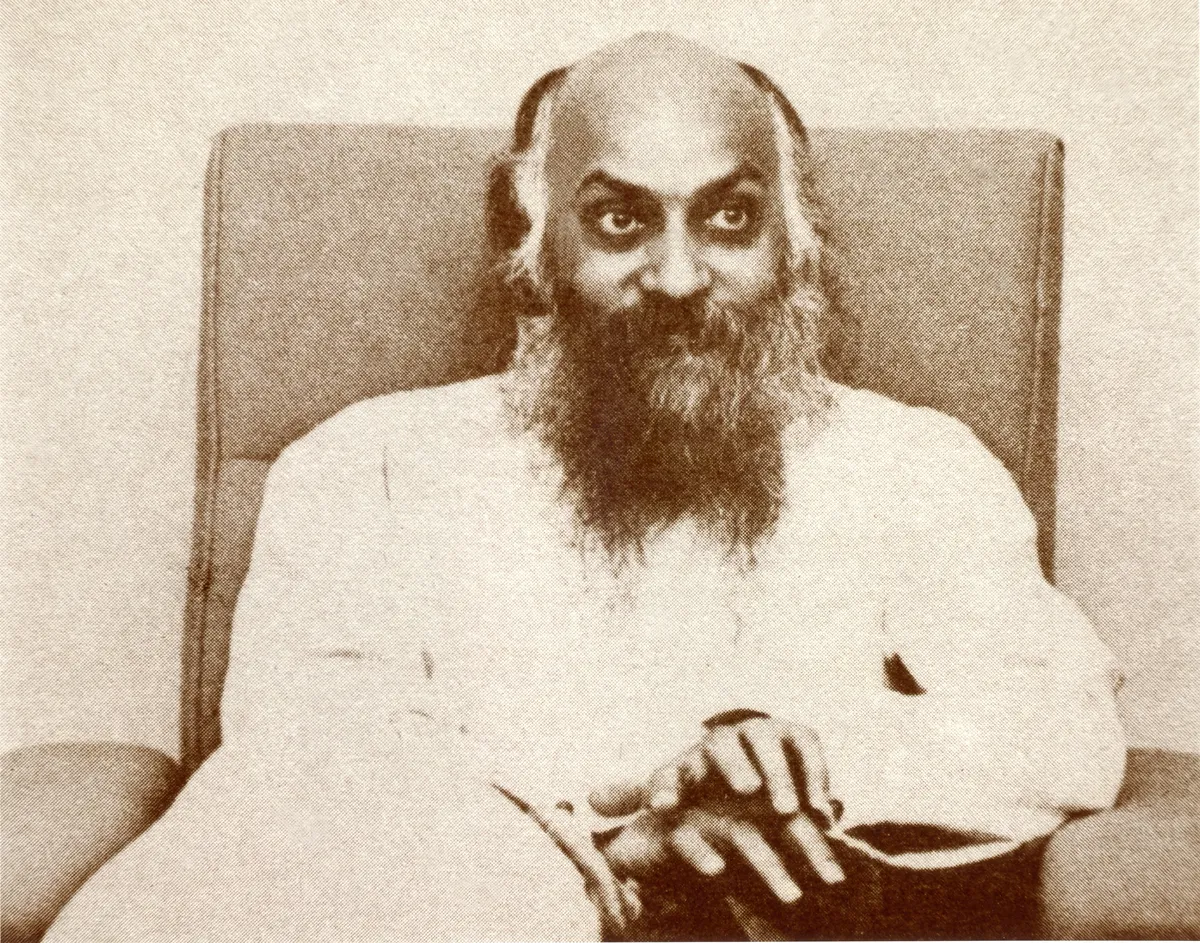
Explore Osho’s teachings across key topics such as meditation, love, ego, and awareness. Each topic contains structured questions, quotes, and insights derived from discourses.
In Osho's view, inconsistency serves as a deliberate tool for awakening, where words transform—like a bell or cold water—to rouse the slumbering minds, urging us to question cherished beliefs and embrace the utility of statements over their truth-value.
In the essence of Osho's philosophy, juice embodies the divine raso vai saha, a profound taste of reality that transcends mere doctrine; it is the ultimate experience that reveals the depth of existence, inviting us to savor the richness of life itself.
Osho illuminates the inner sense as a profound, personal awareness—an intimate realm of feelings and intuitions that, though unprovable by external standards, serves as our ultimate guide; in a world that often breeds doubt, true beauty, love, and divinity emerge only when we trust this inner voice and embrace our authentic selves.
Embracing the essence of Osho's wisdom, one finds that a woman's choice of art over motherhood is not only natural but a celebration of creativity, where the true spirit flourishes in self-expression rather than in imposed roles that bind her to societal expectations.
Inner turmoil drives individuals to seek validation through manipulation, as the longing for significance can overshadow the pain of deception; only in the embrace of wholeness and awareness can one transcend this need, liberating the spirit from the chains of counterfeit love.
In the dance of sounds, true meditation unfolds not as a quest for silence but as a profound stillness within, where one becomes a clear witness, embracing every note without reaction, ultimately transforming the cacophony into a dreamlike awareness that deepens into samadhi.
Human capacities, like a dewdrop reflecting the vast ocean, reveal their boundless nature when we shed self-imposed beliefs; in this dissolution of definitions, we awaken to the infinite truth of our existence—“Ana el Haq.”
Embodying the essence of Osho's teachings, the Way of the White Clouds invites us to embrace a rootless, purposeless journey, where surrendering to the flow of existence reveals a timeless state of no-mind, free from goals and the burdens of separation.
Sexual desire, a primal force intertwined with our biology and shaped by learned patterns, invites transformation through conscious choice—whether embracing the total immersion of Tantra or redirecting energy towards the ascetic path of Yoga, urging us to boldly navigate our passions rather than linger in complacency.
In the spirit of Osho, the Socratic Method finds its place among the blind, relying on logic and debate, yet true enlightenment transcends words, flourishing in silence and spontaneous insight, where experiential realization eclipses mere argument.
In the dance of existence, fullness and emptiness reveal the same profound truth; as the burdens of the world dissolve, what endures is not mere void but a radiant bliss—a divine presence that transcends ego, echoing Osho’s insight into the essence of being.
In the dance of existence, yoga embodies will and discipline while tantra embraces surrender and acceptance; though they diverge in practice, both paths converge at the summit of transcendence, inviting seekers to honor their nature and pursue their chosen journey toward realization.
Osho illuminates the journey of human behavior as a sacred ascent through the layers of existence—first nurturing the body, then embracing the mind's artistry, allowing the soul to blossom through meditation, and ultimately, experiencing the divine in authentic prayer, as bypassing any step leads to inner turmoil.
Osho illuminates how centuries of patriarchal conditioning have led women to undervalue their inherent feminine qualities, obscuring their innate radiance and power, while societal fears and controls have reduced their essence to mere shadows of subhuman existence.
In the spirit of Osho's wisdom, life reveals itself as a dance between affirmation and negation, where neither path is superior; instead, the journey hinges on the disciple's temperament, inviting each to embrace existence's inherent duality.
In the spirit of Osho's teachings, true gender equality blossoms when men embrace their role in restoring women's freedom and dignity, offering compassion as a remedy for past injustices, and fostering a harmonious bond that celebrates feminine uniqueness rather than diminishing it.
A siddha embodies an unbroken, indivisible presence, transcending all divisions—self and other, light and dark—wherein the essence of existence flows as a single continuum, merging seed, field, farmer, and fruit into a harmonious unity of being.
In the spirit of Osho, true spiritual teachers challenge the pedantry of pandits, recognizing that mere repetition of borrowed wisdom obscures genuine awakening; they urge seekers to transcend echoing others and embody the essence of scripture through their own profound experiences.
In the profound stillness of a teacher whose personal I has dissolved, divine presence radiates like light, creating a magnetism that transcends all boundaries, drawing seekers not by charisma but by the pure resonance of love and truth.
In the dance of existence, thought emerges as a singular wave, while the mind serves merely as a vast collection of these waves; by allowing thoughts to ebb, one transcends into the profound stillness of no-mind, where true awareness resides.
Prejudice, often rooted in envy of perceived intelligence and success, mirrors a deeper existential fear; as Osho suggests, true liberation from such hatred requires transcending material values and embracing a higher understanding of human worth.
Discipline and individualism intertwine, as true individuality emerges not from the ego but from a profound, egoless integration; it blossoms through self-chosen discipline and responsibility, transforming chaos into a harmonious essence of being.
Melancholy graces every life as a precursor to self-realization, urging us not to dissect our sadness but to illuminate our being through meditation; as the inner lamp flickers to life, the ache of separation fades, revealing the bliss of wholeness.
In the spirit of Osho's teachings, the fifth K, kachha, symbolizes more than mere attire within the Sikh tradition; it serves as a reminder that true wisdom arises not from external symbols but from an awakened inner consciousness that transcends superficiality.
Don't have an account? Sign up