Explore Osho’s teachings across key topics such as meditation, love, ego, and awareness. Each topic contains structured questions, quotes, and insights derived from discourses.
True goodness flourishes from a deep awareness rather than mechanical compliance, revealing itself in the conscious acts of those who, like Jesus, Buddha, and Lao Tzu, transform darkness into light, transcending mere conditioned responses.
Discipline flourishes not through obedience to external authority, which binds us in compromise and hidden resistance, but through the joyous surrender that reveals our true selves, where individuality and clarity coexist, free from the shackles of ego.
Osho envisions business as a vibrant dance of life, where the true essence lies in liberating individuals from anti-life conditioning, fostering joy and love, and transforming the mundane into a sacred celebration of existence.
In the harmonious dance of Sahaj Yoga, the effortless flow of non-doing intertwines with the disciplined pursuit of practice, revealing that life's profound truths blossom from the creative tension of opposites, leading to a transcendent union where action arises from non-action.
In the spirit of Osho, the essence of legacy lies in the tireless expression of love, for though the body may fade, the real gift is awakening others through compassion and light, embracing both friends and opposition as part of the journey.
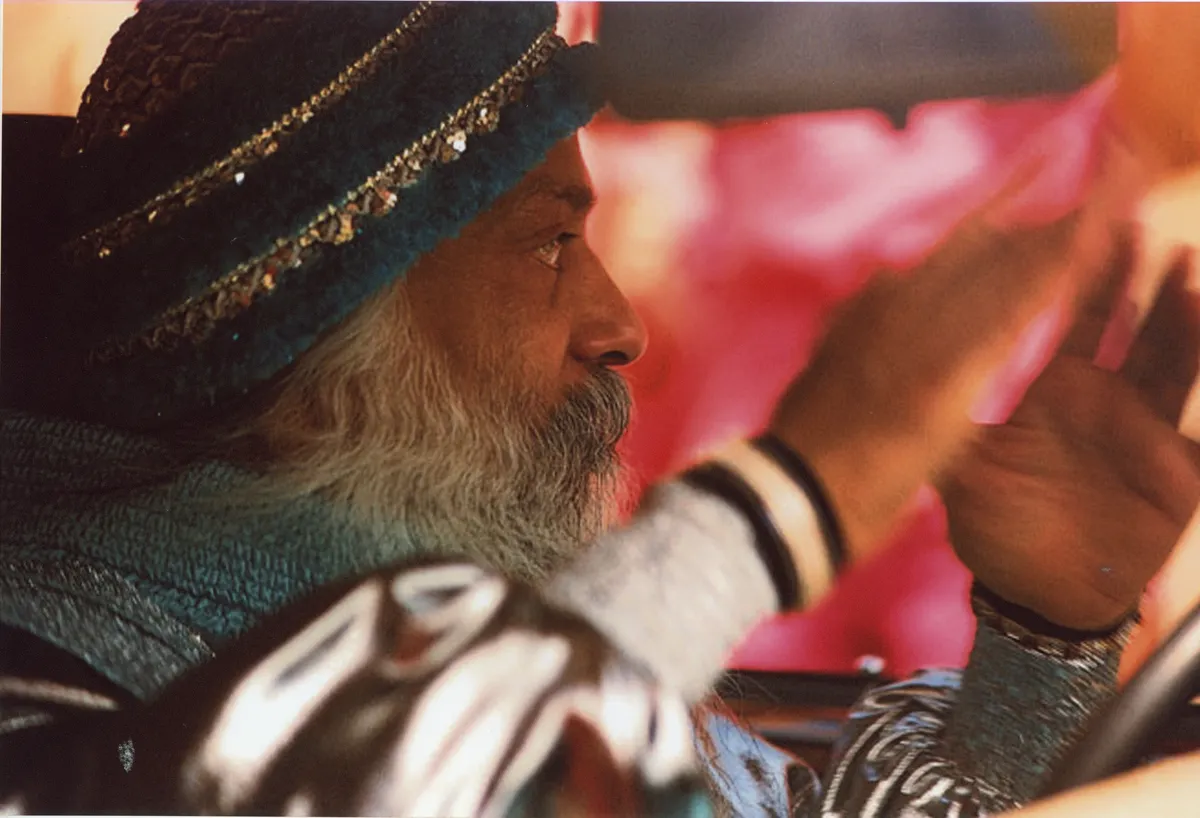
In the art of sustained, unblinking observation, the boundary between seer and seen dissolves, inviting the sky to enter you and transforming you into the very essence of nature, while even a simple image can awaken a profound connection to the master’s presence, revealing the oneness that binds all.
A pessimist, embodying an optimist turned upside down, shifts focus from counting roses to thorns after disappointments, yet true freedom lies in transcending this spectrum, witnessing life without the chains of hope or despair, as Osho insightfully suggests.
Vairagya embodies the essence of existence, where the journey and the destination merge; it invites us to cultivate conscious desirelessness, allowing each step to blossom into effortless being, revealing the bliss that resides in the present moment.
Illness cannot be shared, for karmic fruits remain uniquely ours; the noble desire to alleviate another's suffering nurtures our own growth and joy, yet true honor lies in embracing cosmic order—serving and caring while accepting our personal boundaries.
In the dance of existence, where nature flows in perpetual change, true liberation emerges not from resisting the movement but from anchoring ourselves in the stillness of our inner center, allowing the world to swirl around us as we embrace our essence of unshakable awareness.
Individuation, as envisioned by Osho, transcends Jung's mental constructs of conscious and unconscious divisions, revealing a profound oneness where the multiplicity of the mind dissolves into pure, timeless consciousness, experienced through meditation rather than mere theory.
Embracing risk entails laying bare your soul, shedding all pretense and reliance on intellect, as you surrender entirely to existence; in this radical honesty, where no conditions bind you, true transformation unfolds, revealing the profound wisdom that cleverness obscures.
A saint embodies the Divine, living egoless and boundless, their very essence a rebellion that incinerates the ego, igniting profound transformation and steering humanity away from competition towards the serenity of meditation and the freedom within.
Embracing divine vision can evoke a sudden panic akin to Arjuna's, as we often brace for sorrow rather than the overwhelming joy it brings; yet through meditation and inner preparation, this profound experience unfolds gently, allowing us to welcome its vastness in manageable glimpses.
To navigate the cacophony of societal voices and inherited teachings, one must first confront them with the wisdom of a master, yet ultimately shed all such guidance; true freedom arises in the silence of no-mind, where the courage to 'kill the Buddha' honors the essence of self-liberation.
In the eyes of Osho, the true essence of spirituality is found not in the imitation of religious figures who merely echo dogma, but in the authenticity of being oneself; true masters like Buddha and Lao Tzu embody a living religion, inviting us to walk alongside them as equals on the path of self-conquest.
Sin, as Osho illuminates, is not a judgment from an external authority but rather an immediate consequence of our unconscious actions—anger, excess, and hate that poison us in the moment; in contrast, love and awareness offer instant rewards, urging us to embrace responsibility and alleviate suffering right now.
Embodying the essence of Osho, Zorba the Buddha represents the revolutionary spirit of a new man who harmonizes the earthy vitality of Zorba with the profound awareness of Buddha, transcending the divide between materialism and spiritualism to celebrate the wholeness of existence.
In the spirit of Osho's wisdom, the Mahabharata reveals that the true conflict lies not in its pages but within us; as the Gita concludes, the inner war persists, echoing the eternal struggle against ignorance until awareness brings it to light.
In the spirit of Osho's teachings, the tale of Indra and Mahavira transcends mere dialogue, serving as a profound parable that invites listeners to delve into its symbolic depths, fostering spiritual insight that resonates far beyond the confines of literal truth.
Osho illustrates that a command, stark and directive, starkly contrasts with the gentle invitation of upadesh, where true understanding flourishes in presence and choice, allowing one's own awareness to illuminate the path forward instead of following imposed orders.
Kropotkin’s anarchism stands apart from communism, viewing the state as a hindrance rather than a necessity, while Osho beautifully emphasizes the importance of inner anarchy, advocating for personal order amidst life's chaos rather than relying on external structures.
In the realm of Osho's wisdom, the essence of secrets lies not in concealed truths but in the fearless embrace of authenticity, where one speaks their truth unapologetically, unwavering in the face of opposition and celebrating each consequence as a testament to their integrity.
Gorakh Nath, much like Osho, unveils the folly of scholars who regurgitate scripture without true understanding, emphasizing that genuine enlightenment arises not from ornate words or intellectual posturing, but from the simplicity of direct experience that ignites the inner light.
Don't have an account? Sign up