
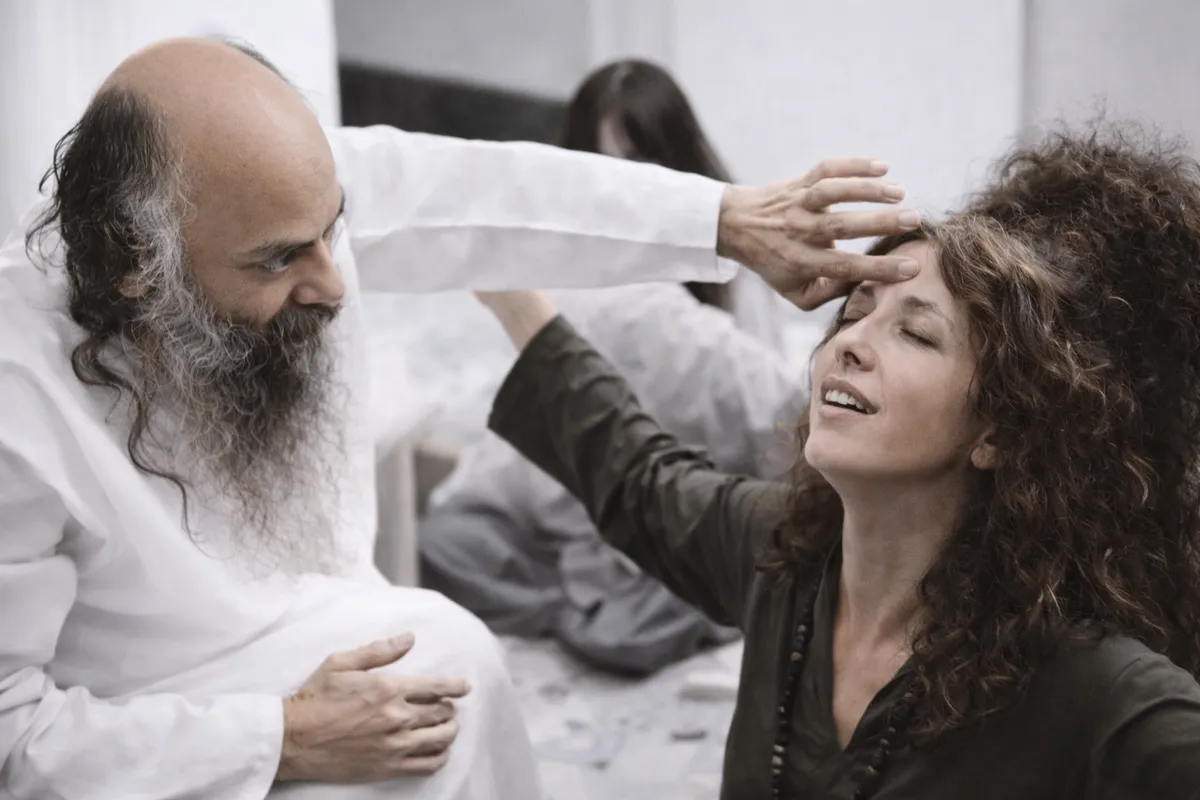
No person can have everything; you become truly complete by letting go of being a separate “me” and merging with the bigger Whole, like a river joining the ocean.
From the Discourses
Passages where Osho speaks to this question — each links to the complete discourse.
Osho, we are incomplete. However much we search outside or inside, how will the Whole ever be seen? How will we find the Whole?
It’s true. You are incomplete; all your seeking will remain incomplete. But non-seeking can be complete. Whatever you seek, you will be the seeker; it will be a search of your own hand, it will be like you. Whatever you make will carry your imprint. Whatever you construct, whatever you create, will be incomplete. If the maker is incomplete, how can the creation be complete? Quite right. Whatever you think will be incomplete. Whatever ideas you entertain will be fragmentary. Whatever conclusions you draw can never be whole and total. If you have faith, it will be incomplete; if you doubt, that too will be incomplete. You go into the world—half-and-half; you enter the temple—half-and-half. Because you are incomplete. That’s right. Then is there no way? God is complete and you are incomplete. And whatever you do will be incomplete—prayer incomplete, sadhana incomplete, samadhi incomplete. So how will you find…
तीसरा प्रश्न: ओशो, हम अधूरे हैं। हम बाहर या भीतर कितनी ही खोज करें, हमें पूरा कैसे दिखेगा? पूरा कैसे मिलेगा?
तुम जो भी खोजोगे, तुम्हीं खोजोगे; तुम्हारे हाथ की ही खोज होगी, तुम्हारे जैसी ही रहेगी। तुम जो भी बनाओगे, उसमें तुम्हारी ही छाप होगी। तुम जो भी निर्मित करोगे, सृजन करोगे, वह अधूरा ही होगा। क्योंकि अधूरा बनाने वाला है, तो कृति कैसे पूरी हो सकती है? बिलकुल ठीक बात है। तुम जो भी सोचोगे, वह अधूरा होगा। तुम जो भी विचार करोगे, वह खंडित होगा। तुम जो भी निष्कर्ष लोगे, वह कभी संपूर्ण और समग्र नहीं हो सकता। तुम श्रद्धा करोगे, तो अधूरी; तुम संदेह करोगे, तो अधूरा। तुम संसार में जाओगे, तो आधे-आधे; तुम मंदिर में प्रवेश करोगे, तो आधे-आधे। क्योंकि तुम अधूरे हो। बात ठीक है। तो क्या फिर कोई उपाय नहीं है? क्योंकि परमात्मा तो पूरा है और तुम अधूरे हो। और तुम जो भी करोगे, वह सब अधूरा होगा--प्रार्थना भी अधूरी, साधना भी अधूरी, समाधि भी अधूरी। तो तुम पूरे परमात्मा को कैसे पाओगे?
If both were present, would you call that completeness?
There are more dimensions, aren’t there! More dimensions, more dimensions—because when you went to Dal Lake you must have thought you were only seeing. That beauty was not just for the eyes. If you had been deaf, that much beauty would not have been visible to you. Hidden in it was the birds’ song, the plash of the waves—everything was woven together. Had you been deaf, you would still have seen, but your seeing would have been lacking. The fragrance drifting all around was also part of that beauty. We never realize it: when a man loves a woman, he never thinks that the scent of her body too accounts for perhaps thirty percent of the attraction—no less. However beautiful she may be, if her scent does not harmonize with him, no tuning is possible—never. Her body has a particular scent that draws him from within. It is a very…
प्रश्न: दोनों होता तो पूर्णता कहते उसको?
और भी दिशाएं हैं न! और भी दिशाएं हैं, और भी दिशाएं हैं, क्योंकि जब आप डल झील पर गए थे तो आपने सोचा होगा कि आप सिर्फ देख रहे हैं। वह सौंदर्य सिर्फ देखने का नहीं था। अगर आप बहरे होते तो इतना सौंदर्य आपको दिखाई न पड़ता। उसमें चिड़ियों की आवाज भी छिपी थी, उसमें लहरों की छप-छप भी छिपी थी, उसमें सब था जुड़ा हुआ। अगर आप बहरे होते तो आप देख तो लेते, लेकिन आपके देखने में कमी रह गई होती। उसमें आस-पास जो सुगंध आ रही थी, वह भी उस सौंदर्य का हिस्सा थी। हमको कभी पता नहीं चलता कि जब कोई एक आदमी किसी स्त्री को प्रेम करता है तो वह कभी नहीं सोचता कि उसके शरीर की गंध भी उसमें कोई तीस परसेंट हिस्सा लेती है, कम नहीं। यानी वह कितनी ही सुंदर हो, अगर उसकी गंध उसको मेल नहीं खाती है तो वह बिलकुल ही तालमेल नहीं बैठ सकता, कभी तालमेल नहीं बैठ सकता। उसके शरीर की एक गंध है जो उसे भीतर से आकर्षित करती है। और पर्टिकुलर गंध है, जो पर्टिकुलर लोगों को आकर्षित करती है, नहीं तो नहीं करती। …
Osho, is it not true that as long as a person is incomplete, imperfect, the rhythms and melodies of life will not stop pursuing him? The question is: how is he to become complete?
If Buddha says it, it must be right. But don’t accept it as your belief. If Buddha says it, it must be right—there is no reason he would be wrong. He has passed through your state, gone beyond you; he too played with these games and toys. So whatever he says is likely to be right. But that is Buddha’s statement; do not make it your creed. You try to understand this play. In the very understanding of the play you will slowly see for yourself that Buddha is right. His rightness will become your experience. Suddenly you will find: the toys are slipping away, lying in a corner. One day every child’s toys lie in a corner; then they go to the trash heap; then they are not even remembered. Years pass, and you don’t even remember what happened to those toys without which even sleep was impossible. Surely…
आखिरी प्रश्न: ओशो, क्या यह सच नहीं है कि जब तक मनुष्य अधूरा, अपूर्ण है, तब तक जीवन के छंद-राग उसका पीछा नहीं छोड़ेंगे? प्रश्न यह है कि वह पूर्ण कैसे हो?
बुद्ध कहते हैं तो ठीक ही कहते होंगे। ठीक मान मत लेना। बुद्ध कहते हैं, ठीक ही कहते होंगे; गलत कहने का कोई कारण नहीं है। क्योंकि बुद्ध तुम्हारी अवस्था से गुजर चुके हैं, तुमसे आगे जा चुके हैं, इन खेल-खिलौनों में खुद भी रहे थे। इसलिए जो कहते हैं, ठीक ही कहते होंगे। लेकिन यह बुद्ध का वक्तव्य है, तुम्हारा मत बना लेना। तुम तो समझने की कोशिश करना इस खेल को। इस खेल की समझ में ही तुम्हें धीरे-धीरे दिखाई पड़ेगा कि बुद्ध ठीक कहते हैं। यह ठीक होना तुम्हारा अनुभव भी बन जाएगा। अचानक तुम पाओगे: खेल-खिलौने छूटने लगे, पड़े रह गए एक कोने में। एक दिन हर बच्चे के खेल-खिलौने कोने में पड़े रह जाते हैं। इसके पहले सो भी नहीं सकता था उनके बिना, रात भी छाती से लगाकर सोता था; फिर एक दिन कोने में पड़े रह जाते हैं, फिर कचरे-घर में चले जाते हैं, फिर याद भी नहीं आती। वर्षों बीत जाते हैं, याद भी नहीं आती कि क्या हुआ उन खिलौनों का, जिनके बिना सोना भी मुश्किल था।
One friend has asked, "you say nothing is complete, then how can the void be complete?"
If you had to attain the perfection of the void, you would never have attained it. The void is complete -- it is, it is! You have just to stop filling yourself and you will suddenly realise that you are empty! There can be no completeness in this world of anything. Nothing is attained by man s actions. Once the Sultan in whose service Nasruddin was, was displeased with him. He told him, "You are a perfect dolt!" Mulla replied, "Do not flatter me. Nobody is perfect." However, if Emptiness too, had to be brought in, it would not be perfect. But the fact is, Emptiness is your nature. You have not to bring it about. It is. All you can do is to cover up what is, hide it, forget it. You cannot destroy it. You have not to attain the perfection of Emptiness. You have only to give…
This is the situation. We are in the middle — incomplete, half-done. The half-done mind longs to be filled, to be whole. Desire for perfection arises out of incompleteness. Remember, in completeness no desire for completeness can arise; it would be meaningless. Desire is always the opposite of what we are. We are poor, so we desire to be rich. We are ill, so we desire health. We are incomplete, so we desire wholeness. Desire is completely logical; in an incomplete mind the idea of becoming complete will naturally arise. Desire is logical — but its fulfillment will never happen. For the incomplete can never become complete — by any effort, by any practice, by any discipline or sadhana. Because all sadhanas, all practices, all efforts will arise from the incomplete. The stamp of incompleteness will remain upon them.
यह स्थिति है। मध्य में हम हैं--अपूर्ण, अधूरे। अधूरे मन की आकांक्षा है कि भर जाऊं, पूरा हो जाऊं। अपूर्णता से वासना पैदा होती है पूर्ण होने की। यह ध्यान रहे, पूर्णता में पूर्ण होने की वासना नहीं पैदा हो सकती, क्योंकि कोई अर्थ न होगा। अपूर्णता में पूर्ण होने की वासना पैदा होती है। वासना हमेशा विपरीत होती है। जो हम होते हैं, वासना उससे विपरीत होती है। हम गरीब होते हैं, तो अमीर होने की वासना होती है। हम रुग्ण होते हैं, तो स्वस्थ होने की वासना होती है। हम अधूरे हैं, तो पूरे होने की वासना होती है। वासना बिलकुल ही तर्कयुक्त है, क्योंकि अधूरे मन में पूरे होने का खयाल पैदा होगा। बिलकुल तर्कयुक्त है वासना, लेकिन परिणति कभी नहीं होने वाली है। क्योंकि अपूर्ण कभी पूर्ण नहीं हो सकता--किसी प्रयास से, किसी चेष्टा से, कैसे ही अभ्यास से, किसी साधना से। क्योंकि सब साधनाएं, सब अभ्यास, सब प्रयास अपूर्ण से ही निकलेंगे। और अपूर्ण की छाप उन पर लगी रहेगी। …