
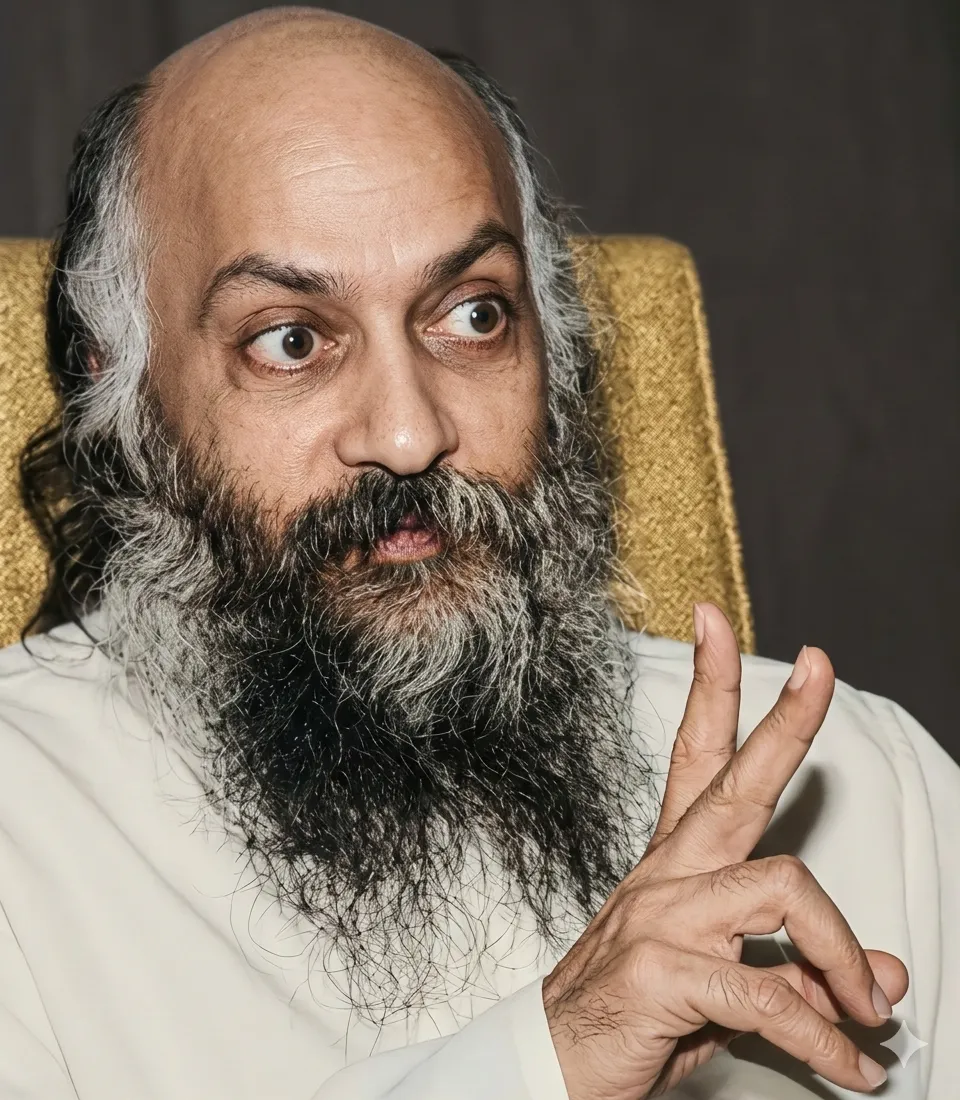
According to Osho, meditation not only can be passionate—it must be. Passion is the fire and total intensity that dissolves ego, bridges you to the divine, and transforms into compassion when it reaches ‘hundred-degree’ intensity. Any act done with utter passion—singing, painting, dancing—becomes meditation as the doer disappears into pure energy and presence; lukewarm effort yields mediocrity.
Yes—go all-in with your energy and love, and the busy ‘me’ quiets so the act becomes real meditation.
From the Discourses
Passages where Osho speaks to this question — each links to the complete discourse.
Can meditation be passionate?
Yes, that is the only way for meditation to exist. Passion is energy, passion is fire, passion is life. If you are doing meditation just so-so, without any passion, without intensity, without fire, nothing will happen. If you are praying just as a formality and it is not love that has arisen in your heart, it is meaningless, it is absurd. If you are praying to God without passion there will be no connection between you and God. Only passion can become the bridge, the thirst, the hunger. The more thirsty you are, the more is the possibility. If you are utterly thirsty, if you have become just a thirst, your whole being is consumed by your passion, then only something happens -- in that intensity, in that moment of hundred-degree passion. Don't be lukewarm. People live a lukewarm life. They are neither this nor that, hence they remain mediocre.…
Beloved Osho, the more I am able to absorb you, the more thirsty I become. Please talk about meditation and passion.
There is no harm in becoming more thirsty for truth. There is no harm in becoming more thirsty for new spaces of experience, new challenges, voyages to new stars in your innermost being. I call it divine discontentment. Only the fools are contented. You can see it. Watch a donkey... how contented he looks! He should be worshipped by all religious people. You cannot find a more contented being -- having nothing, but you will never see him frustrated, in despair, freaking out. In the world of donkeys even psychotherapies don't exist. Donkeys don't need any psychotherapist. But it is not a quality; it is not to be praised, it is a condemnation. The man of any worth is discontented. The smaller men are discontented about smaller things: money, power, prestige. These are not very far away from the donkeys -- cousin-brothers. There is just a difference of a few…
There was an old woman in china who had supported a monk for over twenty years. She had built a hut for him, and she fed him while he was meditating.
ONE DAY SHE DECIDED TO FIND OUT JUST WHAT PROGRESS HE HAD MADE IN ALL THIS TIME. SHE OBTAINED THE HELP OF A GIRL RICH IN DESIRE, AND SAID TO HER: 'GO AND EMBRACE HIM, AND THEN ASK HIM SUDDENLY, "WHAT NOW?"' THE GIRL CALLED UPON THE MONK AND IMMEDIATELY STARTED CARESSING HIM, AND ASKING HIM WHAT HE WAS GOING TO DO ABOUT IT. 'AN OLD TREE GROWS ON A ROCK IN WINTER,' REPLIED THE MONK SOMEWHAT POETICALLY, 'NOWHERE IS THERE ANY WARMTH.' THE GIRL RETURNED AND RELATED WHAT HE HAD SAID. 'TO THINK I FED THAT FELLOW FOR TWENTY YEARS!' EXCLAIMED THE OLD WOMAN IN ANGER. 'HE SHOWED NO CONSIDERATION FOR YOUR NEED,NO DISPOSITION TO EXPLAIN YOUR CONDITION. HE NEED NOT HAVE RESPONDED TO PASSION, BUT AT LEAST HE SHOULD HAVE EXPERIENCED SOME COMPASSION.' SHE AT ONCE WENT TO THE HUT OF THE MONK AND BURNT IT DOWN. A…
Beloved Osho, every time you talk about transforming passion into compassion, something in my heart gets triggered; but still, I do not understand what it means. Could you explain it to me again?
The energy called passion is always addressed towards someone. It is possessive, and because it is possessive it is ugly. To transform passion into compassion means that your energy for love is not addressed to anybody in particular; it is simply your fragrance, it is simply your presence, it is simply the way you are. It is not directed, not one-dimensional. It is radiation, so whoever comes close will feel your love -- and it is non-possessive. The possessive love is a contradiction in terms because possessiveness means you are reducing the other person into a thing. Only things can be possessed, not persons. Only things can be owned, not persons. The person's essential quality that differentiates him from things is his freedom; and possession, ownership, destroys freedom. So on the one hand you think you are loving a person; on the other hand, you are destroying his very essence.…
Many things follow meditation. Meditation is a multi-dimensional phenomenon. It is the spring: not only one flower but thousands of flowers bloom, not only one tree but the whole forest blooms. In India we have a certain flower, palash is its name. When the palash flower opens its buds the whole forest appears as if on fire, because when palash blossoms all the leaves disappear; only flowers remain. It is really a total expression. Nothing is being held back; there is no division at all, otherwise the energy will be divided into leaves and flowers. Palash lives a total life, utterly intense. The leaves disappear, the whole energy is poured into flowers, the whole tree loaded with flowers, just flowers, and they are the color of sannyasins. This is the color that I have chosen - a very lively red, the color of the flames.