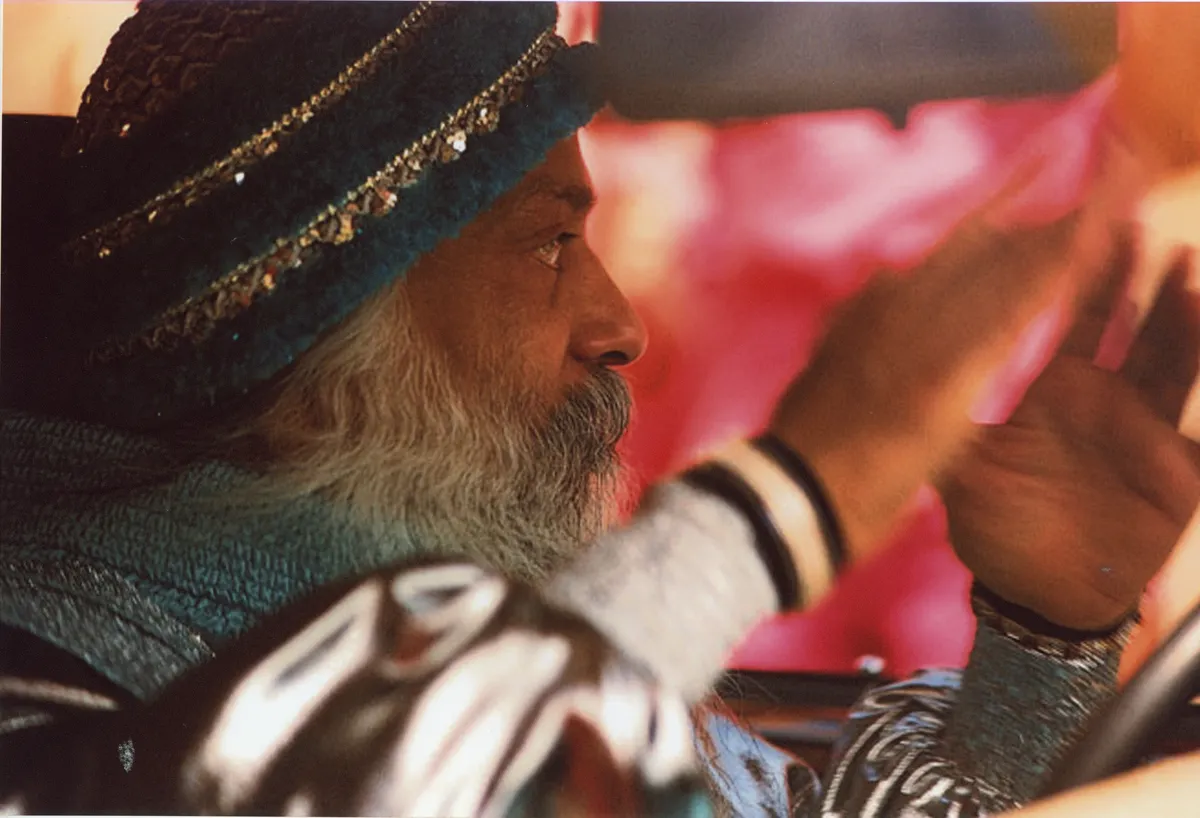
Explore Osho’s teachings across key topics such as meditation, love, ego, and awareness. Each topic contains structured questions, quotes, and insights derived from discourses.
In the stillness of awakened perception, where the silence of samadhi dissolves all questions into profound understanding, reality emerges, while illusion remains a tapestry of borrowed inquiries and unexamined beliefs; thus, true insight invites us to cultivate awareness and embrace our own lived experience.
Deep hollowness resembles a black hole, where external events may shatter our foundations, yet only lead us deeper into the void; when that emptiness vanishes, it reveals the Master’s touch, as true healing emerges from awakened presence, not mere circumstance.
In the embrace of alonement and silence, one discovers an inner joy and bliss that feels like returning home, a truth that, if genuine, endures; thus, by sharing this unconditional love, we enrich our lives and affirm that love renders all deserving.
Ajapa-Japa embodies a seamless flow of witnessing, where awareness transcends effort and setting; amidst life's chaos of praise and blame, one remains an unmoved observer, discovering that in presence, the journey and destination unite.
Prajnaparamita embodies the essence of the Heart Sutra, revealing a wisdom that transcends the confines of cause and effect, inviting us to experience the profound unity of form and emptiness, where the self dissolves into the boundless whole, much like Osho's vision of awakening.
In the spirit of Osho's teachings, true succession transcends geography, manifesting not through mere physical presence but in the consciousness of those who are open, empty, and ignited by profound understanding.
The Ajna chakra transcends mere enumeration of chakras, serving as the essential inner axis from which consciousness ascends; it is the powerful threshold that redirects energy upward, unlocking the path to higher states of awareness.
Honor, when bound to a nation, becomes a mere reflection of collective ego, a fragile construct defended by stereotypes and violence; true dignity emerges from our shared humanity and awareness, inviting us to connect as individuals beyond the confines of nationality.
In the dance of existence, gravity anchors us in the ordinary, yet when we embrace meditation, we unlock a realm where grace transcends, lifting our spirits from heaviness to the lightness of being, inviting us to effortlessly flow with the universe.
Rituals, as Osho might suggest, transcend the confines of tradition and novelty, inviting us to engage in a profound, present-moment awareness; the twenty-one-day ritual emerges not as a relic of the past but as a vital expression of our current consciousness.
The Diamond Sutra, much like Osho's teachings, shatters preconceived notions of truth, guiding us beyond the confines of thought into the immediate, wordless essence of existence, where love and presence reveal a deeper reality beyond mere knowledge.
In the meditative stillness that Osho advocates, the judgments of an opinionated mind dissolve, allowing us to perceive the essence of reality beyond labels of ugliness or beauty; from this clarity, our actions become creative and intelligent responses to the truth of existence.
Vanaprastha unfolds as an instinctive journey from the clamor of the marketplace to the serenity of the forest, an organic transition born from profound witnessing that transcends ego, revealing a purity untouched by the cunning of deliberate renunciation.
The Supreme transcends fixed forms and names, eluding the mind's grasp; it is not an idea to be understood but an experience to be savored in silence, love, and awareness—where dropping conceptual seeking allows the nameless to unveil itself.
In the spirit of Osho's teachings, synchronicity emerges as the profound empathy that interlinks our essence with the universe, revealing how attunement, deep listening, and an open heart effortlessly harmonize our inner and outer worlds.
Embodying Osho's wisdom, purushartha emerges as the vibrant expression of conscious choice in the present, allowing us to shape our destinies, while prarabdha unfolds the tapestry of past decisions; each mindful choice sows the seeds of a transformed future.
Bulls embody the mind’s grand illusions, much like Osho might suggest, where the marvels of conditioning and suggestion create a façade of intelligence, revealing our own credulity and the layers of belief that shape our perception of reality.
Animals are drawn to the simplicity and earthiness of our behavior, resonating with the instinctual signals they trust; thus, while we embrace our natural essence, refining our manners allows both creatures and humans to coexist harmoniously.
Drinking, when approached with a light heart, becomes a celebration of presence rather than a means of escape; it invites playfulness and moderation, allowing us to savor life's moments without the weight of guilt or condemnation.
Inequality persists not through the lens of spirituality, but as a consequence of poverty, where the cycle of corruption and injustice thrives; true transformation emerges only when we address the root causes, fostering affluence and dignity rather than mere rhetoric.
In the realm of spiritual awakening, the 'door' symbolizes the transformative passage of awareness, where the seed of human potential blossoms from a state of homelessness into the conscious celebration of existence, guided by the harmonizing forces of religion and meditation.
In the spirit of Osho's teachings, awakening body awareness involves gently reversing the flow of energy, guiding your hands from feet to head, while softly urging alertness with a verbal cue or a light touch, inviting a profound return to presence.
Social morality often labels many truths as ‘improper,’ yet Osho invites us to illuminate what was once hidden, urging open dialogue free from shame, allowing us to transcend borrowed guilt and transform our instincts into wisdom, love, and responsibility.
Osho invites us to transcend the misguided pursuit of goodness, revealing that his journey is not about moral dichotomies but rather about awakening to the realization that good and evil are mere constructs of the mind, allowing true goodness to blossom effortlessly.
Don't have an account? Sign up