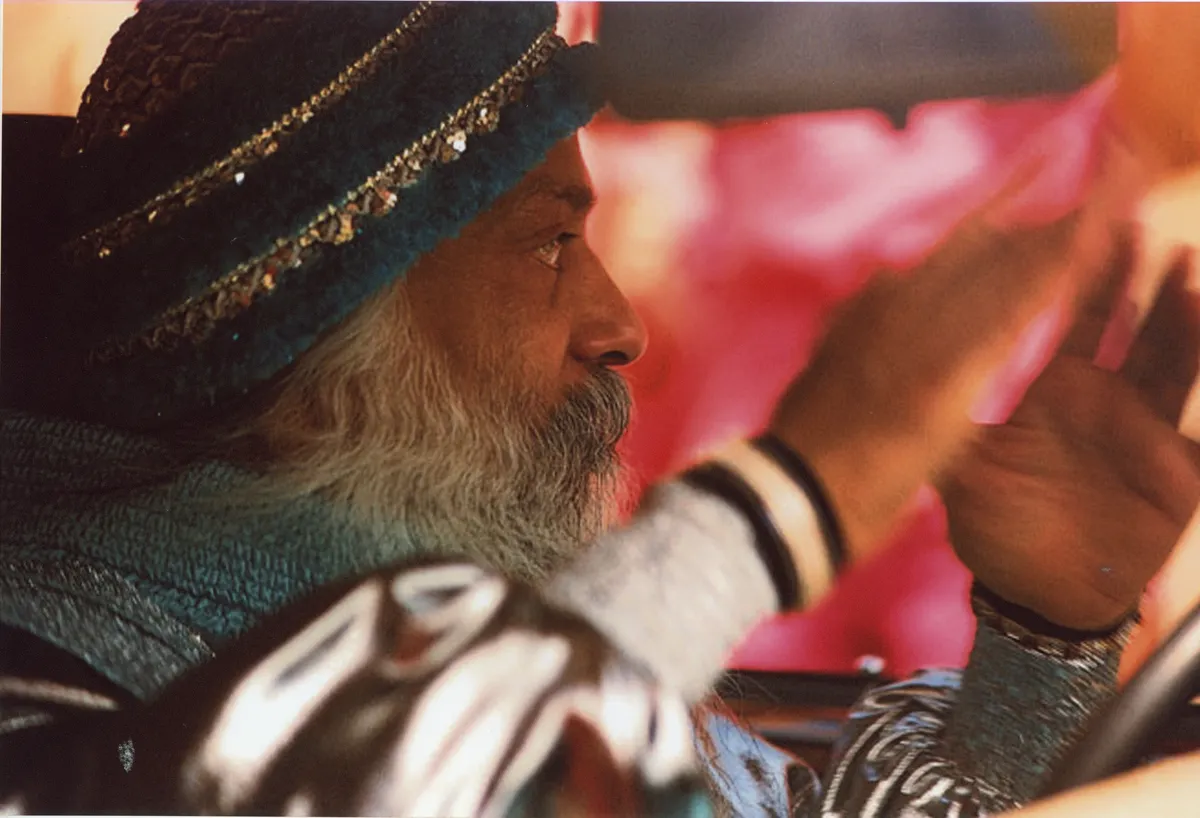
Explore Osho’s teachings across key topics such as meditation, love, ego, and awareness. Each topic contains structured questions, quotes, and insights derived from discourses.
In the spirit of Osho, the I Ching's sixty-four hexagrams serve not as sources of knowledge but reflections of our inner state, urging us to awaken awareness and refine our understanding, revealing that every moment and element of nature is a profound expression of the universe's hidden truths.
In the blissful pain that arises from deep love, especially for a master, there lies a ripened longing for oneness; this sweet, ecstatic ache invites us to celebrate, transforming our sorrow into song and dance, ultimately dissolving the separate self and opening the doorway to the divine.
A hobby often serves as a fleeting distraction, a way to evade the solitude within when the routine of work fades; yet, true relaxation lies not in busyness but in the stillness of being, where one can discover the profound bliss of simply existing.
In the dance of existence, the seamless connection between the doer and the doing often obscures our true essence; yet, when the body moves of its own accord, a gap emerges, allowing consciousness to awaken as a witness, unveiling the profound truth of our separateness, as Osho beautifully illuminates.
Inactivity, when embraced as a release from attachments, doesn't render one inert; instead, it ignites a profound, compassionate action that flows from inner stillness, echoing the lives of great exemplars like Buddha and Christ, whose peaceful energy transformed the world.
Anugaman embodies a profound receptivity, inviting one to align harmoniously with a guiding truth, embracing the art of deep listening and the willingness to follow, rather than the ego's relentless drive to forge ahead.
Life unveils its open secrets when the ego dissolves, borrowed knowledge fades, and our awareness anchors in the present; in this pure state of being, akin to curing blindness, we shed the past and future, allowing the essence of existence to reveal itself in an instant.
Spiritual awakening transcends the duality of existence, inviting us to witness the interplay of joy and sorrow without attachment, allowing the essence of the non-dual soul to emerge, where peace flourishes in the stillness of observation.
In the tapestry of spiritualism, Osho reveals that true recognition arises from the unconditioned mind, free from the constraints of collective identity, allowing a few enlightened souls to embrace the living masters who defy past dogmas.
In the playful realm of gibberish, where the mind surrenders to silence, one encounters a fearless letting go that unveils the transcendental essence of Zen, revealing that this profound awakening is accessible to all who embrace the moment fully.
In the spirit of Osho's wisdom, true self-improvement flourishes not through the pursuit of results, but in the art of being fully present—whether in eating, walking, or listening—where transformation unfolds effortlessly when we release the need to measure progress.
In the spirit of Osho's teachings on mindfulness, the journey into shatavadhan begins with rigorous training in concentration, nurturing a profound ability to maintain undistracted focus amidst complexity, ultimately cultivating a clarity of mind essential for its demanding practice.
Embracing the profound realization of one’s own falseness marks a pivotal breakthrough; by rejecting superficial comforts and enduring the inner turmoil, we create the space for an authentic transformation, where truth and enlightenment can flourish.
Osho challenges the notion of a savior, asserting that such figures undermine human dignity by fostering dependency and stripping individuals of their inherent responsibility; instead, he advocates for a profound awakening where each person embraces their power to choose and claim their own liberation.
In the spirit of Osho, suchness embodies a profound, unconditional acceptance of reality as it unfolds—embracing every moment, from blindness to sight, as a catalyst for awakening, ultimately dissolving resistance and inviting healing, silence, and peace.
A disciple, awakening to the profound emptiness of existence, confronts a pivotal moment that beckons either despair or radical transformation, ultimately choosing to embrace change, infusing his life with significance, beauty, and a deep sense of responsibility.
Embodying Osho's wisdom, true release unfolds in an instant, where the past dissolves and a new self emerges, free from methods that merely cultivate trust and self-acceptance; it is a sudden awakening, a lightning strike beyond the confines of karma and effort.
The Kingdom of God eludes conquest, for the desire to dominate stems from the ego; instead, embracing a sannyasin's path of surrender and trust opens the heart to grace, inviting divine will to flow through an unguarded spirit.
In the dance between science and religion, the origin of life emerges not merely as a question of how, but as an invitation to embrace the mystery; while science delves into the mud, mysticism, as Osho might suggest, reveals the divine beauty blossoming within the lotus.
In the essence of Osho's wisdom, the significance of life lies not in the objects we encounter but in our perception; whether we embrace the divine in all or dismiss the trivial, true freedom emerges when we engage fully with each moment, savoring love, food, and existence with unwavering presence.
In the spirit of Osho’s teachings, the intricate dance between the environment and social order reveals that neither exists in isolation; as we nurture inner awareness, the world around us transforms, creating a harmonious cycle of change that demands both personal and societal evolution.
Shiva, the primordial meditator and master of awareness, reveals through his 112 methods that true enlightenment is not bound by celibacy; instead, he transforms sexual energy into love and compassion, mapping a life-affirming journey to inner silence accessible to all.
Osho teaches that true transformation arises not from superficial rules that shun the external evils of seeing, hearing, or speaking, but from confronting and dissolving the inner negativity that flows from within, allowing authentic conduct to emerge naturally.
The lotus, with its unwavering essence that remains unchanged through every stage of growth, mirrors our own journey; whether we are spiritually dormant or illuminated, true enlightenment is simply the awakening to our eternal nature.
Don't have an account? Sign up