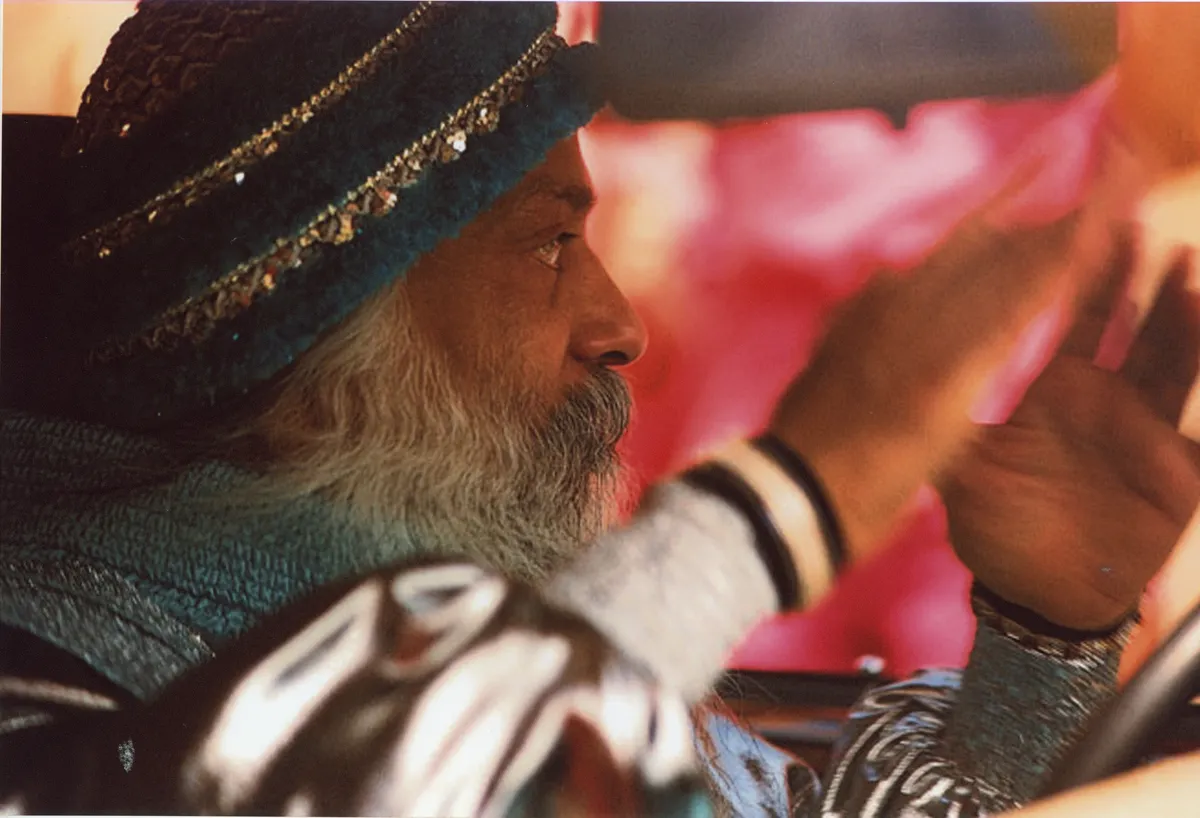
Explore Osho’s teachings across key topics such as meditation, love, ego, and awareness. Each topic contains structured questions, quotes, and insights derived from discourses.
In the vibrant chaos of Delhi, where the dance of power masks the essence of true governance, one finds a stage where rhetoric reigns supreme, and beneath the surface, the quest for control often eclipses the genuine pursuit of democracy, echoing Osho's insight into the illusions that bind us.
Inhibitions, as Osho insightfully reveals, are the weighty repressions of our natural energies—anger, lust, and violence—imposed by civilization, and only through the cathartic release found in meditation can we dissolve these blockages, restoring our essence and enriching our connections with others.
Defeat emerges from the relentless pursuit of victory; by releasing this craving and embracing surrender, one finds true triumph in acceptance, transforming life into a sacred offering where love prevails over ego's illusions.
An avadhut embodies the essence of the Imperishable, embracing direct knowing that transcends theory, perceiving the transient world as mere dust, and awakening to the divine within—all while dissolving ego and living the Eternal in every moment.
In the dance between rebel and revolutionary, the true essence lies in the rebel's journey of individual transformation, where shifting consciousness ignites societal change, while the revolutionary, bound by power and the crowd, often succumbs to corruption.
In the spirit of Osho's teachings, the essence of spiritual exploration lies in the deeply personal journey of experimentation, where insights bloom within, revealing truths that resonate only when one has traversed the same inner landscape.
In the vibrant tapestry of modern India's spiritual landscape, figures like Ramana Maharshi and J. Krishnamurti have emerged, yet the absence of a cohesive lineage reveals that true spiritual transmission, as Osho suggests, thrives in the authenticity of living individuals rather than in rigid institutions.
In the essence of Osho's thought, spirituality transcends geography, revealing that true sacredness lies not in holy sites like Kaaba or Kashi, but in the heart's surrender and awareness, where love and consciousness unlock the divine within us.
In the throes of youth revolt, the Western mind, having reached the zenith of rationality, yearns to embrace its suppressed irrationality; as affluence fosters a profound boredom, the allure of meditation, Zen, and yoga emerges, offering experiential paths to restore balance in a technocratic world.
In Osho's perspective, right and wrong transcend rigid rules, emerging instead from the depths of our consciousness; as life evolves, true ethics reside in our awareness, where conscious actions breathe life into authenticity, while unconscious choices lead us astray.
In the state of attainment, as Osho beautifully illustrates, all seeking dissolves into a profound inner fulfillment, where desirelessness and effortless being reveal our true nature—whole, free, and complete, resting in the silence of what is.
Readiness unfolds in the dance of existence, where reality precedes understanding; embrace the moment and engage directly, for recognition follows like a shadow, illuminating the path of experience that has always been reaching for you.
In the spirit of Osho, the notion of four thousand years transcends mere numerical significance, illustrating that our existence is intricately woven into the cosmos, urging us to embrace the profound interdependence with the sun and to awaken to the essence of awareness and meaningful living in the present moment.
The world’s madness stems not from our essence but from the conditioning imposed by priests, politicians, and societal norms, which stifle our innate joy; Osho's teachings urge us to shed these constraints, embracing our true selves through love and trust to cultivate genuine happiness.
Greatness is a mirage, as Osho suggests; the essence lies not in idolizing heroes but in embracing our own ordinariness, awakening to the profound awareness that transcends notions of superiority or inferiority.
Occultism, often seen as a pursuit of hidden truths, distracts from the divine that is ever-present in the world around us; true awareness lies not in secret paths but in the simplicity of silence and the openness of being.
In the stillness of turning inwards, one finds that true awareness arises not from the chase of desires, but from the profound recognition that reality, in its eternal presence, has always been within, waiting to be discovered in the silence of our being.
In the realm of divine inspiration, Osho illuminates the distinction between selfless guidance that risks personal loss for the greater good and ego-driven impulses that masquerade as insight, reminding us that true inspiration serves all without reservation.
In the dance of Zen and Sufism, the Sufi heart, a poetic essence of refined thought and devotion, mirrors Zen's empty mind; both invite us to relinquish all mental clutter, unveiling a boundless emptiness that serves as a gateway to the divine.
Gluttony reveals a deeper sorrow, and rather than battling with food, one must illuminate the inner self through meditation; as awareness blossoms, cravings and burdens dissolve effortlessly, allowing a natural balance to emerge without guilt or struggle.
In the essence of Osho's wisdom, the realization of the Eternal transcends time, a shared knowing as constant as the sun, while its fragile expression dances like a rainbow, relying on the harmony between the awakened speaker and the receptive listener.
In the act of gazing into the abyss, one engages in a profound meditation, where the stillness of emptiness mirrors our own essence, inviting thoughts to dissolve and revealing the harmonious unity of the inner and outer vastness, a dance of self and the cosmos.
Pratibha embodies a thought-free consciousness, a radiant clarity where the mind shines in its purest form; it emerges from awakened wisdom, transcending cleverness and intellect to reveal an innocence and simplicity that illuminates existence itself.
Excessive sentimentality, rather than being suppressed, should be consciously redirected, transforming raw emotion into love, creativity, and presence, for when we guide our feelings wisely, intensity evolves into virtue, enriching our lives.
Don't have an account? Sign up