
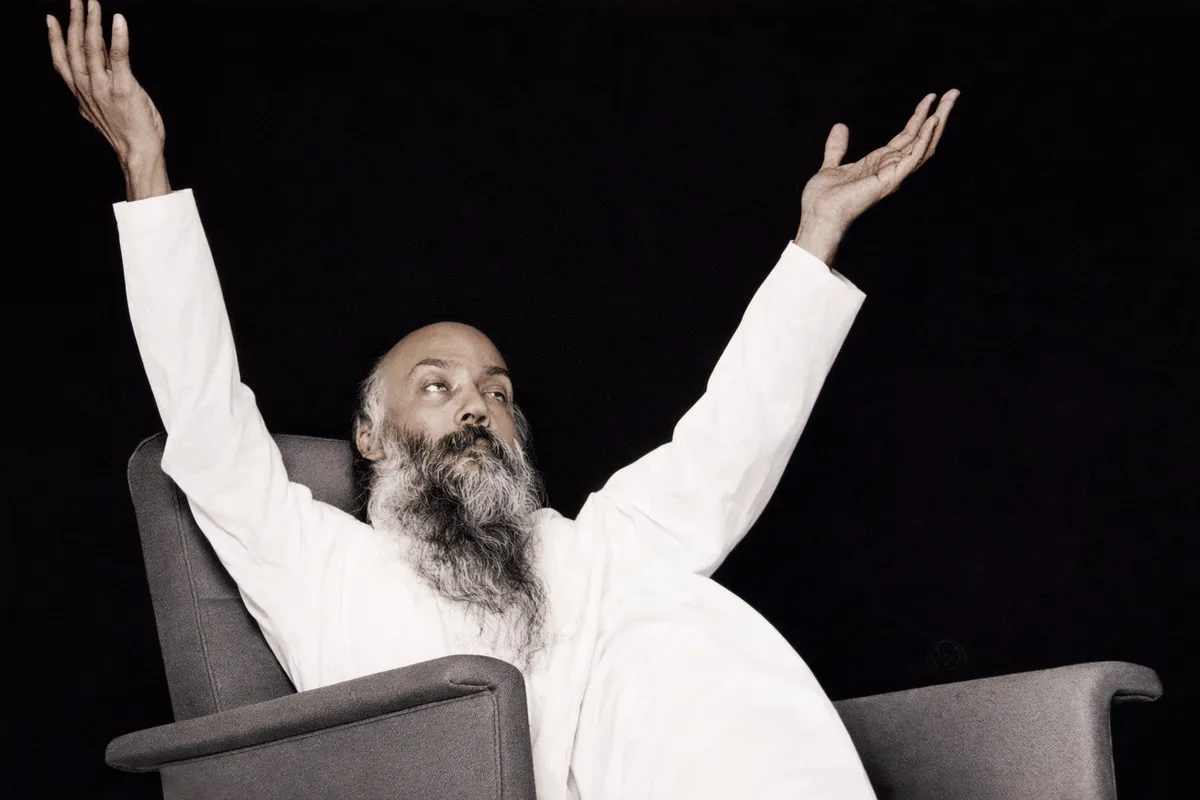
When your longing grows, be patient, stay thankful for what is and what will be, and enjoy the yearning as part of the path.
From the Discourses
Passages where Osho speaks to this question — each links to the complete discourse.
Osho, my life is a blank page—blank it has remained. Lord, you have said again and again that prayer is only to express gratitude—never to ask for anything. But the mind cannot keep from asking. I ask, Lord—for a thirst that will set body and soul ablaze. Will the Lord grant my request?
Achyut Bharati! The fire has already begun to burn. For now it is a spark; the whole forest will catch. Once the spark has come, the forest will burn. Once the first flower opens, it announces the coming of spring; other flowers will blossom too. Do not be in a hurry. And I know, the mind hurries; the mind does not hold patience. Give the spark a little time—to flare, to spread. It will blaze forth. But the more impatient you are, the longer it will take. That is the obstacle. Keep patience and it will happen quickly; be impatient and it will be delayed. If you rush too much, it will take a very long time. And if you do not rush at all—it has already happened; now, now. I understand your prayer. Wherever even a spark falls into the heart, this feeling naturally arises within. I do not…
Osho, I was receiving so much that the joy of it wouldn’t fit inside. So much bliss, so much happiness—where do I keep it, how do I hold it—I cannot understand. And the thirst is just as intense. By whose grace I am receiving all this in the evening of life, I am near them and yet far. For these two things I had been living almost madly. For some days now everything has begun to fall silent. I sit for hours or lie down. I don’t feel like doing anything. Nothing feels bad, nothing feels good. Osho, what is happening?
Such a tussle will come. Do not be afraid. Keep only one remembrance: whatever is happening, whatever happens—is auspicious. Let this be your prayer now: whatever is happening is auspicious. Then ever-new doors of the auspicious will open. A path does meet the heart from somewhere, coming close; I wonder, is this your thoroughfare or not? Do not fall into this worry, because soon the path of the Divine that passes by the heart will be seen. Do not get into thinking. When all becomes still—celebration goes, bliss goes—and everything falls quiet and one is left amazed and emptied, then the path that passes by the heart is glimpsed! We have come near ourselves, become detached, unentangled. This is the pinnacle of sannyas. The world and all that is outside is forgotten. We go within, within, within—reach our center. From there the path of the Divine passes. Then do not…
Osho, in your presence there is a taste of the depth of meditation, but that state does not remain permanent. Please guide us toward making it permanent!
If delay is your way, no harm; we will cultivate the habit of patience—what else! If you tarry, fine. However long you can delay, we will learn to wait longer still. We too will cultivate the habit of acceptance— Your aloofness may be your habit; so be it. Do not fall into haste. Haste breeds tension. It is haste that makes the mind restless. Walk with patience. Infinite time is available. There is no hurry anywhere. Time’s stream is endless—no near shore, no far shore; no beginning, no end. In this eternal, you are worrying needlessly. Why all this running about? Your running will not make anything come sooner. There is no need to hurry. Look at the trees—how languid they are. Look at the moon and stars—how silently they move. Do you see any hurry in existence to reach somewhere? Existence is so calm, as if it has already…
Osho, two evenings ago during darshan you told a young woman, “Have faith.” And I too trusted your words—that where the thirst is intense, water has to come. Now the water has come, but should I at once cup my hands and drink, or should I wait patiently until the water rises to my lips?
Therefore, if your state is devotional and you wish to let the play go on a little longer, even if the spring rises before you and floods you up to the chest—stand there; no harm. He too is coming; He is seeking you. He will come to your lips. But if you have come by great endeavor, then do not be so patient—drink at once! What is gained by effort can be lost in a moment. In some state of mind the spring appears; the state changes, it is lost. If, by gaining mastery over the mind’s waves, becoming meditative, you glimpsed the spring, drink quickly—who knows when the waves return and you miss again! The seeker often misses after reaching—again and again—because his reaching depends on a particular state of mind: very narrow, very difficult to sustain. To hold it even for a moment is hard. Mahavira said: if…
Osho, when God stands directly before the devotee, why does the longing still not lessen?
He says: Seeing this, I fled. I was so afraid I even set the chain down gently, lest it ring by mistake. And I was so afraid I took my shoes—worn up the temple steps—into my hands, lest the footfall be heard inside; lest he open the door and say, Come; lest he embrace me—and then I would be annihilated. There would be no rescue then. And seeing him standing there, even running away would seem unseemly. The song’s final stanza says: From that day, having fled, I wander on all roads except the road to that temple. My search continues. I tell people I am seeking God, practicing yoga, meditating. And I know very well where he is. Leaving only that place, I search everywhere else. For me, the atheist is precisely that person who, in some birth, suffered a very profound pain—so terrible that he does not wish…