
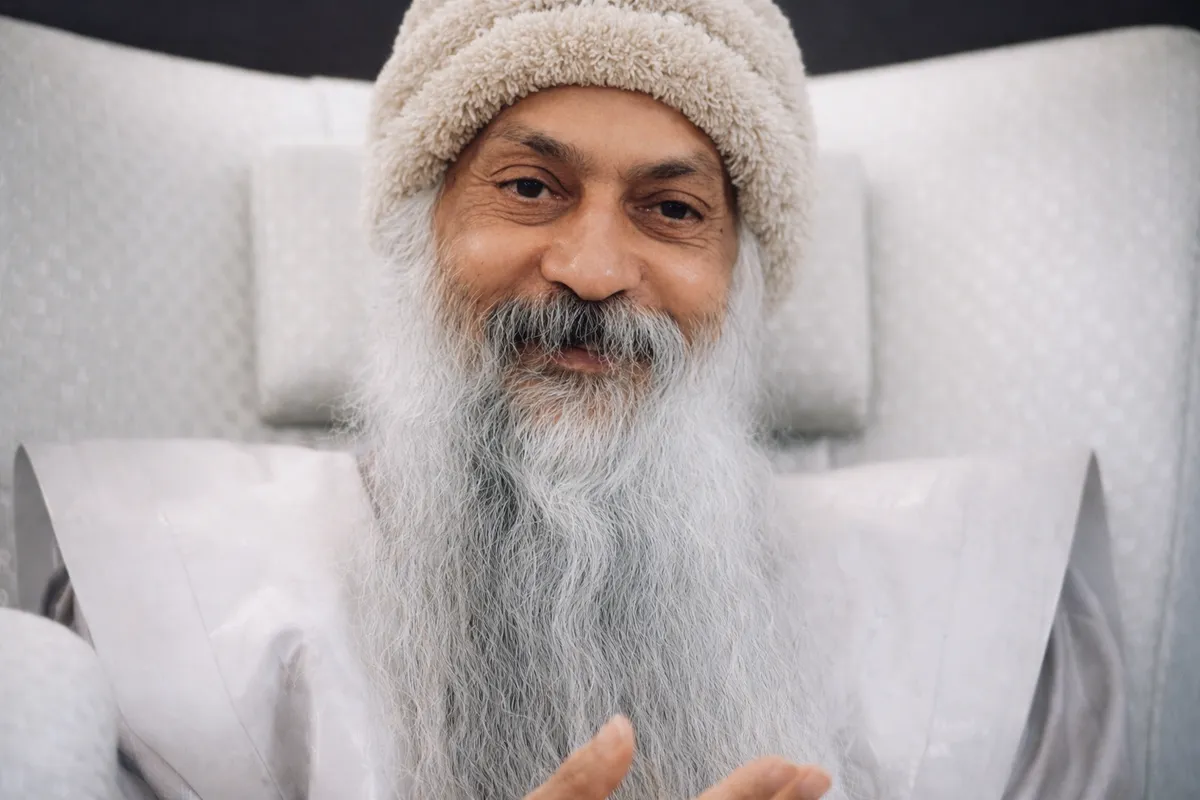
According to Osho, there is not a list of traits but a single mark of a sannyasin: like a lotus in water, he lives amidst the world yet remains untouched by it. This means non-attachment and non-clinging—participating fully in life without letting circumstances, desires, or fears stick to the being. Presence without entanglement is the essence.
Be like a lotus: live in the world, but don’t let the world stick to you.
From the Discourses
Passages where Osho speaks to this question — each links to the complete discourse.
Osho, what are the marks of a sannyasin’s life? Please explain.
There aren’t “marks” in the plural—there is the mark. Like a lotus in water. Don’t ask in the plural. A sannyasin has not many traits; there is only one—ask in the singular. He lives in the water and yet the water does not touch him.
Beloved Osho,what are the qualities of a sannyasin?
In the early morning he went back, fell at Buddha's feet and said, "Sir, excuse me, forgive me. I could not sleep the whole night." And Buddha laughed, and he said, "You fool! Why? I slept perfectly well. Why should you get so disturbed about such a small thing? It has not hurt me. You see my face is as it was before. Why did you get so worried?" And the man said, "I have come to become your disciple. Initiate me. I want to be with you. I have seen something unique, superhuman. But first, forgive me." And Buddha said, "This is nonsense. How can I forgive you? -- because I have not even taken any note of it. I was not angry, so how can I forgive you?" Twenty-four hours had passed, and they were sitting on the bank of the Ganges. And Buddha said, "Look at how…
The sannyasin lives facing what is. For him, death is a truth. And the one who stands before death, who does not fear it and does not flee, his life changes—his outer life changes—and by encountering death, by standing face to face with it, his inner soul also changes and awakens. Hence we change the old name of the sannyasin. The declaration is that the old man has died. The old way you were seen is gone. His clothes are changed so that the old identification, the old identity—“I am this”—breaks. Now he may live in a new way, view life from a fresh angle, include death within his very arrangement. If a person lives each moment knowing that death can come in the next, he will not remain greedy, nor angry, nor lustful. If death stands revealed beside you, your anger, greed, delusion—everything will depart at once.
To be a sannyasin is a declaration that 'From now onwards I am going to be a master, not a servant.' And this is the secret of mastery: be unattached to everything. And I am not saying to renounce, I am saying to be in the world, to live in the world, and to live totally -- but with no possessiveness. When things are there, good; when they are not there, that too is perfectly good. When you have a beautiful palace enjoy it; when it disappears a dream is over. Then whatsoever is available, enjoy that. A sannyasin should be able to enjoy every possibility: he will enjoy the day, he will enjoy the night, he will enjoy life, he will enjoy death, he will enjoy friendship and he will enjoy aloneness. Ian has both possibilities: he can be a rock or he can be a flower.
Osho, which guna-dominant seeker do you call a sannyasin? Does the predominance of any one guna begin as soon as one takes sannyas?
Sannyas has nothing to do with the gunas. Sannyas is related to nirguna, the quality-less. Sannyas is an inner state of feeling. It is the art of non-grasping. You do not cling to anything. You remain without holding on. Grasping is what makes a householder. You will build houses all around; you will cling to something. You will not be able to live without supports. You will need some prop, some security for the future, some wealth—be it the wealth of merit, of good deeds, of sattva. A sannyasin means: I will build no inner house; I will not hoard any inner wealth; I will gather no possessions; I will not think of the future. I will live in this very moment—and live as consciousness. And I will know only this much: I am a witness; an observer; a seer. Sannyas is a state beyond the gunas. Until that arises,…