
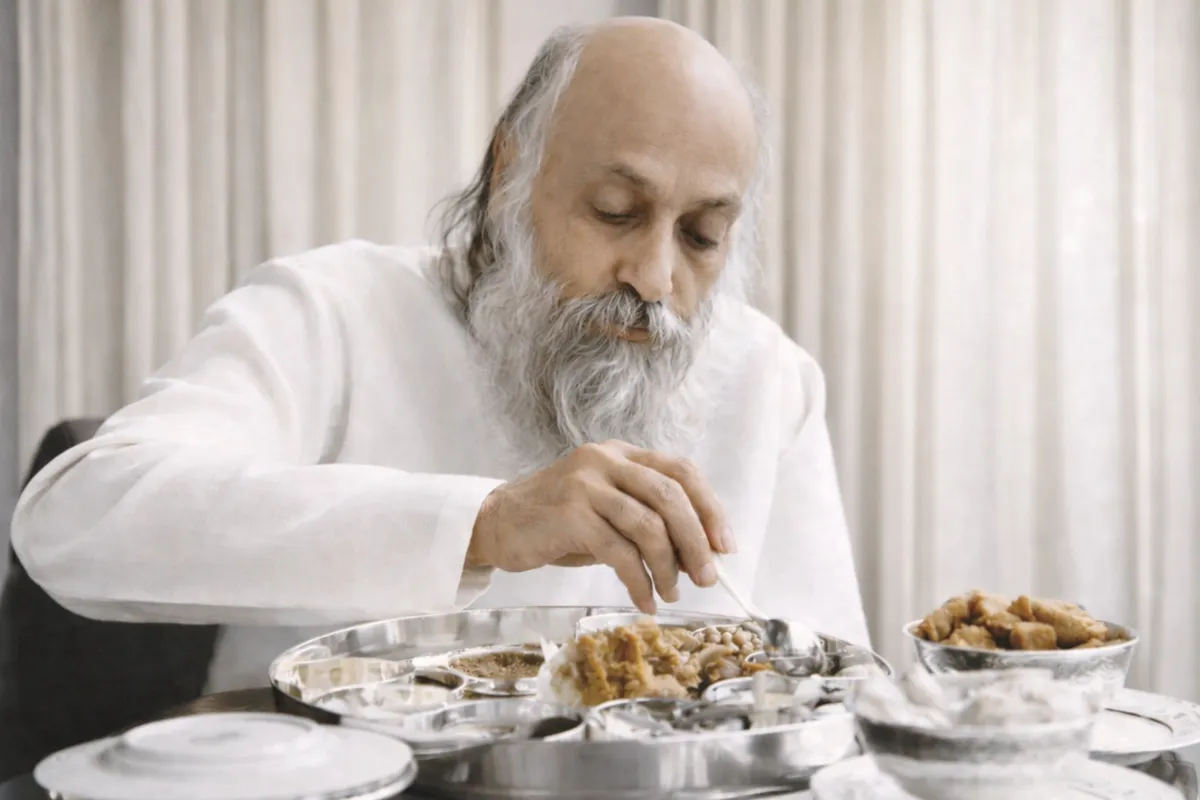
Mahavira knew the whole truth; it only seems one-sided when put into words, because words break the whole into parts.
From the Discourses
Passages where Osho speaks to this question — each links to the complete discourse.
Osho, the other day you spoke of “ekant” in relation to Lord Mahavira. Was Mahavira’s realization also ekant—one-sided? Was it not complete? This is my question.
What news we bring back are drishtis, thoughts. What we actually knew and lived was darshan. In that darshan, Srinagar was one. There, night-day were joined, mountain-lake were joined, good-bad were joined—everything was together. But the moment we speak, we choose; we sift; we stand somewhere and select a viewpoint. The moment anything is spoken, a drishti is formed. This has been the great danger: mistaking drishti for darshan. Hence, the Hindus have a drishti, not darshan; the Jains have a drishti, not darshan; the Muslims have a drishti, not darshan. If we speak of darshan, then Hindu, Muslim, Jain all disappear—only the One remains; there is no drishti, no ideology. Mahavira’s experience is total; expression cannot be. Whenever we try to say it, we cannot say the total. The experience of the divine is a far greater matter—even a small, simple experience cannot be expressed in its wholeness. You…
प्रश्न: ओशो, आपने पिछले दिनों भगवान महावीर के संबंध में एकांत वाली बात कही थी। वह क्या रियलाइजेशन जो भगवान महावीर का था--वह भी एकांत ही था? क्या वह संपूर्ण नहीं था? यह मेरा प्रश्न है।
वे जो खबरें हम ले जाएंगे, वे दृष्टियां होंगी, वे विचार होंगे। लेकिन जो हमने जाना और जीया था, वह दर्शन था। उस दर्शन में श्रीनगर एक था। वहां रात-दिन जुड़े थे, पहाड़-झील जुड़ी थी, वहां अच्छा-बुरा जुड़ा था। वहां सब इकट्ठा था। लेकिन जब हम बात करने गए, चुनाव हमने किया, छांटा, तो हम खड़े हो गए और हमने एक दृष्टि से चुनाव किया। तो जैसे ही कोई बात बोली जाएगी, वैसे ही दृष्टि बन जाएगी। और यही बड़ा खतरा रहा है कि दृष्टियों को दर्शन समझने की भूल होती रही है। और इसलिए जैनों की एक दृष्टि है, दर्शन नहीं; हिंदुओं की एक दृष्टि है, दर्शन नहीं; मुसलमानों की एक दृष्टि है, दर्शन नहीं। अगर दर्शन की हम बात करते हैं तो हिंदू, मुसलमान, जैन सब खो जाएंगे। वहां तो एक ही रह जाएगा, वहां कोई दृष्टि नहीं है, कोई विचार नहीं है। महावीर का जो अनुभव है, वह तो समग्र है, लेकिन अभिव्यक्ति समग्र हो ही नहीं सकती। जब भी हम कहने जाते हैं, तभी समग्र को हम कह नहीं सकते। …
Osho, Mahavira refused to take anyone’s support—that is right. But along with that, a question arises: just as it is important not to take support, it should be equally important not to give support. Yet his way of expressing himself, and then the whole structure of shravaks and shramans and all that—this amounts to giving support to others. So why was this aspect not considered: if I do not take support, who am I to give support to another?
They would say… Sicily is a small island to the south. The Sophists offered an example: a man came from Sicily and, on arriving in Athens, said, “In Sicily, everyone is a liar.” Someone stood up and asked him, “Where are you from?” He said, “I am from Sicily.” The man said, “Now we are in trouble! You say everyone in Sicily is a liar, and you are from Sicily; so you are a liar—what shall we do with your statement? And if we accept that everyone in Sicily is a liar, then at least one person in Sicily must be telling the truth, and your statement becomes false. If we do not accept that everyone in Sicily is a liar—if we take you to be lying—again we land in a difficulty.” Someone stood up and said, “What shall we do?” Perhaps the man himself had no idea what to…
प्रश्न: ओशो, महावीर ने किसी दूसरे का सहारा लेने से इनकार कर दिया, सही बात है। लेकिन साथ ही साथ प्रश्न यह उठता है कि जितना महत्वपूर्ण सहारा न लेना है, उतना ही महत्वपूर्ण सहारा न देना भी होना चाहिए। लेकिन उनकी अभिव्यक्ति और उसके बाद फिर श्रावक और श्रमण और यह सारी चीज है--यह दूसरे को सहारा देने वाली बात हुई। तो इस पहलू पर क्यों नहीं विचार किया गया कि मैं जब सहारा नहीं लेता हूं तो मैं सहारा दूसरे को देने वाला भी कौन हूं?
तो वे कहते थे...सिसली नीचे एक छोटा द्वीप है। और सोफिस्ट एक उदाहरण लेते थे कि सिसली से एक आदमी आया और उसने एथेंस में आकर कहा कि सिसली में सब लोग झूठ बोलने वाले हैं! तो एक आदमी ने खड़े होकर उससे पूछा कि तुम कहां के रहने वाले हो? …
Osho, in Jainism the principles of ahimsa, aparigraha, anekantavada, co-existence, etc., have a special place. But today in a newspaper I read a statement about you by a Jain muni, Shri Bhadragupta Vijayji, and was surprised. This monk is calling people to sacrifice everything and organizing them in protest against your entry into Kutch. For those who profess aparigraha, why this attachment to the Kutch region? And within their anekantavada, why opposition to your vision of life? Does it befit a muni to incite people in this way?
What of a Jain muni’s claim on Kutch! But it makes no difference; if “my India” is possible, why not “my Kutch”? Then “my district, my tehsil, my village.” Then what trouble with “my house”? It’s the same thing. Then why such difficulty with “my wife” and “my children”? If “mine” must remain, what fault is the wife’s and the children’s that you ran away, leaving them? It’s not that the wife wasn’t from Kutch—she must have been a Kutch woman. The children too were Kutchis—they were born of two Kutchis. You left your wife—no shame at leaving a Kutch woman! You left your children—the little Kutchis—no shame! And still: “My Kutch”? But I understand. It is a flock of the blind—led by the blind. The blind lead the blind, and both fall into the well. They keep falling—day after day. But if it is “my own well,” why not…
पहला प्रश्न: ओशो, जैन धर्म में अहिंसा, अपरिग्रह, अनेकांतवाद, सह-अस्तित्व आदि सिद्धांतों का विशेष स्थान है। लेकिन आज एक समाचार-पत्र में आपके संबंध में एक जैन मुनि, श्री भद्रगुप्त विजय जी का वक्तव्य पढ़ा तो आश्चर्य हुआ। ये मुनिश्री आपके कच्छ-प्रवेश के विरोध में लोगों को सब-कुछ बलिदान कर देने के लिए आह्वान कर रहे हैं, संगठित कर रहे हैं। अपरिग्रह मानने वालों को कच्छ प्रदेश पर परिग्रह क्यों? और उनके अनेकांतवाद में आपकी जीवन-दृष्टि का विरोध क्यों? क्या मुनिश्री का लोगों को इस तरह भड़काना शोभा देता है?
इसमें क्या, जैन मुनि का क्या कच्छ! मगर कोई फर्क तो नहीं पड़ता, अगर ‘मेरा भारत’ हो सकता है तो फिर ‘मेरा कच्छ’ भी हो सकता है। फिर मेरा जिला, मेरी तहसील, मेरा गांव...। फिर ‘मेरे घर’ में ही क्या तकलीफ है? बात तो वही है। फिर ‘मेरी स्त्री’ और ‘मेरे बच्चे’ में क्या इतनी अड़चन आ रही है! जब ‘मेरा’ बचना ही है तो स्त्री और बच्चों का ऐसा क्या कसूर है कि इनको छोड़ कर भाग गए? ऐसा तो नहीं था कि स्त्री कच्छी नहीं थी। स्त्री भी कच्छी रही होगी। और बच्चे भी कच्छी रहे होंगे। जब दोनों के मेल से ही पैदा हुए थे तो कच्छी ही रहे होंगे। स्त्री को छोड़ कर भाग गए--कच्छी को छोड़ते शर्म न आई! बच्चों को छोड़ कर भाग गए--छोटे-छोटे कच्छी, उनको छोड़ कर भाग गए, शर्म न आई! और अभी भी ‘कच्छ मेरा?‘
Mahavira gave birth to the doctrine of saptabhangi. He began to answer a single question in seven ways. You want a yes or no when you ask, “Is there God?” Mahavira gives seven answers because he says every viewpoint is partial, and there can be seven ways of looking. Man can see in seven modes. So Mahavira combined all seven in his answers so that when the seven viewpoints are joined, the whole might be glimpsed. Any single view is only a fraction. The quarrel between dog and donkey is a quarrel of viewpoints. All quarrels are quarrels of viewpoints. You cannot quarrel with Mahavira, because he accepts all viewpoints. Whatever you say to him, he says, yes, that too is true. Mahavira says: never say “this alone is the truth,” for there the mistake begins.
महावीर ने सप्तभंगि न्याय को जन्म दिया। महावीर एक प्रश्न का उत्तर सात ढंग से देने लगे। तुम किसी से पूछो ईश्वर है, तो तुम चाहते हो, ‘हां’ या ‘ना’ में जवाब हो। महावीर सात उत्तर देंगे क्योंकि महावीर कहते हैं, प्रत्येक दृष्टि अधूरी है और सात तरह की दृष्टियां हो सकती हैं। आदमी सात ढंग से देख सकता है। तो महावीर ने अपने उत्तरों में सातों ढंग इकट्ठे कर दिये ताकि सातों दृष्टियां जुड़ जायें, तो पूरे का दर्शन हो सके। दृष्टि मात्र अंश है।
Osho, between Sage Kapila’s Sankhya philosophy, Ashtavakra’s Mahageeta, and Krishnamurti’s teaching, is the only difference one of expression according to time and place? Kindly explain!
Now syadvada is the complete truth! And if someone says it is also partial, a quarrel will begin. “All are partial truths, but what I am saying is the complete truth”—this was the very quarrel. Syadvada was devised to settle that quarrel. Now syadvada too has become one more party, another controversy, another sect. Had syadvada truly been understood, there should be no Jain sect at all—because on the basis of syadvada a sect cannot stand. Syadvada means that truth is in all, and complete truth is in none; therefore there is no place for erecting sects. A sect necessarily claims: truth is here, not there. Syadvada cut the very root of sectarianism. Yet a Jain sect stands, now defending syadvada. Between these three—Kapila, Ashtavakra, and Krishnamurti—I am not asking you to seek a synthesis. I am saying: if you go into the depths of meditation, if you attain to…
पहला प्रश्न: ओशो, कपिल ऋषि के सांख्य-दर्शन, अष्टावक्र की महागीता और कृष्णमूर्ति की देशना में क्या देश-काल अनुसार अभिव्यक्ति का ही भेद है? कृपा करके समझाइये!
अब यह स्यादवाद पूर्ण सत्य है! अब अगर इसको कोई कहे कि यह आंशिक सत्य है, यह भी आंशिक सत्य है, तो झगड़ा खड़ा हो जायेगा। सब आंशिक सत्य हैं, लेकिन जो मैं कह रहा हूं वह पूर्ण सत्य है--यही तो झगड़ा था। इसी झगड़े को हल करने को स्यादवाद खोजा गया। अब स्यादवाद भी झगड़ा करने वालों में एक हिस्सा हो गया, एक पार्टी। वह भी एक विवाद है। वह भी एक संप्रदाय है। अगर स्यादवाद समझा गया होता तो जैनों का कोई संप्रदाय होना नहीं चाहिए, क्योंकि स्यादवाद के आधार पर संप्रदाय खड़ा नहीं हो सकता। स्यादवाद का अर्थ ही यह है कि सभी में सत्य है और किसी में पूर्ण सत्य नहीं है; इसलिए संप्रदाय खड़े करने की कोई जगह नहीं है। संप्रदाय का तो मतलब ही यह होता है कि सत्य यहां है, वहां नहीं है। स्यादवाद ने तो संप्रदाय की जड़ काटी थी। लेकिन जैनों का एक संप्रदाय खड़ा है, जो अब स्यादवाद की रक्षा करता है। इन तीनों के बीच तुमसे मैं समन्वय खोजने को नहीं कह रहा हूं। …