
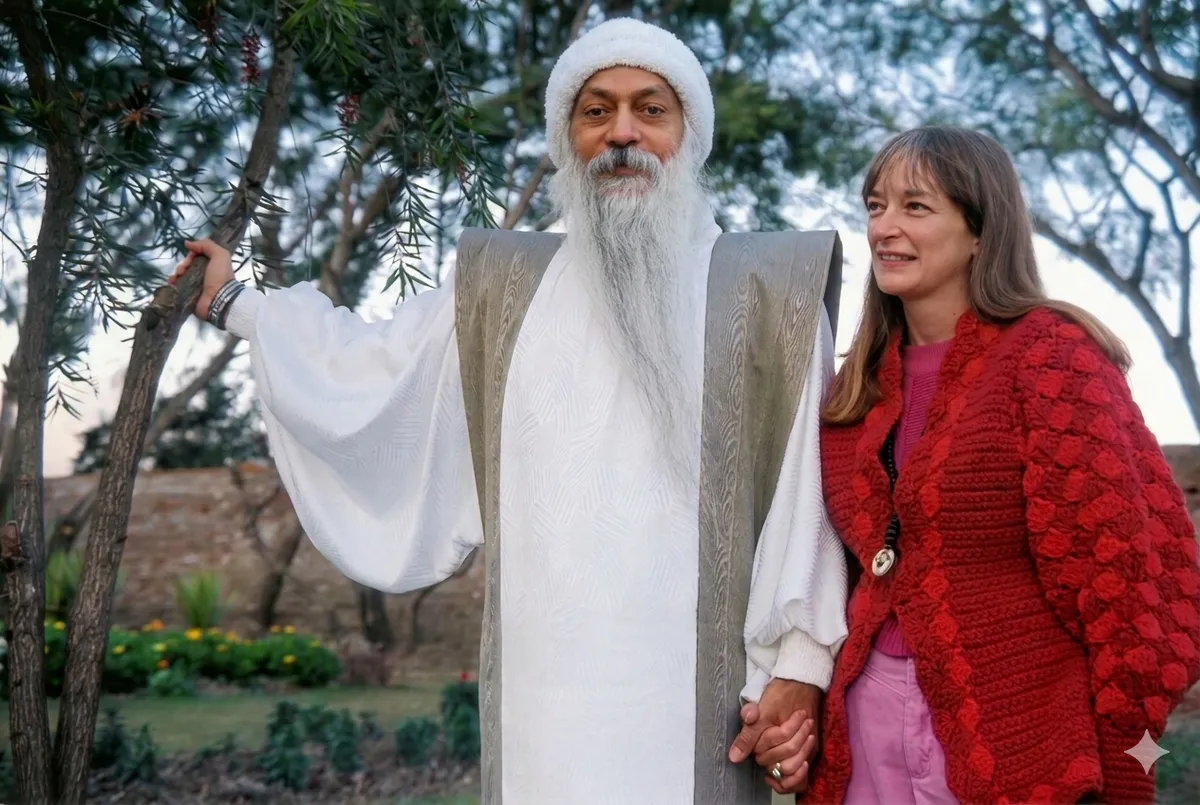
You can try a different path until you completely become one with the goal; after that, there’s no separate ‘you’ to start something new.
From the Discourses
Passages where Osho speaks to this question — each links to the complete discourse.
A friend has asked: Osho, Sri Ramakrishna Paramhansa walked many different paths and affirmed one destination and one truth. But once he had become accomplished in a practice, how did he start another practice again from A, B, C? After attaining knowledge, did he become ignorant again and then begin anew on a fresh path?
This needs a little understanding. After the ultimate knowing, no one can return. There is no way back—because the destination and the traveler have become one. When the destination and the traveler are one, who would return, and how? But before the ultimate knowing—just before arriving at the destination—one last step remains. We call that knowing. We call it the ultimate knowing when the destination and the traveler dissolve into one. The river has fallen into the ocean; now it cannot return. But a river that has reached the shore and is poised there can still fall into the ocean—or it can turn back. That is the moment of knowing: the seeker has arrived at the very door of fulfillment. From there the whole spread of the ocean is visible. And yet a small distance remains. The seeker has not yet become the siddha. He has come very close—almost equal…
Osho, in yesterday’s talk you said that a seeker should first be concerned with becoming a vessel, and should not go about begging from place to place. But the very meaning of a seeker is that he has obstacles in practice. He doesn’t know how to become a vessel, how to prepare. So if he does not go asking, what should he do? How difficult it is to meet the right guide!
But searching and begging are two different things. In fact, the one who does not want to search is the one who begs. Searching and begging are not the same; they are opposites. He who wants to avoid searching begs; a seeker never begs. And the processes of searching and begging are entirely different. In begging you have to keep your attention on the other—the one who will give. In searching you have to keep your attention on yourself—the one who is to receive. It is true that there are obstacles on the path of the seeker. But if we understand rightly, saying there are obstacles on the path of the seeker means the obstacles are within the seeker; the path too is within. And to understand one’s obstacles is not very difficult. So we will have to speak a little more extensively on what the obstacles are and how…
Osho, you are in the sun, you are in the moon; all around it is only you, only you. Without knowing and without asking, I found such a source of bliss that I drowned in it. But you say that even this has to be transcended. Why would anyone deliberately lose such bliss? Nirupama has asked:
It’s true: when one finds bliss, who would agree to lose it! Understand, though. There is a pleasure the world promises—but it never arrives. Hope is spun that happiness will come; what comes is sorrow. At the door it says “Happiness”; once inside, you meet suffering. The world’s pleasure is false. The bliss of the Divine is true. Between the two stands the Master. The Master is the doorway—the point from which you enter the Divine from the side of the world. The Master is like a traveler, weary under the sun, who rests in the shade of a tree—like sitting down in the cool shade. But this is a halt, not the destination. Joy will come—great joy. You had not known joy in the world; therefore, in the Master’s presence, in love for the Master, through the Master’s grace, you will taste much joy. And since you have known…
Osho, Buddha has said that those steadfast ones who practice meditation continuously attain the unsurpassable ease and security called nirvana. Are there kinds of nirvana?
It is said of the Zen master Rinzai that he had eighteen hundred satori experiences before samadhi. Eighteen hundred is only symbolic; they could be eighteen thousand. However many glimpses there may be, a glimpse is only a message: “I am coming closer, closer”—but I have not yet arrived. The goal begins to be seen, and then it is lost again, because the moods of the mind keep changing. On some days meditation settles easily—the mind is buoyant, quiet, blissful. On other days it does not settle—there is a miss, and a great distance arises. So there is often a coming near and a moving far. But once the glimpses begin—once the taste comes—you cannot be led astray. One thing is now certain: what you are seeking is. It is not imagination. Whatever the births it may take, it is. Faith arises. And as soon as faith arises, satori slowly…
Osho, if an extrovert, through practice, keeps turning inward and becomes introverted, should he change his path later in life?
Now this is difficult. There is a Socrates who draws certainty from the atheist and from the theist. And there is this friend—the anti-Socrates—who draws anxiety from Buddha and Mahavira, and also from Bertrand Russell. He draws anxiety from both opposites. What does this mean? It means we draw out only what we can draw out. Yet we think my anxiety is because of Bertrand Russell, or because of Mahavira. The truth is: I am anxious, I am uncertain. I will extract uncertainty from Mahavira, and I will extract uncertainty from Russell. Arjuna says, “Tell me something by which I may go beyond all uncertainty and become steady.” Arjuna’s demand is right; but he is not clear about the cause. This is our state too. We go to temple, to mosque, to a guru or a saint—to find certainty, to become definite. Nowhere will it become definite. With an uncertain…