
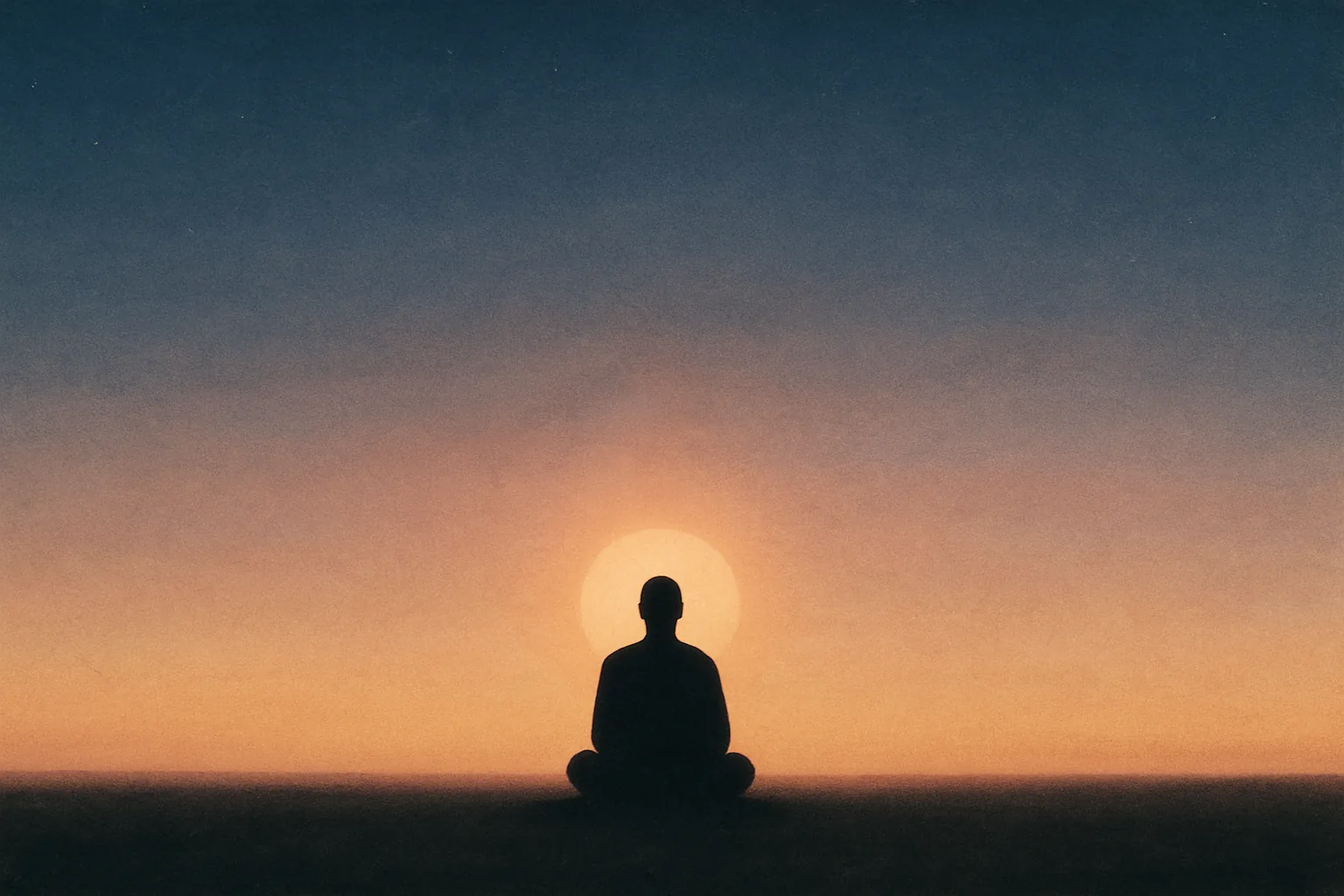
The Meditation Intensive is a 5‑day immersion designed to let meditation infuse every hour of your day—softly, powerfully, and without distraction. Held in a relaxed, supportive container of shared silence and digital detox, the retreat interweaves Osho’s Active and Passive methods so energy can move, release, and settle into clarity. Participants are guided through practices such as Dynamic Meditation, Kundalini Meditation, Vipassana, Zazen, Anapanasati, Tathata, and more.
Across morning, afternoon, and night meditations, the emphasis remains constant: witnessing, silence, awareness. Rather than separating meditation from life, you learn to let it pervade walking, working, eating, resting—until awareness becomes a natural flavor of being. The Intensive invites you to meet each moment as it is, letting activity ripen into stillness and stillness illuminate activity.
Come ready to be wholehearted in movement and utterly simple in rest. By alternating deep engagement and deep letting go, you discover a quiet center that is present whether eyes are closed in zazen or open to the world. The Intensive is not an escape from life; it is a way of returning to it with presence.
Phase Instructions
Entering the Container: Silence and Digital Detox
From the first hour, remain in noble silence. Speak only when practically necessary and keep interactions minimal and gentle. Switch off phones and devices; avoid media and messaging for the full 5 days. Let this quiet boundary protect your attention so sensitivity and awareness can deepen without interruption.
Morning Sessions: Active Meditation
Arrive on time with an empty or light stomach. Follow the facilitator’s guidance for the selected Active Meditation (e.g., Dynamic or Kundalini). Give your total energy—breath, sound, movement, expression—without holding back. When the meditation shifts into stillness, become unmoving and inwardly alert; simply witness breath, heartbeat, and the after‑glow of energy. Remain in silence afterward and allow the body to settle.
Midday Sessions: Passive Sitting (Vipassana, Zazen, Anapanasati)
Sit with a stable, upright spine; hands resting easily; eyes gently closed or half‑open. Let the breath be natural. Place attention on the breath and the subtle sensations of sitting. When thoughts arise, notice them and return to the simple fact of breathing and being seated. Do not analyze or suppress—just witness. Let stillness gather of its own accord.
Afternoon Unwinding: Active/Restorative Practice
Engage in the afternoon’s chosen Active Meditation or gentle movement period (often restorative compared to the morning). Allow the body to unwind; let accumulated tensions shake loose and release. When the guidance invites, relax into quiet. Feel the contrast: movement flowering into silence, silence returning you to effortless awareness.
Tathata (Suchness): Acceptance Practice Woven Through the Day
Several times daily, pause and meet experience exactly as it is. Notice sensations, moods, and thoughts without improving or resisting them. Let the whole field—sounds, breath, aliveness—be present at once. Rest as the witness of suchness: nothing added, nothing taken away. This openness allows activity and stillness to harmonize.
Night Meditations: Deepening Silence
As darkness returns, gather for night meditation. Keep lighting minimal and movements unhurried. Sit or lie down comfortably. Feel the day empty itself—sounds, echoes of activity, subtle currents in the body. Let everything pass through awareness without commentary. Leave the space quietly and carry the hush into sleep.
Meditation in Activity: Walking, Eating, Doing
Between sessions, continue meditating while you move through daily tasks. Walk with awareness of the soles of the feet and the rhythm of breath. Eat slowly, tasting each bite in silence. While working or attending to chores, keep a thread of attention in the body and breath. Let your actions be precise, simple, and present.
Completion and Integration
On the final day, gently reintroduce speech and, only when needed, your devices. Keep short oases of silence as you pack and depart. In the days that follow, spread meditation through life: pause to breathe, witness before reacting, walk and sit in awareness. Let the flavor of the Intensive continue—silence within movement, movement within silence.
Core Benefits
- Infusing meditation into every hour of your day
- Releasing and settling energy into clarity
- Developing a natural state of awareness
- Finding a quiet center present in daily activities
- Returning to life with presence and stillness
What Osho Said About This Technique
SECOND STAGE Now we have to enter the second stage. Continue deep breathing, and let go of the body. Leave the body to do what it wishes to do. Let go of it. Let it take whatever asanas or postures it wants to take; let it form whatever mudras or gestures it likes. Leave it free to move and shake and whirl as it likes. If it wants to weep let it. Let go of the body completely. Continue deep breathing and let go of the body. Let the body fall down if it wants to fall down. And let it rise again if it wants to rise. And if it wants to dance allow it wholly. Let go of the body absolutely. Let it do whatever it wants to do. Leave it free. Don't impede it even in the least. Cooperate with the body. If it spins, let it.
What is dynamic meditation?
The first thing to be understood about Dynamic Meditation is that it is a method of creating a situation through tension in which meditation can happen. If your total being is completely tense, the only possibility that remains is relaxation. Ordinarily one cannot go directly into relaxation, but if your whole being is at a peak of total tension then the second step comes automatically, spontaneously: silence is created. The first three stages of the technique are done in order to achieve this climax of tension throughout all the layers of your being. The first layer is the physical body. Beyond that is the prana sharir, the vital body: this is your second body, the etheric body. Beyond it is the third body, the astral body. Your vital body takes in breath as its food. If the normal intake of oxygen is changed, the vital body is bound to change.…
Blessed are those who fill with gratitude toward life—for whatever is highest, beautiful, auspicious in life—all becomes available to them. After this we shall sit for the morning meditation. So understand two or four things. Then we will sit separately for meditation. For me, meditation too is the acceptance of life, an embrace. These winds—let them come, let them pass. Sounds—let them arise, let them dissolve. The roar of the ocean will continue. Some bird will call. Accept all this as the blessing of Paramatma. Receive it. Until now, what has been taught in the name of meditation is resistance. Until now it has been taught: let no sound be heard; if an ant bites—let it not be known. Become like a stone; know nothing. These are processes of dying. When a man dies, then even if an ant bites, it is not known.
मेरे लिए तो ध्यान भी जीवन की स्वीकृति है, अंगीकार है। ये हवाएं हैं, ये आएंगी, ये गुजर जाएंगी। आवाजें हैं, पैदा होंगी, विलीन हो जाएंगी। सागर का गर्जन चलता रहेगा। कोई पक्षी बोलेगा। इस सबको परमात्मा का आशीर्वाद समझ कर अंगीकार कर लेना है। इसे स्वीकार कर लेना है। अब तक ध्यान के नाम से जो भी सिखाया गया है, वह रेसिस्टेंस है, वह प्रतिरोध है। अब तक यही सिखाया गया है कि कोई आवाज न सुनाई पड़े, चींटी काटे तो पता न चले। पत्थर की तरह हो जाना है, कुछ पता न चले। ये मर जाने की प्रक्रियाएं हैं। आदमी मर जाता है, तब चींटी भी काटती है तो पता नहीं चलता। हवा भी चलती है तो पता नहीं चलता। बच्चा भी रोता है तो पता नहीं चलता।
Osho, for many years I have been making continuous efforts—nothing happened. I did this, I did that—nothing happened. But yesterday, when I simply sat holding awareness, I was astonished: What was that? What happened was beyond my imagination.
It will be; it is bound to be beyond imagination. You don’t even know—what will happen is utterly unknown and unknowable. You cannot make any expectation of it; you have no idea what it will be. What will happen in meditation cannot be said in advance, nor can it be imagined. What happens is unprecedented. It has never been known before. It is totally unknown, utterly unknowable. It will happen only when this entire known mind of yours becomes utterly quiet. And it will become quiet. Awareness stills the mind. When the mind becomes still, meditation descends. Meditation is not something you do; it descends. It surrounds you. Meditation is a state outside the mind-field. Meditation is the very nature of the soul. As soon as the mind-field is quiet, meditation begins to spread. So, very quietly, very effortlessly, without any tension, in silence; everyone sit with a little space…
ओशो, बहुत वर्षों के बाद निरंतर उपाय किए हैं, कुछ नहीं हुआ। यह किया है, वह किया है, कुछ नहीं हुआ। लेकिन कल जब मैं सिर्फ बोध को साध कर बैठा, तो हैरान हो गया कि यह क्या हुआ? यह मेरी कल्पना के बाहर था जो हुआ।
… उसका आपको कोई पता ही नहीं कि क्या होगा। ध्यान में क्या होगा, इसका कुछ नहीं कह सकते आप। न कोई कल्पना कर सकते हैं। जो होगा वह अपूर्व है। वह कभी न जाना हुआ है। वह बिलकुल अननोन है, वह बिलकुल अज्ञात है। वह होगा तभी जब आपका यह सारा ज्ञात मन एकदम शांत हो जाए। और यह शांत हो जाएगा। बोध से मन शांत होता है। शांत होने से ध्यान का अवतरण होता है। ध्यान कोई आप नहीं करते, ध्यान उतरता है। ध्यान आपको घेर लेता है। ध्यान आपके चित्त के बाहर की स्थिति है। ध्यान आत्मा का स्वभाव है। जैसे ही चित्त शांत होता है ध्यान फैलने लगता है।
Now try to go deep into meditation. Sannyas needs nothing, nothing external; its need is just internal, and that is that you should be deeply involved in meditation and all your energy should flow into it. It is only a matter of effort for a few days in the beginning. Once the rock is broken and the stream starts flowing, there is no difficulty. Once the stream starts flowing, then the stream itself will carry you to the ocean. Effort is needed only in the beginning. If you do it for the first four to six months with determination, without wavering and without relaxing your efforts, then meditation will happen by itself; you will not be required to do it. Try all the meditation techniques here, and then regularly continue one of them that suits you. [The new sannyasin says: I do Vipassana.] Vipassana is good. Concentrate on Vipassana....
Common Questions
It is a 5-day immersion with a mix of Osho's Active and Passive methods.
Yes, the retreat is designed to be accessible, with guidance through various practices for participants of all levels.
No, the retreat includes a digital detox to support shared silence and focus.
Meditation is integrated into walking, working, eating, and resting, allowing awareness to naturally pervade life.
No, the Intensive is intended for returning to life with a deeper presence and awareness.