
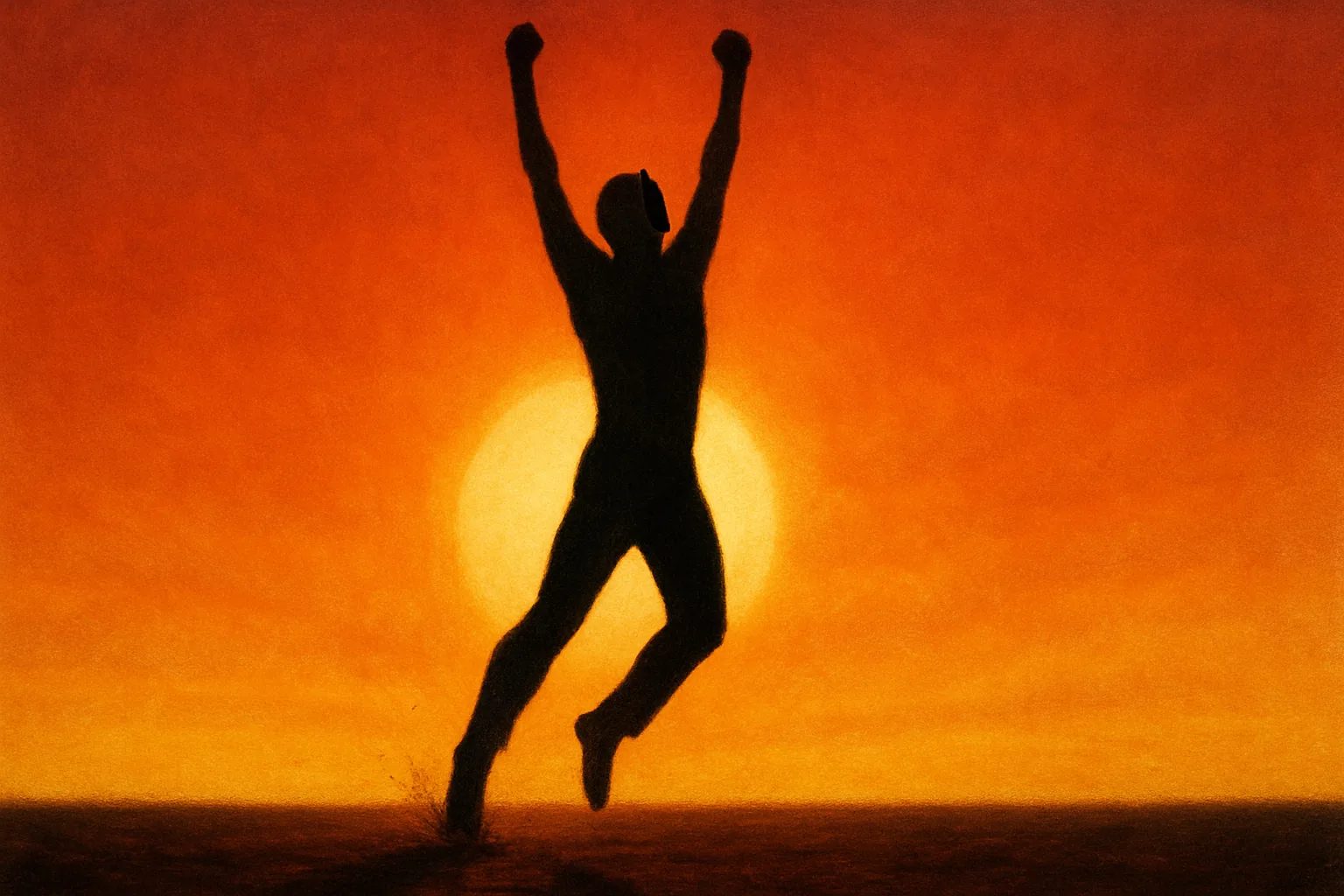
Dynamic Meditation is Osho’s powerful morning method for breaking the inertia of sleep and waking the whole being to alertness. Designed for the modern mind, it channels suppressed energy through vigorous movement and sound, and then crystallizes that energy in utter stillness. Though it can be done alone, practicing in a group amplifies the field; yet the journey itself is profoundly individual. Keep your eyes closed throughout—ideally with a blindfold—so your attention turns inward and witnessing remains continuous.
The meditation unfolds in five precise stages, moving from chaotic breath to catharsis, from the hammering mantra of “HOO” to a sudden stop and frozen awareness, and finally into celebration. In every phase you act totally while remaining a witness—as if everything is happening to the body, and you are simply watching from the center. When all movement ceases in the fourth stage, this alertness reaches its peak.
For best results, practice on an empty stomach and wear loose, comfortable clothing. If your space requires silence, a complete quiet version is possible. As energy reorganizes, bodily sensations may arise—itching, heaviness, numbness, even pain. Do not interfere; give pure attention. Witnessing is the great solvent: observed fully, the same energy that appears as discomfort can transform into ease and clarity.
Phase Instructions
First Stage: Chaotic Breathing (10 minutes)
Keep your eyes closed throughout, preferably with a blindfold. Breathe chaotically through the nose, focusing entirely on the exhalation—the body will take care of the inhalation. Go as fast and as deeply as you possibly can, and then a little more, letting natural body movements help build intensity. Feel the energy mounting, but do not release it yet. All the while, remain a witness: the breathing happens in the body; you simply watch, alert and centered.
Second Stage: Catharsis (10 minutes)
Explode—let everything that needs to be thrown out, be thrown out. Scream, shout, cry, jump, shake, dance, sing, laugh; keep the whole body moving and hold nothing back. A little acting can help you break through at the start. Do not let the mind interfere; be total. Stay aware inside the storm: you are the watcher of the body’s release. Silent alternative if noise is not possible: allow the entire catharsis to express only through vigorous bodily movements without making sound.
Third Stage: Mantra and Jumping (10 minutes)
Raise your arms and jump up and down, shouting the mantra “HOO! HOO! HOO!” from as deep in the belly as possible. Each time you land on the flats of your feet, let the sound strike like a hammer into the sex center. Give everything you have; exhaust yourself totally, yet keep witnessing. Silent alternative: continue jumping with arms raised while hammering the sound of “HOO” silently inside.
Fourth Stage: Stop—Absolute Stillness (15 minutes)
Stop! Freeze immediately wherever you are—do not adjust or arrange the body in any way. Remain utterly still and silent. Even a cough or the slightest movement dissipates the built energy. Simply witness whatever arises: breath, heartbeat, surges of energy, itchiness, numbness, or pain. Do not scratch, do not open the eyes, do nothing—only watch with total attention and let everything settle by itself.
Fifth Stage: Celebration (15 minutes)
With music, dance and celebrate—rejoice and express gratitude to the whole. Let the body move freely in joy while the inner witness remains clear. Allow this freshness and aliveness to accompany you through the day. Silent alternative: move into a fully expressive but soundless dance, letting gratitude flow through the body without vocalization.
Core Benefits
- Breaks the inertia of sleep and awakens the whole being.
- Channels suppressed energy through movement and sound.
- Crystallizes energy in stillness.
- Amplified group energy when practiced together.
- Facilitates witnessing and inner alertness.
What Osho Said About This Technique
What is dynamic meditation?
The first thing to be understood about Dynamic Meditation is that it is a method of creating a situation through tension in which meditation can happen. If your total being is completely tense, the only possibility that remains is relaxation. Ordinarily one cannot go directly into relaxation, but if your whole being is at a peak of total tension then the second step comes automatically, spontaneously: silence is created. The first three stages of the technique are done in order to achieve this climax of tension throughout all the layers of your being. The first layer is the physical body. Beyond that is the prana sharir, the vital body: this is your second body, the etheric body. Beyond it is the third body, the astral body. Your vital body takes in breath as its food. If the normal intake of oxygen is changed, the vital body is bound to change.…
Question: in hatha yoga there is an exercise in which one tenses every muscle in the body and then releases the tension and becomes relaxed. Is this similar to what happens in dynamic meditation?
You are not aware of the spiritual because you have so much tension in the body, so much tension in the mind. But if you are not tense in the physical and mental realms, you will automatically know the bliss of the spiritual, the relaxation of the spiritual. It comes to you; it has been waiting for you. Your whole attention is so absorbed by the physical and the mental that there is no attention left to divert to the spiritual. Only if the body and the mind are not tense can you delve into the spiritual, can you know the bliss of it. The spiritual is never tense; it cannot be. There is no spiritual tension, only bodily tension, only mental tension. Bodily tension has been created by those who, in the name of religion, have been preaching anti-body attitudes. In the West, Christianity has been emphatically antagonistic toward…
Question: dynamic meditation is very active, very strenuous.can one not go into meditation just by sitting silently?
You can go into meditation just by sitting, but then be just sitting; do not do anything else. If you can be just sitting, it becomes meditation. Be completely in the sitting; nonmovement should be your only movement. In fact, the word zen comes from the word zazen, which means, just sitting, doing nothing. If you can just sit, doing nothing with your body and nothing with your mind, it becomes meditation; but it is difficult. You can sit very easily when you are doing something else but the moment you are just sitting and doing nothing, it becomes a problem. Every fiber of the body begins to move inside; every vein, every muscle, begins to move. You will begin to feel a subtle trembling; you will be aware of many points in the body of which you have never been aware before. And the more you try to just…
Common questions
Practical questions about the method. The answers are written by Osho Live from his instructions — for his own words, see “What Osho said about this technique” above.
1Do I need a quiet space to practice Dynamic Meditation?
If your space requires silence, a complete quiet version is possible.
2What should I wear during the practice?
Wear loose, comfortable clothing for best results.
3Is it better to practice alone or in a group?
Though it can be done alone, practicing in a group amplifies the field.
4Should I eat before practicing this meditation?
For best results, practice on an empty stomach.
5What if I experience bodily sensations like itching or pain?
Do not interfere; give pure attention. Witnessing can transform discomfort into ease and clarity.