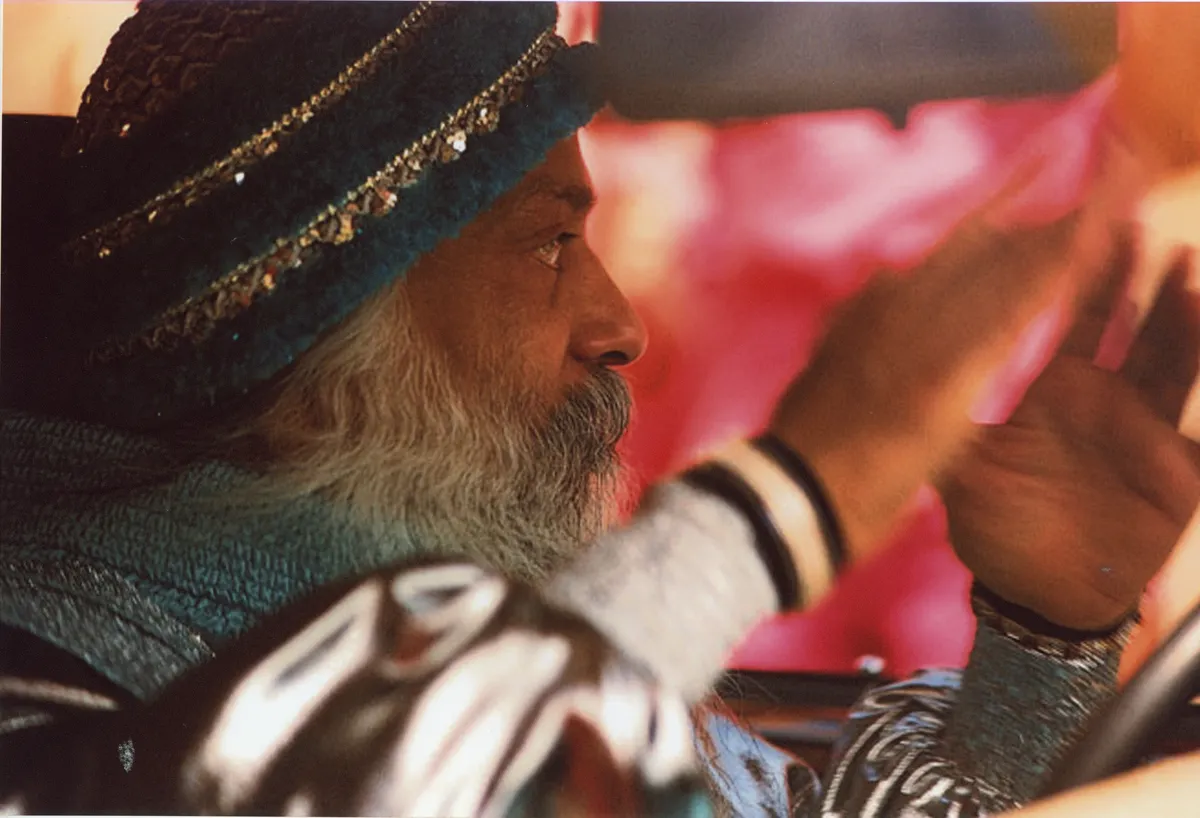
Explore Osho’s teachings across key topics such as meditation, love, ego, and awareness. Each topic contains structured questions, quotes, and insights derived from discourses.
In the spirit of Osho's teachings, parables serve as a mystical dance of words that confound rationality, inviting listeners to fill in the gaps and embark on a journey of meditation and imagination, ultimately transcending the confines of the mind toward profound inner awakening.
Abhipsa emerges as a profound urgency, akin to gasping for breath when submerged, where all desires dissolve into a singular, pure longing for Truth, revealing the divine essence in its untainted intensity, much like Osho’s vision of authentic existence.
Rasa transcends method, embodying the essence of supreme bliss, love, and inner celebration; it weaves through all paths, revealing that even in Ashtavakra’s austere journey, the realization culminates in an inner festival, where the divine essence of raso vai sah unfolds.
Drowning in the unfathomable invites a surrender to the vast, unknowable reality that transcends mind and ego, dissolving the self rather than inflating pride, revealing that true theism lies in embracing the ocean beyond our limited understanding.
In the intricate dance of masochism and sadism, one finds the masochist pleading for pain—Beat me, whip me—while the sadist, reveling in control, denies even that solace, revealing a profound interplay of suffering and dominion, echoing Osho's insights into the paradox of desire.
In the essence of Osho's teachings, a true salutation unfolds as an inward bow, where the heart's silent reverence transcends mere gestures, revealing that the most profound greeting lies in a loving presence that resonates within.
Embracing the role of an instrument reveals the ego's illusions, much like Rama's self-discovery in Ramlila; as we act with intention, our doing transforms into being, allowing the Divine to flow through us and awaken our true essence.
Temptation emerges not from God, who embodies pure goodness and beckons us to surrender, but from the ego's resistance to that divine invitation; in choosing surrender like Jesus, we dissolve the 'I' that clings to its own 'no,' allowing goodness to flow freely through us.
Osho invites us to see sexual freedom not as a mere slogan but as a deeply personal journey, where trust lies in cultivating awareness and meditation, allowing us to respond authentically to each moment rather than adhering to rigid ideologies.
Osho illuminates that true spiritual growth emerges from fulfilling our genuine needs, particularly the soul's yearning for truth and connection with the divine, while recognizing that mind-made desires—rooted in ego and illusion—only distract us from this deeper journey.
In the stillness of meditation, perceiving a satanic image reveals the mind's tendency to project its own shadowy aspects onto the canvas of awareness; every master and object merely reflects our inner landscape, inviting us to embrace and transcend these traits rather than cast blame outward.
When energy turns inward, the clamor of the outside world fades, revealing a profound stillness; in this fertile emptiness, joy blossoms and centeredness transforms reality into a dreamlike tapestry, inviting us to surrender and let the experience unfold.
Heartbreak, in its profound shattering of our dreamed selves, reveals the futility of separateness; it invites a transformative awakening where sorrow dissolves into bliss, urging us to embrace existence and flow harmoniously with the universe's unfolding.
In the rush dictated by societal norms, where a singular life amplifies desires and the imperative of action, we become trapped in a cycle of anxiety; yet, embracing the timeless wisdom of multiple lives, as Osho suggests, invites us to transcend this conditioning and find peace in simply being.
True closeness transcends physical presence and rituals, blossoming instead from the heart's resonance, where love binds souls; even miles apart, we remain intimately connected, inviting our inner harmony to manifest in the world around us.
In the stillness where the doer dissolves and the ego recedes, one discovers that true action emerges effortlessly from surrender, transforming the self into a vessel for the Divine, where rightness flows naturally from emptiness.
Ashtavakra's eight crookednesses reveal that the essence of truth transcends the rigid paths of scripture and sadhana, illustrating that even in our twisted forms, the untouched Self remains, echoing Osho's insight that our nature is inherently free and whole, rendering the quest for how unnecessary.
Martyrdom, often mistaken for holiness, reveals itself as a veiled form of suicide, where the wounded ego seeks to manipulate others in a destructive dance; true contentment transcends the duality of life and death, dissolving the need for sacrifice.
In the spirit of Osho’s insights, the drunken reveler embodies a joyous liberation that unsettles our attachment to societal norms, revealing our deep-seated insecurities; to embrace their ecstasy, we must relinquish control and dare to stand apart from the crowd.
Remorse, Osho might suggest, drains the vitality of the present; what’s past is merely a stepping stone to wisdom, urging us to embrace our missteps as essential to growth, harvest their lessons, and move forward with renewed clarity and purpose.
In the spirit of Osho's wisdom, the significance of a birthday, be it February 29th or any other day, lies not in the arbitrary markings of time, but in the profound celebration of our existence and the awareness we cultivate within it.
In the face of an inevitable global crisis, Osho's vision reminds us that true transformation arises not from salvaging failing systems, but through nurturing awakened individuals who embrace awareness and interdependence, thereby cultivating a new consciousness for humanity.
Hopelessness, in its deepening, invites you to shed the illusions of hope, revealing the profound truth of the present; embrace this journey with patience and humility, for in the surrender lies the essence of realization.
Desiring to gain often entangles us in ego and burdens, while true receiving unfolds through the art of letting go—shedding identities, pride, and even spiritual status—allowing the inalienable core of our being to emerge and reveal what truly matters.
Don't have an account? Sign up