
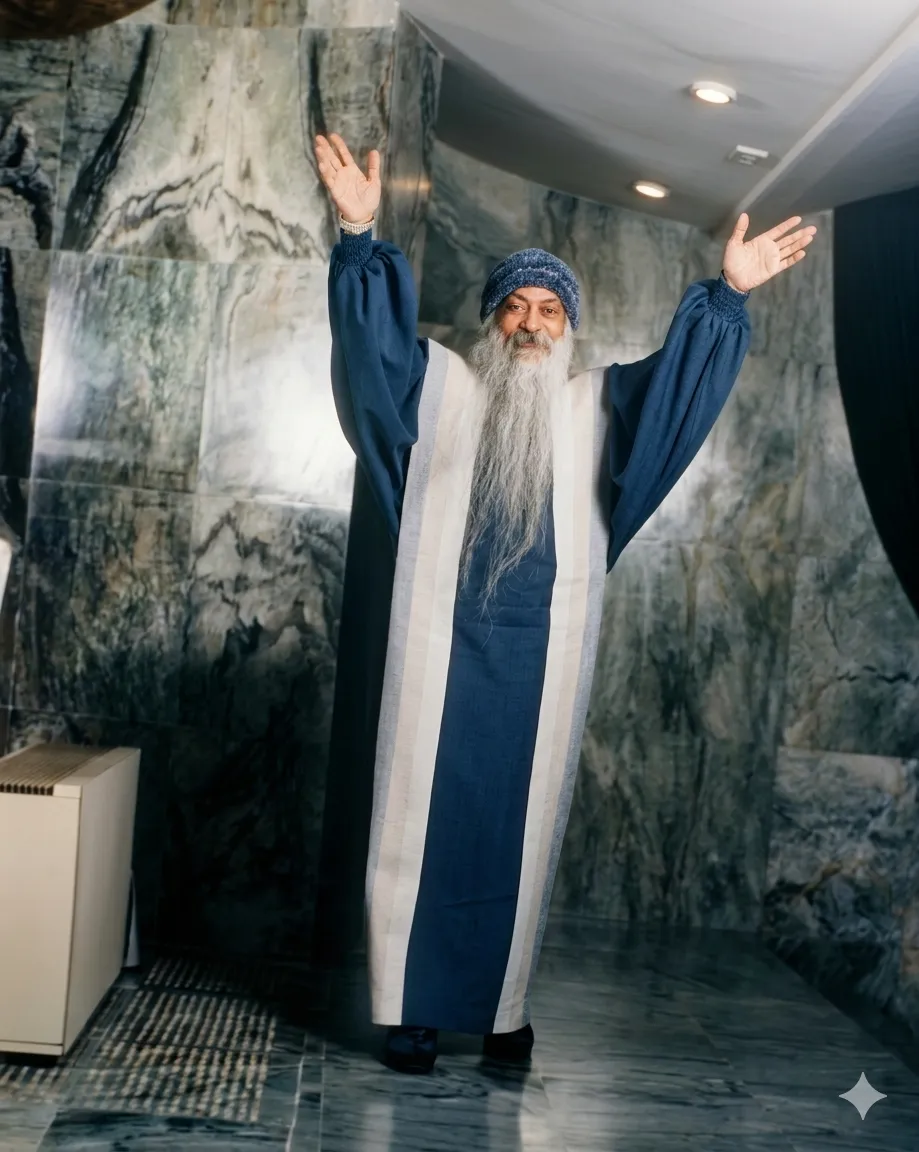
Zen is not about transmitting doctrines, but about removing your masks so that existence can sing through you.
Zen is the purest form of meditation, a journey inward where you drop all that you are not, until you arrive at the silent center of your being.
To see the face is to recognize your original essence, while to hear the words is to remain trapped in borrowed concepts; true understanding transcends language and is found in the silent witness within.
The absence of a central god in communism has birthed an innocent mind, more receptive to Zen's non-theistic meditation, yet this innocence must be safeguarded from organized religions to cultivate a new awareness of harmony between matter and spirit.
Zen sees sex as a natural act, free from obsession; it invites you to drop ideologies and respond to your body with innocence and spontaneity.
Fullness and emptiness are not opposites; they are two sides of the same coin, and in the embrace of nothingness, you dissolve into the vastness of existence.
Zen is not against scriptures; it is against the mind that clings to secondhand knowledge, for true understanding arises only when you become the truth yourself.
Zen is the dance of silence and laughter, where the self dissolves into the oneness of existence, awakening to the joy of total participation.
You cannot seize Zen with bare hands, for it is not something to be conquered; it is the realization of your own nature, where the observer and the observed dissolve into oneness.
Different paths may lead to the same summit of self-realization; the Upanishads invite you into a loving communion, while Zen beckons you to awaken in solitude.
Enlightenment is no longer a distant goal achieved through years of hardship; it is a playful awakening available to us in the simplicity of our everyday lives.
Recognize the false as merely a shadow; in that clear awareness, it vanishes, leaving only the truth behind.
The man of Zen takes his tea as a sacred meditation, where each sip becomes a moment of total presence, leaving behind the self and embracing the silence.
Zen is the art of dropping the mind's conditioning and experiencing the profound silence of your own being in the here-now. In this surrender, the separate self dissolves, revealing the ocean of equanimity and naturalness that you truly are.
Zen is the art of being here and now, without any path or progress; it invites you to relax into the immediacy of your own existence.
Zen is not a philosophy to be understood, but a profound journey of death and resurrection, where one transcends the mind and is reborn in pure awareness.
Bodhidharma's journey from the West to the East is a reminder that true Zen is not about doctrines, but about the art of witnessing and recognizing your own buddha-nature in every moment.
Sex, when lived consciously, transforms into meditation, love, and creativity; it is not about repression or glamorization, but about total awareness that allows energy to rise.
Special treatment is not privilege; it is the vigilant, loving attention that nurtures the imminent flowering of a soul on the brink of awakening.
A true master disrupts the ordinary with humor and shock, awakening us from our clinging to authority and inviting us to embrace the spontaneity of life.
Western intellectuals are drawn to Zen not for new beliefs, but for a direct experience of their own nothingness, where freedom from the self leads to a celebration of existence and a living revolution beyond dogma.
In the stillness of zazen, when you abandon all doing and simply sit, the ultimate truth reveals itself in the silence of your no-mind.
Surrender in Zen is not about yielding to an authority, but about relaxing into the flow of life, trusting it as a skilled swimmer trusts the river. It is an attitude of acceptance, not a belief, where you simply live through direct trust.
The moon’s roundness and sharpness remind us that wholeness exists even in partial appearances; your Buddha-nature is complete and independent, realized through the silent witnessing of life’s reflections.