
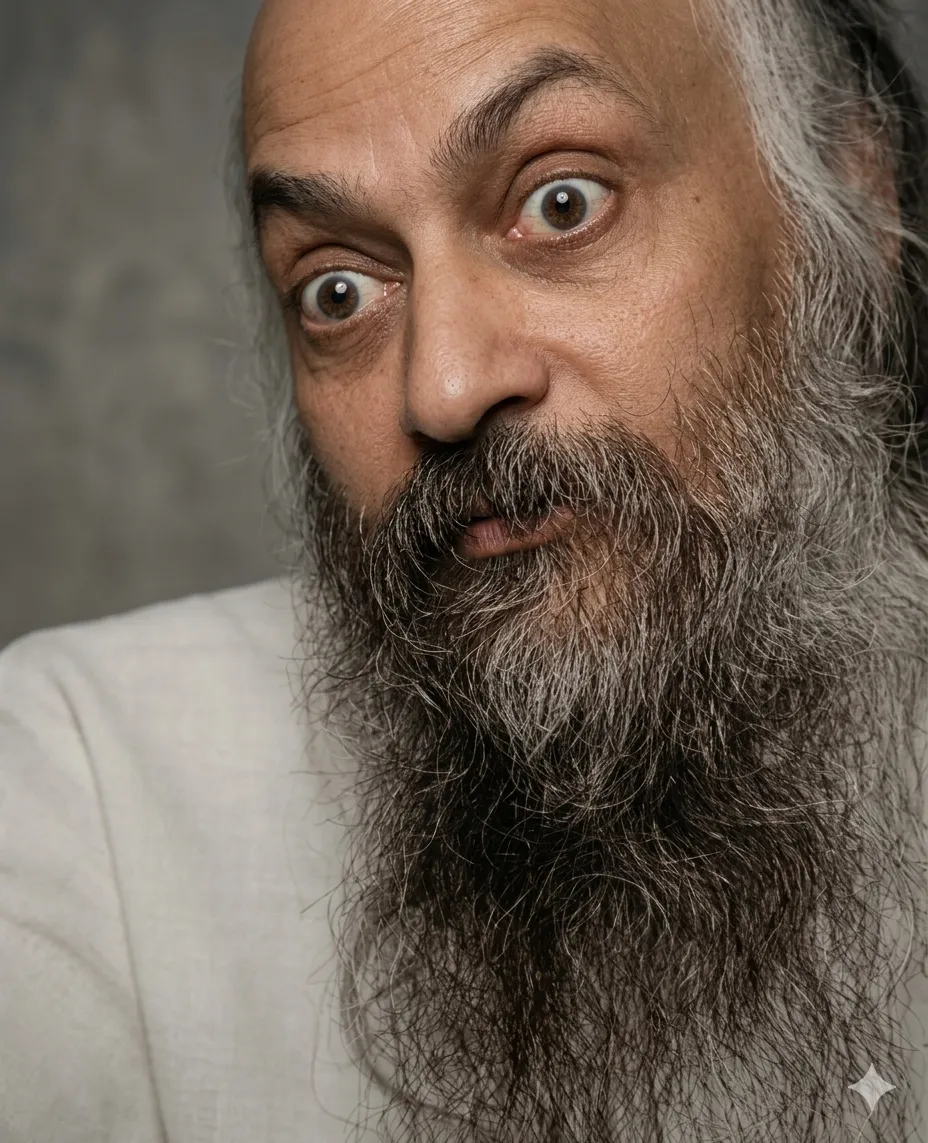
People argue about Osho because he says real religion is your own fresh experience, not old books or gurus, so he won’t support traditions.
From the Discourses
Passages where Osho speaks to this question — each links to the complete discourse.
About that controversy: are you in some way different from others? Why did they get so upset? We would be grateful if you could tell us something about this.
Controversy is perfectly natural. It is not their fault; the fault is mine. Because whatever I am saying goes against many things. In this I am opposed to tradition. And I maintain that religion has no tradition; it cannot have one. The experience of religion is always new; it can never be old. Whenever it comes to someone, it is fresh and new. And we cannot build a tradition upon the experience of religion; the very act of making it into a tradition turns it stale and borrowed. In fact, the moment the experience of religion is given words—written or spoken—it dies. A living religion has no tradition; only dead religions have tradition. All religions are dead religions. And yet religion can never die. Religion is a living experience. Whatever happened to Nanak is alive, but what a Sikh clings to is dead—the words Nanak spoke. The experience that happened…
प्रश्न: तो उस कंट्रोवर्सी की वजह से जो बिखरा या पूछा जाए, क्या आपका दूसरे लोगों से फर्क है? क्यों वे इतने अपसेट हुए हैं? तो इसके बारे में अगर आप कुछ बताएं हमें तो मेहरबानी होगी।
कंट्रोवर्सी बिलकुल स्वाभाविक है। उसमें उनका कसूर नहीं, कसूर मेरा है। क्योंकि जो भी मैं कह रहा हूं, वह बहुत सी चीजों के विपरीत है। इसमें ट्रेडीशन, परंपरा का विरोधी है। और मेरा मानना है कि धर्म की कोई परंपरा नहीं होती। हो नहीं सकती। धर्म की जो अनुभूति है, वह सदा नई है। वह कभी पुरानी हो ही नहीं सकती। और जब भी किसी व्यक्ति को मिलती है तो वह सदा ताजी और नई ही होती है। और धर्म की अनुभूति पर हम कोई ट्रेडीशन भी नहीं बना सकते हैं। बनाते से ही बासी और उधार हो जाते हैं। असल में धर्म का जो अनुभव है उसे शब्द देते से ही, लिखते से, बोलते ही मर जाता है। तो लिविंग रिलीजन की कोई ट्रेडीशन नहीं होती। सिर्फ डेड रिलीजन की ट्रेडीशन होती है। सभी धर्म मरे हुए धर्म हैं। और धर्म कभी मर नहीं सकता। तो धर्म तो जीवंत अनुभव है। तो नानक को एक अनुभव होगा, वह अनुभव तो जीवित है। लेकिन सिक्ख जिसको पकड़े बैठा है, वह मृत है। वह नानक का कहा हुआ शब्द उसके पास है। बुद्ध को जो अनुभव हुआ, वह तो जीवित है। …
Osho! Shri Girija Kumar Mathur, who has given poetry a new mode and a new dimension, is a resident of my village, Ashoknagar. He still lives there. He is interested in you—has read some books and also shows interest in your tape discourses. He says, “I do have the eagerness to meet him once, but I get nervous because his personality is controversial.” If you find it proper, kindly say something.
These are not their questions. But to show others, “Our questions are spiritual. We are not ordinary folk—we are seekers. Anger, lust—these we left behind long ago. Wealth, food—such cravings don’t beset us. In us devotion to God has arisen; we want to taste liberation.” Without annihilation there is no savor of abiding. Until you efface the ego, you will not find God. If you want God, one thing must be erased—you must erase yourself. Until you are annihilated—become a pure zero—you will not know the ecstasy of existence. Such is the paradoxical arithmetic of life: the one ready to vanish finds life; the one who clutches at life finds nothing but repeated death. Truth itself is paradoxical; therefore, how can those who have experienced it be anything but controversial? Their utterances become paradoxical. To speak truth, there is no other way but paradox. And to speak truth, compromises cannot…
पहला प्रश्न: ओशो! कविता को एक नई विधा, एक नया आयाम देने वाले श्री गिरजाकुमार माथुर, मेरे गांव अशोकनगर के निवासी हैं। इन दिनों भी वहीं रहते हैं। आप में उनकी रुचि है। कुछ किताबें भी पढ़ी हैं, टेप-प्रवचन में भी रुचि दिखाते हैं। कहते हैं--एक बार साक्षात्कार की उत्सुकता तो है, परंतु उनका व्यक्तित्व विवादास्पद होने के कारण घबड़ाता हूं। उचित समझें तो कुछ कहने की कृपा करें।
ये प्रश्न ही नहीं हैं उनके। मगर सबको दिखलाने के लिए कि हमारे प्रश्न आध्यात्मिक हैं! हम कोई साधारणजन नहीं हैं, आध्यात्मिक खोजी हैं! क्रोध, कामवासना इत्यादि तो हम कब की पीछे छोड़ चुके! धन, भोजन, इनकी लालसाएं हमें नहीं घेरतीं। हमारे भीतर तो परमात्मा की भक्ति जगी है, मोक्ष का स्वाद लेना है।
Why does so much controversy surround you and your ashram?
Krishna Prem, if it were not so, it would have been really a surprise, it would have been a miracle, it would have been unbelievable. This is the natural course. This is what was happening to Socrates. And what was his mistake? His mistake was that he was trying to tell the truth as it is. His mistake, his only mistake, was that he was not ready to compromise with the stupidities of the crowd. He lived in continuous controversy; he died because of those controversies. Do you think Jesus lived a noncontroversial life? Then why was he crucified? A reward for a noncontroversial life? He lived continuously in controversy; it is bound to be so. So it was with Buddha, so it was with Bodhidharma, so it has always been, and it seems so it is always going to be. Truth creates controversy, because it shocks people, it shatters…
Osho! Basically, you are a herald of religion—of the original, essential religion. You yourself seem to be religion. But the surprising thing is that right now your strongest opposition comes from the religious establishment itself! The recent statements by two Shankaracharyas are fresh examples. Would you kindly shed some light on this?
The death of his father shook Shankaracharya utterly. But the mother, already in grief, would be left alone if Shankara took sannyas. She refused. The story says: Shankara went to bathe in the river, and a crocodile caught his leg. A crowd gathered on the ghat; the mother came running. Shankara said, “The crocodile says it will let go if you allow me to take sannyas.” What could the mother do? With tears she said, “All right, then become a sannyasin—at least live. If you live, even as a sannyasin, I will see you some day.” And the story says the crocodile let go. That is just a story; crocodiles were not that wise then, nor now! If man is not so wise, what of crocodiles! I spoke of Mulla—he did marry. Fourteen-year-old girl, eighty-year-old groom. The next day friends asked, “How was the wedding night?” “Don’t ask—great joy! Only…
पहला प्रश्न: ओशो! बुनियादी रूप से आप धर्म के प्रस्तोता हैं--वह भी मौलिक धर्म के। आप स्वयं धर्म ही मालूम पड़ते हैं। लेकिन आश्चर्य की बात है कि अभी आपका सबसे ज्यादा विरोध धर्म-समाज ही कर रहा है! दो शंकराचार्यों के वक्तव्य उसके ताजा उदाहरण हैं। क्या इस पर कुछ प्रकाश डालने की कृपा करेंगे?
शंकराचार्य को पिता की मृत्यु ने ऐसा झकझोरा...। लेकिन मां तो वैसे ही दुखी थी, शंकराचार्य संन्यास लें तो और दुखी हो जाए, बिलकुल अकेली छूट जाए। उसने कहा, मैं आज्ञा नहीं दूंगी। तो कहानी कहती है: शंकराचार्य नदी पर नहाने गए हैं और एक मगर ने उनका पैर पकड़ लिया। भीड़ इकट्ठी हो गई है घाट पर। मां भी भागी आई। और शंकराचार्य ने कहा कि यह मगर मुझसे कहता है कि अगर तेरी मां तुझे संन्यास ले लेने दे तो मैं तेरा पैर छोड़ दूं। ऐसी हालत में मां भी क्या करे! आंख से आंसू टपकते हुए उसने कहा कि ठीक है, तो तू ले लेना संन्यास, किसी तरह बच तो जा, कम से कम बचेगा तो, संन्यासी ही रहेगा तो कभी देख तो लूंगी। और कहानी कहती है कि मगर ने पैर छोड़ दिया। यह तो कहानी ही है। मगर इतने समझदार न पहले होते थे न अब हैं। आदमी नहीं है इतना समझदार, तो मगर की क्या कहना!
A: I will get negative response everywhere. Even I go to another planet, so what is the reason, what is the point. Coming to Nepal I will get the negative response. So it makes no difference to me whether I am in America, or in India or in Nepal. Wherever I am, I am going to get the negative response because I am going to speak against people's traditions, against their superstitions, against their religions, against their philosophies, against their whole past. So they are not responsible for being negative. I am responsible, because I have decided to say the truth, whatsoever the cost. And I am ready to pay the cost, and I am paying it. So there is no problem. Wherever I want to make people negative, I go there. I have come to Nepal, now I will make people negative here.