
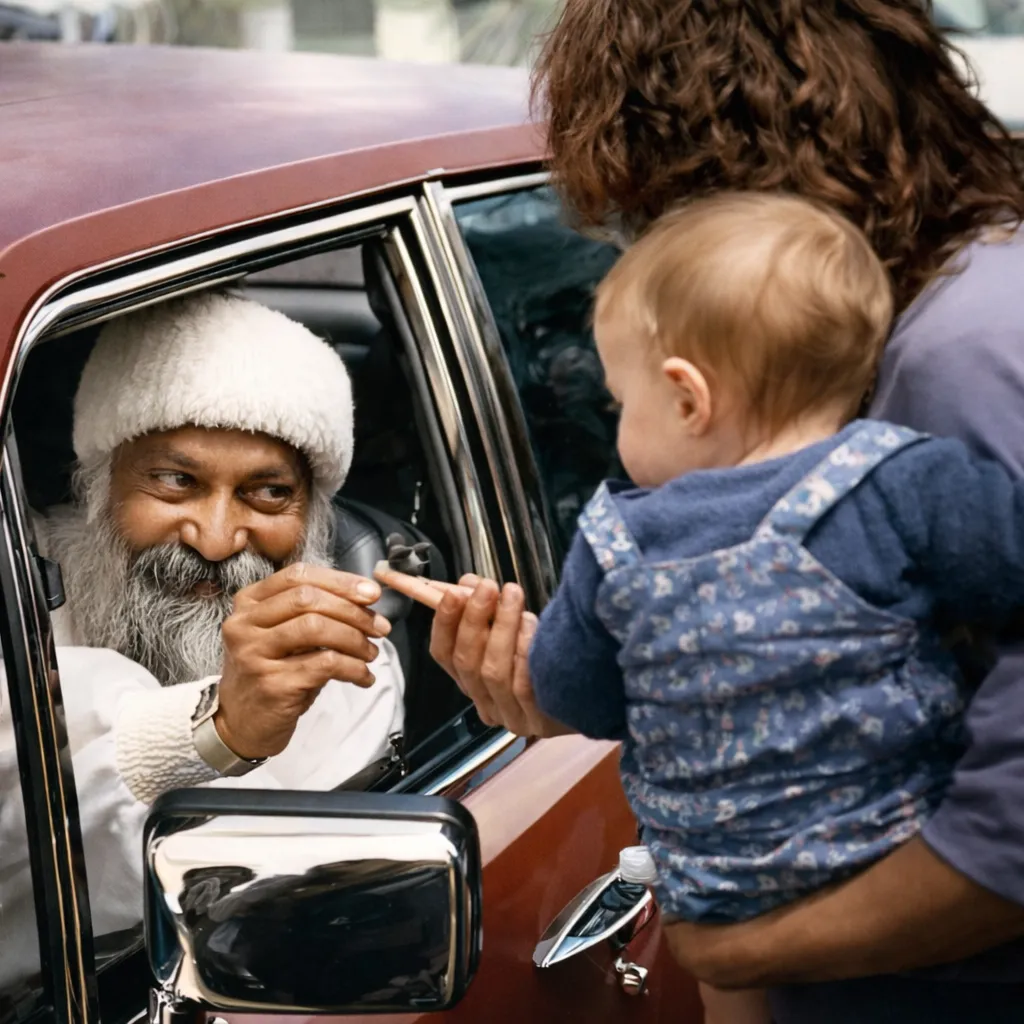
According to Osho, “too early” or “too late” sannyas only reflects human unconsciousness—timing is accidental through influence, chance, or missed moments. Even a “right” time is coincidental. What truly matters is not the calendar but your inner clarity: right determination, decisiveness, and commitment. Whenever you take sannyas, that becomes the right moment.
Don’t worry if you chose sannyas early or late; your sincere decision now makes it right.
From the Discourses
Passages where Osho speaks to this question — each links to the complete discourse.
Beloved Osho, you once said something like when we take sannyas it is either too early or too late. I have often wondered what you meant by this. Would you please comment?
Man is so unconscious that he does not know what he is doing, or for what he is doing it, or when the right time to do it is -- so perhaps someone takes sannyas too early. It is just accidental. He comes into the influence of a group of sannyasins, reads some books or listens to my world and feels that he is ready. A few people take sannyas too late. That too is accidental. It is sheer chance that they did not come across sannyasins, my message, earlier. It is a very rare coincidence that a person takes sannyas exactly at the right moment in his life for the simple reason that man is not conscious. The right moment comes and passes by, and he is lost in his dreams, in his ambitions, in his desires. But my statement simply describes a factuality. As far as you are…
Question: First question: Osho, I want to take sannyas; when should I take it? When there is readiness, understanding happens in an instant. You don’t have to work it out; it is seen, it is a direct seeing. He saw the truth of it: “He’s right. I have spread a net of words for nothing; I know nothing, I have no experience. I argued, I defeated the pundit, but neither he knows nor do I. Tomorrow someone else may come and defeat me. My life has no foundation. I am entangled in verbiage; I have wasted so much time.” Like lightning in the dark, everything was illuminated—clear in a single flash. Not that he went through a chain of reasoning—no. In one instant it was all seen. He placed his head at the master’s feet and said, “You ask, ‘When?’ The moment to do it is now.
Osho, I want to take sannyas. Am I worthy, and has the auspicious moment arrived?
And because I don’t tell you to leave your home, there is an added difficulty. Mahavira did not give his people as much trouble as I am giving you. Buddha did not give as much trouble. I am putting you in a very paradoxical arrangement: making you a sannyasin and not separating you from the home. You will sit at your shop in ochre robes—it will be a great awkwardness. In ochre you can sit in the forest—there is no trouble then. At a shop you do not sit in ochre—there is no trouble then. I am creating a contradiction in your life. I am saying: live in water and be like a lotus. The rose has no such difficulty; it doesn’t live in water. The lotus has the difficulty—to be in water and untouched by water. To be in the marketplace and untouched by the market. To be in…
Osho, why should I take sannyas?
Because tomorrow you may not be. The next moment you may not be. And sannyas is nothing but a vision of living this moment utterly, totally, absolutely. Sannyas simply means that you will not postpone life anymore. Sannyas simply means that you will not live in dreams anymore, that you will take hold of this moment and squeeze the whole juice out of it right now. That's what sannyas is: it is a way of intense living, of sensitive living. And remember, life is very accidental. One never knows. Listen to this story. A salesman came home unexpectedly one day, and the first words he said when he came in the door were, "Where is he? I know he is here! I can feel it in my bones!" His wife, who was cleaning the dishes at the time said, "Who are you looking for?" Salesman: "Don't give me that. You…
Osho, why does pratikraman—the return home—feel uneasy, difficult, almost impossible to us?
Hence whenever a living Master appears, those who uphold old scriptures become his opponents, because because of him people begin to set scriptures aside. When scriptures are set aside, the pandits are set aside, the whole business is set aside. It becomes hard. The pandits become enemies. Then when this Master dies, the same pandits who were his enemies gather at the cremation ground—to offer homage. They then make scriptures out of him. Their enmity was with the living, not with scripture. So they themselves make the scriptures. It is amusing: Mahavira was a Kshatriya, but all his ganadharas were Brahmins! Strange—what is this? The moment Mahavira died, the Brahmins rushed in: “Good opportunity—now we can make scriptures again.” At once they set up scriptures. Jainism got constructed. Now if once again someone brings living religion, the scholars, the pandits, the worshipers of scripture, are in trouble again; their business…