
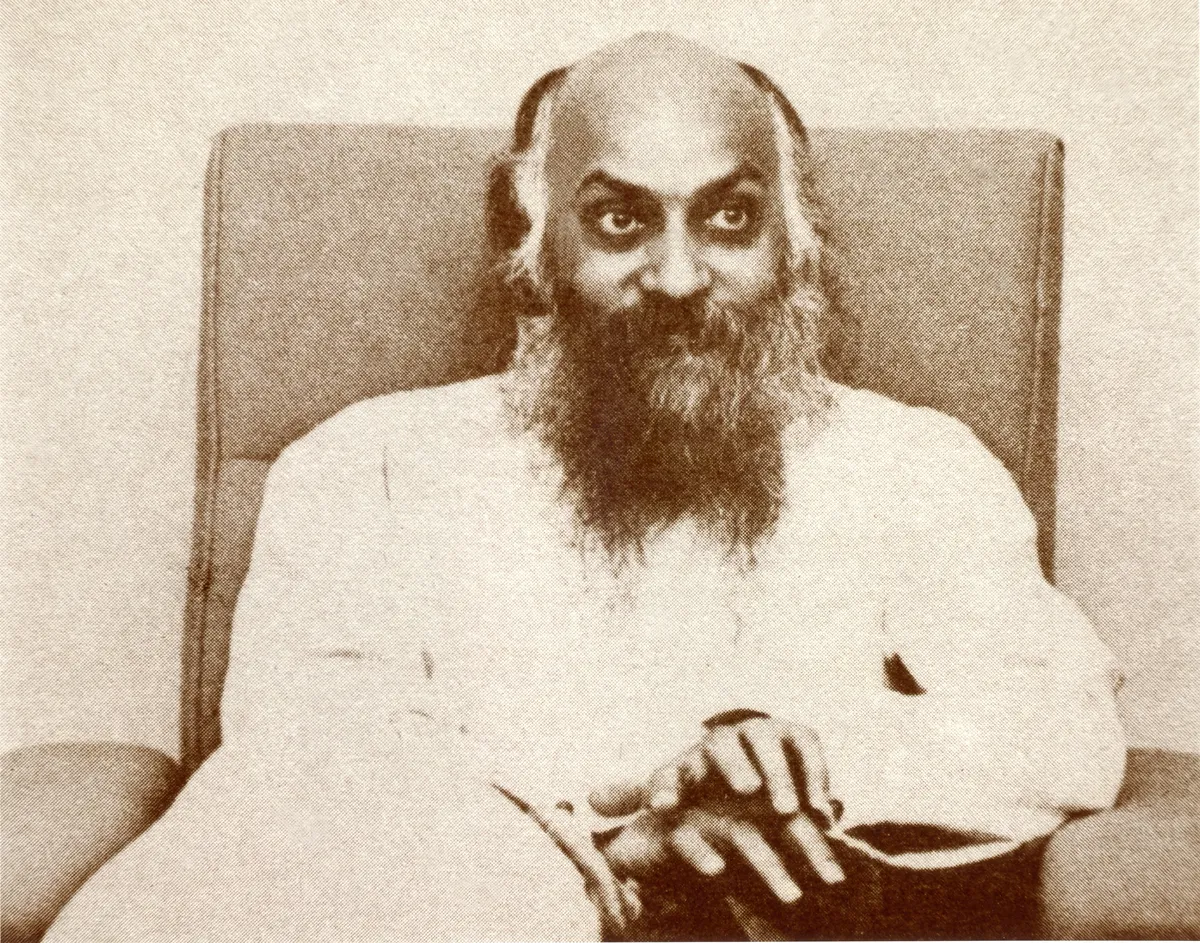
Sympathy makes you feel big and the other small; real care is kindly pointing out the wrong attitude and helping them change.
From the Discourses
Passages where Osho speaks to this question — each links to the complete discourse.
Osho, we’ve run into a big difficulty! The difficulty is that, until now, we believed that sympathy is a part of nonviolence. We had held this for a long time. But while speaking of ahimsa under the Panch Mahavrat, you said that there is hidden violence in sympathy, because in it the “other” is present. Then you took it further, and, while giving the example of samānubhūti (empathy), you mentioned Paramhansa Ramakrishna—saying that when a farmer was being whipped, the marks of those lashes showed up on Ramakrishna’s back.
So, between sympathy and empathy, in reference to the tendency toward violence, please explain their subtle difference. And please also tell us whether what you called empathy is a mental event or something of the spiritual plane. Sympathy is commonly thought to be something very valuable and precious—but it isn’t. Sympathy means: someone is unhappy and you express sorrow with him; you become sorrowful. Sympathy means co-experiencing—experiencing alongside another. But the person who experiences sorrow in another’s sorrow never experiences joy in another’s joy. If someone’s big house goes up in flames, you express sorrow; but if someone builds a big house, you do not express joy. This needs to be understood. What does it mean? It means sympathy is a deception. Sympathy could only be true if you felt sorrow in another’s sorrow and joy in another’s joy. But while we can manage, or at least display, sorrow in…
Beloved Osho, yesterday, the whole day I saw many sannyasins give sympathy to swami prem anam after your discourse. Could you please comment?
Rabindranath could not tolerate this. He said to his father, "If you want to know the truth, the truth is that his painting is better than the paintings that you have made of Krishna. And your behavior is just insane!" The master laughed, and he said, "Rabindranath, I have to be very hard on Nandalal. He is my best disciple, and he has much more capacity. Yes, I know you are right -- his painting is far better than my own paintings, but he has yet much potential. If I had praised his painting, that potential would have remained just a potential. I want to bring him to his utmost flowering." And there were tears in the eyes of the master; he said, "The job of a master is not easy, and it is not easy even to understand." After three years Nandalal appeared with a new painting of Krishna.…
This means sympathy is a kind of deception. That sympathy is genuine when you experience unhappiness in the miseries of others and experience joy and happiness in the happiness of others. But we are able to experience or show unhappiness in another's unhappiness, though many a time we are unable to experience happiness in another's happiness. That is why, it will not be correct to say we are able to show sorrow when another is unhappy'. If we are able to be happy in the happiness of others, then and then only, would it be proper to show our sorrow in their unhappiness. On the contrary, we derive some pleasure in the unhappiness of others. We take some pleasure in another's difficulties. We become fully delighted in others' miseries.
Osho, I have been reflecting on the difference between 'feeling sorry' for someone and 'having compassion'. It seems to me that to be sorry for someone has an element of condescension in it, as if you were superior to the other, and that it does not necessarily have anything to do with love, whereas compassion must be an integral part of loving. Please comment.
The first and the most important thing to remember is that reflecting is not going to help at all. 'Reflecting' is nothing but a beautiful word for 'thinking'. The blind man can go on thinking about light, he can arrive at certain conclusions too, but those conclusions cannot be right. Howsoever right they appear to be, they are bound to be false, untrue. The moon in the sky is one thing and the moon reflected in the silent lake is totally another. One exists, the other is only a reflection. If you jump into the silent lake you will not be able to catch hold of the moon; on the contrary, you may even disturb the reflection because the lake will be disturbed. The more you think, the more you are creating waves and ripples in the mind. The real thing for the blind man to do is not to…
Osho, Baba Malukdas says: “Show compassion and keep dharma in your heart.” I have done exactly that all my life—shown compassion, served, offered sympathy—but no one even acknowledged it. Far from gratitude, those I did good to did me harm! What do you say about this?
When did even one of my sighs become yours for a day? When did the stream of tears from this eye ever flow from that eye? How long will the little box of words keep the truth shut? What shall I do with your sympathy? What shall I do? Who is there that can hand his sorrow to another? Who is there that can take another’s sorrow upon himself? Why should this trade in deception continue between us? What shall I do with your sympathy? What shall I do? Why not accept that we are walking on such a path where every traveler is alone, where griefs are not shared? He who displays pain at another’s pain hides only his private joy of being free from that pain. You are miserable, so I am happy— what a heavy curse upon the world! What shall I do with your sympathy? What…