
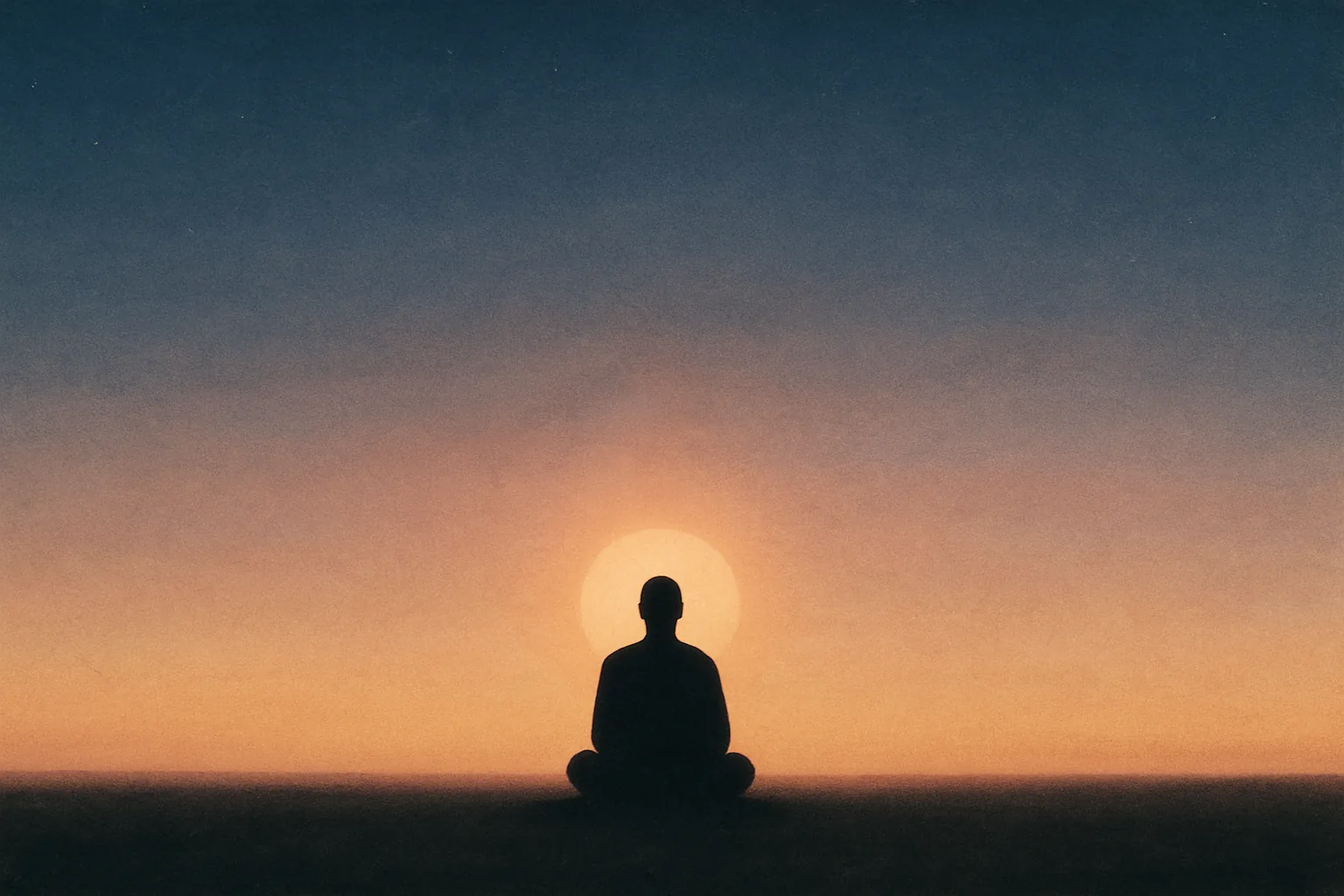
When on a bed or a seat, let yourself become weightless, beyond mind. This simple, solitary Tantra method comes from the stream of the Vigyan Bhairav Tantra, where Shiva points directly to a shift of identity—from the body that has weight to the consciousness that is weightless. Osho’s guidance here is practical and intimate: you need no partner, no ritual, and no special setting—only privacy and a willingness to feel your way out of the hypnosis "I am the body." The practice is inconspicuous and can be done anywhere suitable: on a bed, on a chair, or sitting directly on the earth.
The purpose is to dehypnotize the felt sense of heaviness and to taste your nature as light, unbounded awareness. You begin by deliberately feeling weightlessness, again and again, even as pockets of heaviness appear. Persist, and a moment arrives when the body’s weight is no longer yours; mind grows quiet—mind itself is a kind of weight—and you remain as transparent presence. For those who wish to refine the posture, Osho notes that sitting on the ground in siddhasan (the classic Buddha posture), ideally close to nature and with minimal clothing, best minimizes the body’s contact with gravity, making the shift easier. Yet the essence is not posture: it is the continuous, gentle insistence on the felt reality of weightlessness until the distinction between body and awareness loosens and you slip beyond mind.
Phase Instructions
First Stage: Preparation and Posture
Choose privacy. This meditation requires no partner and is not obvious to others. Sit on a bed or a seat, or—preferably—on the ground in siddhasan (the Buddha posture), spine naturally upright, hands resting easily. If possible, be close to natural ground and wear minimal clothing; even sitting naked on the earth is ideal. Avoid leaning to one side; a balanced, still posture reduces the body’s area exposed to gravity. You may also lie on your back if sitting is not comfortable. Close your eyes, let the breath be natural, and allow the whole body to settle without effort.
Second Stage: Evoke Weightlessness
Begin to feel—gently but deliberately—that you have become weightless. Do not force; simply incline sensation toward lightness. Let the idea "weight belongs to the body, not to me" sink in. As you notice contact points (floor, bed, cushion), sense them as becoming lighter, as if the body were hollow, featherlike, or buoyed from within. You will find places that feel heavy—acknowledge them without struggle and return to the overall feeling of lightness. Keep re-evoking this weightlessness, again and again. Allow thoughts to pass; each time mind comments, feel weightlessness instead of thinking about it.
Third Stage: Slip Beyond Mind
As the sense of lightness stabilizes, notice the boundary of the body begin to blur. Let the outline dissolve; remain very still. At a certain moment you will simply feel there is no weight. When there is no weight, you are not the body; the identification loosens and mind becomes quiet. Do nothing now—no analysis, no effort—just abide as the weightless awareness that remains. If heaviness or thought returns, softly re-establish the feeling of being weightless and rest there. Stay with this non-doing for the remainder of the session.
Fourth Stage: Integration in Any Posture (Optional)
Carry the method into ordinary situations where it will not be noticed: sitting at a desk, standing briefly, walking slowly, or as you drift into sleep. Wherever you are—walking, sitting, or lying down—touch the same cue: "I am weightless awareness; weight belongs only to the body." Move as if gravity has less hold, without exaggeration. Notice how happiness naturally feels light and sorrow feels heavy; use this understanding to return to lightness in daily life. To finish, invite a faint sense of bodily weight back, open your eyes, and rise slowly.
Core Benefits
- Dehypnotizes the felt sense of heaviness.
- Allows tasting of nature as light, unbounded awareness.
- Leads to a moment where the body's weight is no longer perceived.
- Helps the mind grow quiet, as mind itself is a kind of weight.
- Facilitates sliding beyond mind into transparent presence.
What Osho Said About This Technique
Let the body be loose, eyes closed—and begin to see a small picture in imagination: it is morning, the sun has risen, two mountains shine in its light, and between them a river runs. Just imagine this, so the feeling of floating can be understood. Between two hills, in the glittering sunlight, a river is racing. The river is running, flowing. See it clearly, because soon we too will enter it and float in it. The river flows; it will become clear. Two shining hills; between them the river runs. The river flows—now gently leave yourself in it; step in softly. Do not swim—let go like a dry leaf; just begin to float, flow with the river. The river runs; you too flow with it. Keep seeing yourself drifting, drifting, drifting. Leave yourself completely loose; the river will carry you—there is nothing to do.
शरीर ढीला छोड़ दें, आंख बंद कर लें और एक छोटा सा चित्र अपनी कल्पना में देखना शुरू करें: सुबह है, सूरज निकला, उसकी धूप में दो पहाड़ चमकते हैं और पहाड़ के बीच से भागती हुई एक नदी है। सिर्फ कल्पना कर लें, ताकि बहने का भाव समझ में आ सके। दो पहाड़ों के बीच में, सूरज की चमकती रोशनी में एक नदी भागी जा रही है। नदी भाग रही है, बह रही है। इसे ठीक से देख लें, क्योंकि जल्दी ही हम भी इसमें उतर जाएंगे और हम भी इस नदी में बह जाएंगे। नदी बह रही है, बराबर दिखाई पड़ने लगेगी, दो पहाड़ हैं चमकते हुए, सूरज की रोशनी में भागती हुई बीच में नदी है। नदी भागी जा रही है, इसमें अपने को भी छोड़ दें, आहिस्ता से उतर जाएं। लेकिन तैरें नहीं, छोड़ दें सूखे पत्ते की भांति, बस बहने लगें, नदी के साथ बहने लगें। नदी भागी जा रही है, आप भी नदी में बहे जा रहे हैं। अपने को बहता हुआ देखते रहें, देखते रहें, देखते रहें। और बिलकुल ढीला छोड़ दें, नदी ले जाएगी, आपको कुछ भी करना नहीं है। …
With this, the body feels a little light!
Yes, you will feel light. You will feel light, because what we call the sense of the body—our body-consciousness—is our heaviness. What we call heaviness is nothing but the sense of the body. That is why even a sick, thin person feels burdened, while a healthy person, however heavy in weight, feels light. The awareness of the body that we carry is our load. And that body-consciousness, the sense of the body, exists in the same measure as there is discomfort in the body. If there is pain in the leg, you become aware of the leg; if there is pain in the head, you become aware of the head. If there is no discomfort anywhere, the body is not felt at all. Therefore the very definition of a healthy person is: one who experiences bodilessness; one to whom it does not seem, “I am the body.” Then understand, that…
प्रश्न: इससे शरीर हलका सा महसूस होता है!
हां, हलका महसूस होगा। हलका महसूस होगा, क्योंकि हमारे शरीर का जो बोध है, शरीर का बोध ही हमारा भारीपन है। जिसको हम भारीपन कहते हैं, वह हमारे शरीर का बोध है। इसलिए बीमार दुबला-पतला हो तो भी उसको बोझ मालूम पड़ता है और स्वस्थ आदमी कितना ही वजनी हो तो भी उसे हलका मालूम पड़ेगा। शरीर की जो कांशसनेस है हमारी, वही हमारा बोझ है। और शरीर की कांशसनेस, शरीर का जो बोध है उसी मात्रा में होता है जिस मात्रा में शरीर में तकलीफ हो। अगर पैर में दर्द है तो पैर का पता चलता है, सिर में दर्द है तो सिर का पता चलता है; अगर कहीं कोई तकलीफ नहीं है, तो शरीर का पता ही नहीं चलता।
Questioner: how is it that the body begins to feel light after deep and fast breathing?
It is true that the body will feel light after this meditation. It will be so because our consciousness of body is one of heaviness. What we call heaviness is nothing more than our awareness of the body. The body weighs heavy on a sick person even if he is skinny and wiry. But a healthy person, even if he is a heavyweight, carries his body very lightly. So it is really our body-consciousness which feels like a weight on us. And we become conscious of our body only when it is in pain, when it is suffering. We become conscious of our feet when they are hurting. We become aware of our head when it is aching. If there is no body pain, we are never aware of our body. This consciousness is the measure of our suffering. We define a healthy person as one who feels as if…
A friend has asked: I do climb onto the funeral pyre, and yet I still find myself standing on the sidelines, watching.
A man went to a fakir and said, “You are very peaceful and I am very restless—tell me the way to be peaceful.” The fakir said, “What need is there of a way? I am peaceful; you are restless. I am content with my peace; you become content with your restlessness.” The man said, “How can I be content? I am restless; I want to eradicate my restlessness.” The fakir said, “As long as you want to eradicate, you will not be peaceful. Be content even with your restlessness—then see whether restlessness remains or not! If someone becomes content even with his restlessness, where then is restlessness? Restlessness was in the discontent, in the opposition—in that insistence: ‘No, this should not be so; there must not be restlessness; I must be peaceful.’” The man said, “You speak rightly, but still I want to be peaceful.” The fakir said, “Then you…
किसी मित्र ने पूछा है कि चढ़ा तो देता हूं चिता पर अपने को, लेकिन फिर भी मैं तो किनारे खड़ा देखता रहता हूं।
एक फकीर के पास एक आदमी गया था। और उस फकीर से उसने कहा कि आप तो बहुत शांत हैं और मैं बहुत अशांत हूं, तो मुझे शांत होने का रास्ता बता दें। उस फकीर ने कहा: रास्ते की क्या जरूरत है? मैं शांत हूं, तुम अशांत हो। मैं अपनी शांति में राजी हूं, तुम अपनी अशांति में राजी हो जाओ। उस आदमी ने कहा: मैं कैसे राजी हो जाऊं? मैं अशांत हूं, मुझे अशांति मिटानी है। उस फकीर ने कहा: जब तक मिटाना है, तब तक तुम शांत न हो सकोगे। अपनी अशांति में राजी हो जाओ, फिर देखो अशांति बचती है या नहीं बचती है! अगर कोई अपनी अशांति में भी राजी हो जाए, तो अशांति फिर कहां है? अशांति तो नाराजी में थी, अशांति तो विरोध में थी, अशांति तो इस बात में थी कि नहीं, ऐसा नहीं होना चाहिए, अशांति नहीं होनी चाहिए, मुझे शांत होना है। उस आदमी ने कहा: आप ठीक कहते हैं, लेकिन मुझे शांत होना है। उस फकीर ने कहा कि फिर तुम न हो सकोगे। और मैं तो कभी तुम्हारे पास पूछने न आया कि तुम बड़े अशांत हो, मैं बड़ा शांत हूं, तो मुझे अशंात होना है। …
Common Questions
This meditation can be practiced anywhere suitable: on a bed, on a chair, or sitting directly on the earth.
Sitting on the ground in siddhasan, ideally close to nature with minimal clothing, is recommended for minimizing the body's contact with gravity.
No special setting is needed; only privacy and a willingness to feel weightlessness are required.
Mind grows quiet through this practice because feeling the body's weight lessens the mind's weight, leading to a quiet mind.
No partner is necessary, as this is a solitary Tantra method.