
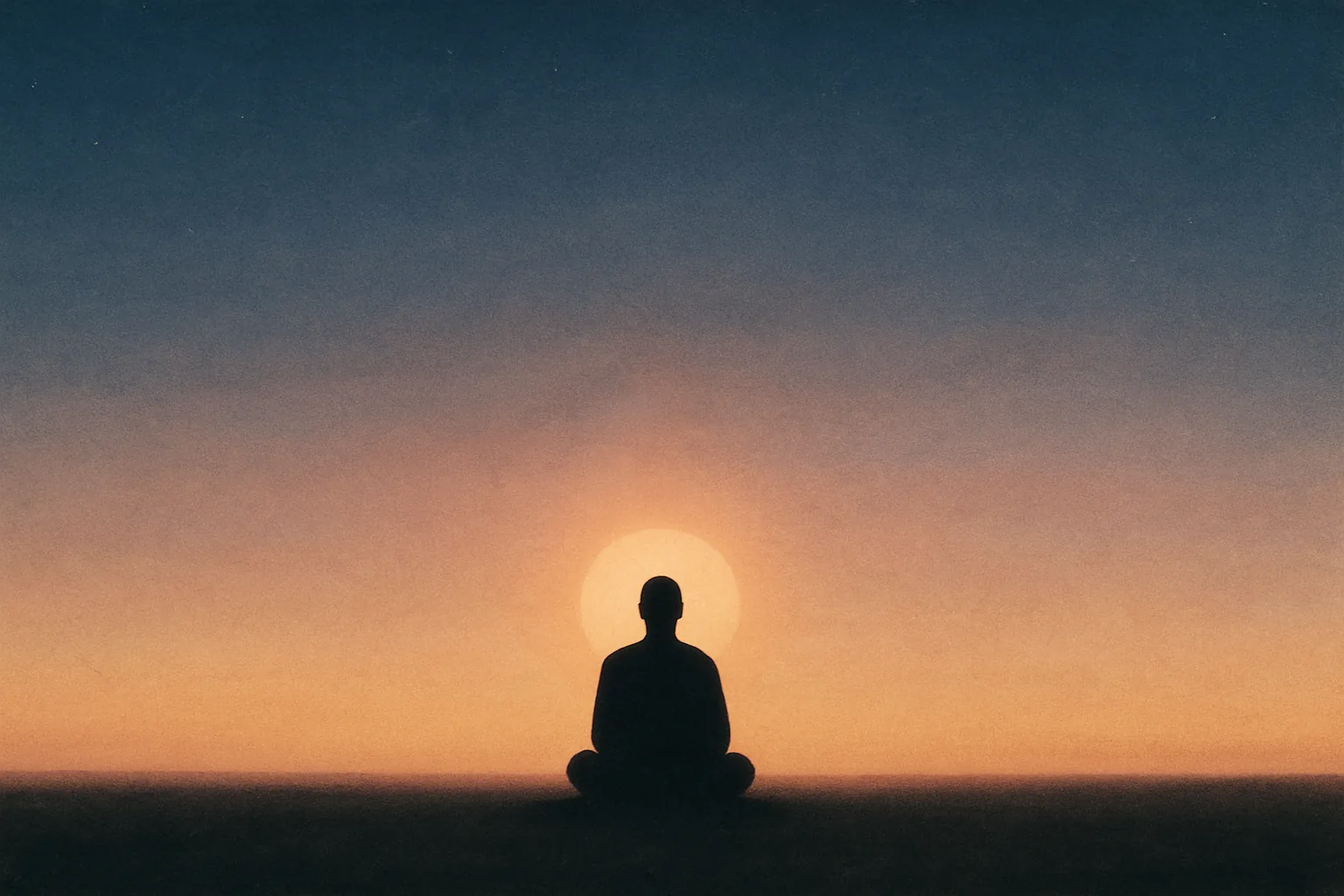
This immersive retreat weaves Osho’s Active Meditations with the living arts of Theatre, Music, and Dance to open a playful gateway into inner silence. Participants are invited to explore many roles and moods—then relax into the one who simply witnesses. As expression ripens into awareness, creativity becomes a doorway to presence.
The program blends guided Osho methods (such as Dynamic, Kundalini, and Evening Satsang) with theatre games, improvisation with the Five Elements, live flute meditation, and heartfelt sharing. Spontaneity, sound, and silence harmonize: you step into different perspectives, touch a deeper connection with nature and the inner self, and conclude in celebration with a final performance held in awareness and love.
Phase Instructions
Arrival and Intention
Enter the space in comfortable clothing, leaving phones and distractions aside. Stand or sit with an upright, relaxed posture. Take a few slow breaths and sense the body from head to toe. Whisper a simple intention—for example, “to play fully, to witness clearly.” Commit inwardly to two qualities throughout the retreat: totality in expression and continuous awareness.
Guided Osho Active Meditation
Join a facilitator-led Osho method (e.g., Dynamic, Kundalini, or Evening Satsang) suited to the group and moment. Allow cycles of movement, breath, sound, and silence to unfold as guided. Let energy rise and settle; when expression peaks, notice the quiet center within. Keep attention on the breath, sensations, and the witness. Follow the music and instructions precisely while remaining rooted in awareness.
Theatre and Acting Games
Enter playful exercises that invite spontaneity and presence. Follow the facilitator’s prompts to explore roles, perspectives, and quick shifts in mood or character. Move, speak, and respond without rehearsing—trust immediacy over perfection. Notice how different “faces” appear and dissolve. Each time you complete an exercise, take a conscious breath and sense the witness behind all expressions.
Improvisation with the Five Elements
Improvise through the qualities of Earth, Water, Fire, Air, and Space. For each element: embody its weight, rhythm, and feeling in movement and voice; visualize its presence around and within you; interact with others while staying attuned to your inner center. Let Earth ground you, Water flow, Fire ignite, Air lighten, and Space open. Transition smoothly from one element to the next, noticing which roles cling and which release easily, and keep returning to the silent watcher.
Live Flute Meditation
Sit or lie down comfortably with eyes closed. Receive the live flute as if it were a breeze moving through your body. Let breath and sound meet; allow micro-movements or stillness to arise naturally. Feel the vibration in the body, and listen as intently to the pauses as to the notes—sound and silence completing one another. When thoughts appear, gently return to the pure act of listening and the spaciousness it reveals.
Supportive Sharing Circle
Gather in a circle. Speak from direct experience using “I” statements, naming one or two insights or feelings that emerged. Keep shares brief and sincere. When others speak, rest in silent, compassionate listening—no advice, fixing, or cross-talk. Sense the common thread of awareness that runs through all different stories and roles.
Culminating Performance in Awareness
In small groups, co-create a short, playful piece that weaves the day’s elements—movement, voice, theatre, and moments of silence. Keep it simple and alive; let the piece be discovered rather than controlled. Present to the group while the audience watches as witnesses, not critics. After each piece, pause in stillness, breathe together, and bow in gratitude to the creative field you all shared.
Closing and Integration (Evening Satsang)
Gather for a quiet closing—this may include music and collective silence. Sit with eyes closed for a few minutes, sensing the afterglow of expression settling into calm. Acknowledge the many roles you can play, and the faceless presence that plays none. Carry this remembrance into daily life: act fully, watch silently.
Core Benefits
- Opens a playful gateway into inner silence
- Encourages exploration of many roles and moods
- Transforms expression into awareness and presence
- Harmonizes spontaneity, sound, and silence
- Deepens connection with nature and the inner self
What Osho Said About This Technique
So the difference between a creative and a non-creative person has to be understood. And it is good that one is a creative person. Your meditation, your growth is through creativity. These groups are not just groups -- these are your canvases on which you are painting. These are your poems that you are composing. When you see somebody flowering, somebody radiant, a poem is born and you feel fulfilled. You suddenly feel enhanced. You recognise, you realise your worth, mm? -- this man has flowered, this woman is smiling so beautifully. Then you are happy. This is the happiness of a creative person. A creative person is happy only when something beautiful is created. A creative person's heaven is in creativity.
Beloved master, please share with us your vision of the benefits of the arts for our process of growing towards ourselves, in therapy, meditation, worship.
The arts can be immensely helpful in therapy, in spiritual growth, in your meditations. But it is taking a hard and long way unnecessarily. The shortcut is: first, meditation, and then out of meditation comes creativity of its own accord. Otherwise, it is a long journey; even one life may not be enough. For example, the paintings of Picasso are nothing but his nightmares, as if somebody is not painting but vomiting. It has helped him to relieve himself of his tensions, schizophrenia, paranoia and all kinds of mental repressions. But it is not of much use to you. In fact, if you go on looking at a Picasso painting for a long time, you will feel sick, because it is vomiting. You will start feeling nauseous. This is not real art. The people who created the Taj Mahal -- that is real art. They were Sufi mystics who knew…
Osho, as the depth of meditation grows, it feels as if countless songs are surging to burst forth in my very life-breath! What should I do?
A Christian priest was preparing his sermon. The next day was Sunday, and a big religious festival was approaching; he was busy composing his sermon. His little son sat nearby, watching. Small children have a wisdom that even the old have lost. The dust of a whole lifetime settles so thick that wisdom is lost. Small children have a certain freshness, a vision, a guileless innocence. The little boy said, “Father, a question is arising in my mind. You always say—and last Sunday in church you also said—that the words I speak are not mine; they are God’s.” The father said, “Certainly. I repeat only His words.” Then the boy said, “In that case a question arises: why are you making so many cuts and edits in the sermon you are writing? If these words are His, who are you to edit them? And if you are editing them, how…
Many things follow meditation. Meditation is a multi-dimensional phenomenon. It is the spring: not only one flower but thousands of flowers bloom, not only one tree but the whole forest blooms. In India we have a certain flower, palash is its name. When the palash flower opens its buds the whole forest appears as if on fire, because when palash blossoms all the leaves disappear; only flowers remain. It is really a total expression. Nothing is being held back; there is no division at all, otherwise the energy will be divided into leaves and flowers. Palash lives a total life, utterly intense. The leaves disappear, the whole energy is poured into flowers, the whole tree loaded with flowers, just flowers, and they are the color of sannyasins. This is the color that I have chosen - a very lively red, the color of the flames.
SECOND STAGE Now we have to enter the second stage. Continue deep breathing, and let go of the body. Leave the body to do what it wishes to do. Let go of it. Let it take whatever asanas or postures it wants to take; let it form whatever mudras or gestures it likes. Leave it free to move and shake and whirl as it likes. If it wants to weep let it. Let go of the body completely. Continue deep breathing and let go of the body. Let the body fall down if it wants to fall down. And let it rise again if it wants to rise. And if it wants to dance allow it wholly. Let go of the body absolutely. Let it do whatever it wants to do. Leave it free. Don't impede it even in the least. Cooperate with the body. If it spins, let it.
Common Questions
The main focus is to combine Osho's Active Meditations with theatre, music, and dance to foster inner silence and presence.
The program blends Dynamic and Kundalini meditations, Evening Satsang, theatre games, Five Elements improvisation, live flute meditation, and heartfelt sharing.
Creativity is used as a doorway to presence by encouraging participants to explore different roles and moods, which then transforms into awareness.
The final performance is a celebration held in awareness and love, symbolizing the harmonization achieved through the meditation process.
Yes, the retreat is designed to welcome participants of all levels by providing guided methods and a supportive environment for exploration and learning.