
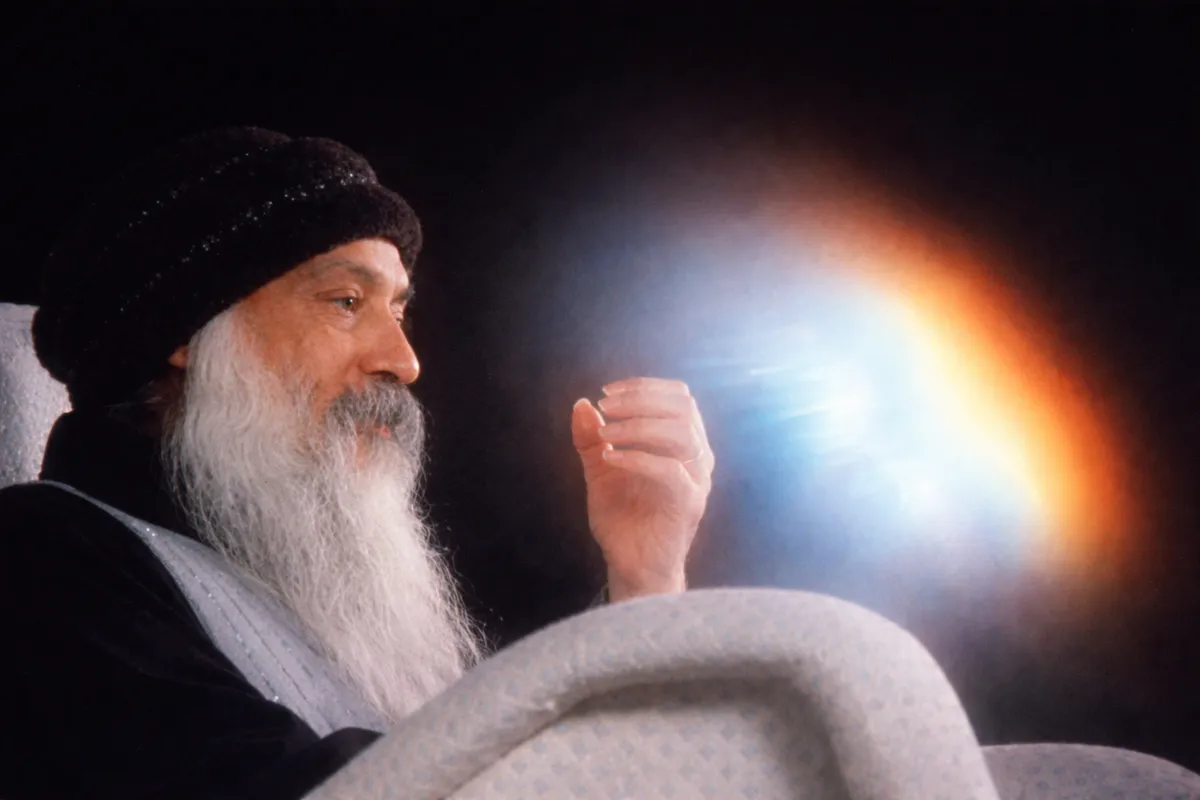
"Zarathustra: The Laughing Prophet" by Osho delves into the profound teachings of the ancient Iranian spiritual leader, Zarathustra, illuminating how his philosophy resonates with contemporary seekers of truth. Osho juxtaposes Zarathustra’s visionary teachings with today’s existential inquiries, inviting audiences to embrace life with courage, laughter, and spontaneity. Central to this series is the theme of living authentically beyond societal norms, emphasizing the importance of self-awareness and personal transformation. Osho highlights Zarathustra's call for a deeper understanding of good and evil, encouraging individuals to transcend moral binaries and elevate their consciousness to perceive the divine dance of existence. Through his vibrant discourse, Osho conveys the perennial nature of Zarathustra’s wisdom, urging disciples to cultivate a spirit of joyous acceptance and unbounded creativity. While reflecting on the essence of spirituality beyond dogma and tradition, Osho presents an intricate tapestry where each being is invited to rediscover their intrinsic godliness. This series ultimately serves as an exhortation for personal enlightenment and collective awakening, inspiring an empowered journey into the self, marked by laughter and unconditional love.
-
Chapter 1: Of the famous philosophers
Famous philosophers upheld popular superstitions; true spirituality is creative evolution—becoming the superman, not a creator-worshipper, and daring to live.
-
Chapter 2: Of self-overcoming
Life is relentless self-overcoming: a will-to-power drives obedience, command, creation through destruction; religions command when we cannot obey our nature.
-
Chapter 3: Of scholars
Knowledge is borrowed and cheap; scholarship smothers living knowing. Renounce respectability and return to innocent, risky inner knowing to be free.
-
Chapter 4: Of poets
Poets must lie to point toward truth; truth is indivisible and ineffable, so masters use myth, metaphor and compassionate falsehoods to lead seekers.
-
Chapter 5: Of redemption
Religion fractures humanity, betrays the earth, and manufactures suffering; Zarathustra is a seer-bridge calling will to transcend into childlike innocence.
-
Chapter 6: Of manly prudence
Not the height but the abyss terrifies: twofold will pulls between clinging to mankind and Superman; prudence is inward seeing, disguise and risk.
-
Chapter 7: Of the stillest hour
At the stillest hour Zarathustra hears a voice: the mystic's grief—his teaching fails to reach men; he returns to solitude to refine words and be heard.
-
Chapter 8: The wanderer
Be a wanderer: life is becoming, not being—climb inner mountains, embrace the impossible, accept each event, and in ceaseless searching discover yourself.
-
Chapter 9: Of blissful islands
Become the gardener of your own consciousness: create the superman within by loving the self, learning solitude, defiance and foresight to blossom.
-
Chapter 10: Before sunrise
Zarathustra's longing for boundless sky: transcend mind, embrace the impossible, bless existence with a naked 'yes'—silence and mystery lead to freedom.
-
Chapter 11: Of the virtue that makes small
Reject gods and small virtues that keep you weak; take your truth, strengthen your will, love neighbors as themselves, and become living fire.
-
Chapter 12: Of the apostates
Awakened ones face corpses, buffoons and credulous believers; prayer is cowardice, God a projection—rise beyond belief to create the future superman.
-
Chapter 13: The home-coming
Solitude is the homecoming: turn inward from Babel's noise to rediscover the inner silence where words fail and the seeker and the sought become one.
-
Chapter 14: Of the three evil things
Zarathustra reclaims sensuality, will-to-power and healthy selfishness as human, creative forces—condemnation cripples growth; courage to see anew.
-
Chapter 15: Of the spirit of gravity part 1
Overcoming the Spirit of Gravity: shed possessiveness, jealousy, and borrowed values; learn healthy self-love to become light, free, and truly alive.
-
Chapter 16: Of the spirit of gravity part 2
Truth has no ready-made way: each must courageously create a unique path through divine discontent; self-discovery is inner, solitary, and cannot be followed.
-
Chapter 17: Of old and new law tables part 1
Only change is constant: values must be created anew. Good and evil arise from creative contribution to life, not from old, half-written law-tables.
-
Chapter 18: Of old and new law-tables part 2
Everything is flux; shatter old law-tables and static morality—awareness and spontaneous responsiveness replace fixed 'good' and 'evil' as life's guide.
-
Chapter 19: Of old and new law-tables part 3
Abandon inherited past and mob-made madness; live in the present, become begetters of a new nobility that creates the future and redeems our children.
-
Chapter 20: The convalescent
Zarathustra's seven-day death and rebirth reveals seven stages of consciousness; eternal recurrence is a sharp device to awaken choice and break mechanical repetition.
-
Chapter 21: of the meeting with a higher man
Higher men - kings, priests, sorcerers - are false supermen; true superman is childlike, superconscious, utterly free and loving; pity degrades dignity.
-
Chapter 22: The greeting
False greatness hides in masks; true transformation demands warriors who renounce comfort, become pure mirrors and children of a new race—who is Zarathustra?
-
Chapter 23: Of laughter and dance
Condemning laughter—'Woe to those who laugh'—is humanity's greatest sin; laughter, dance and play reclaim wholeness, defy religious seriousness and slavery.