
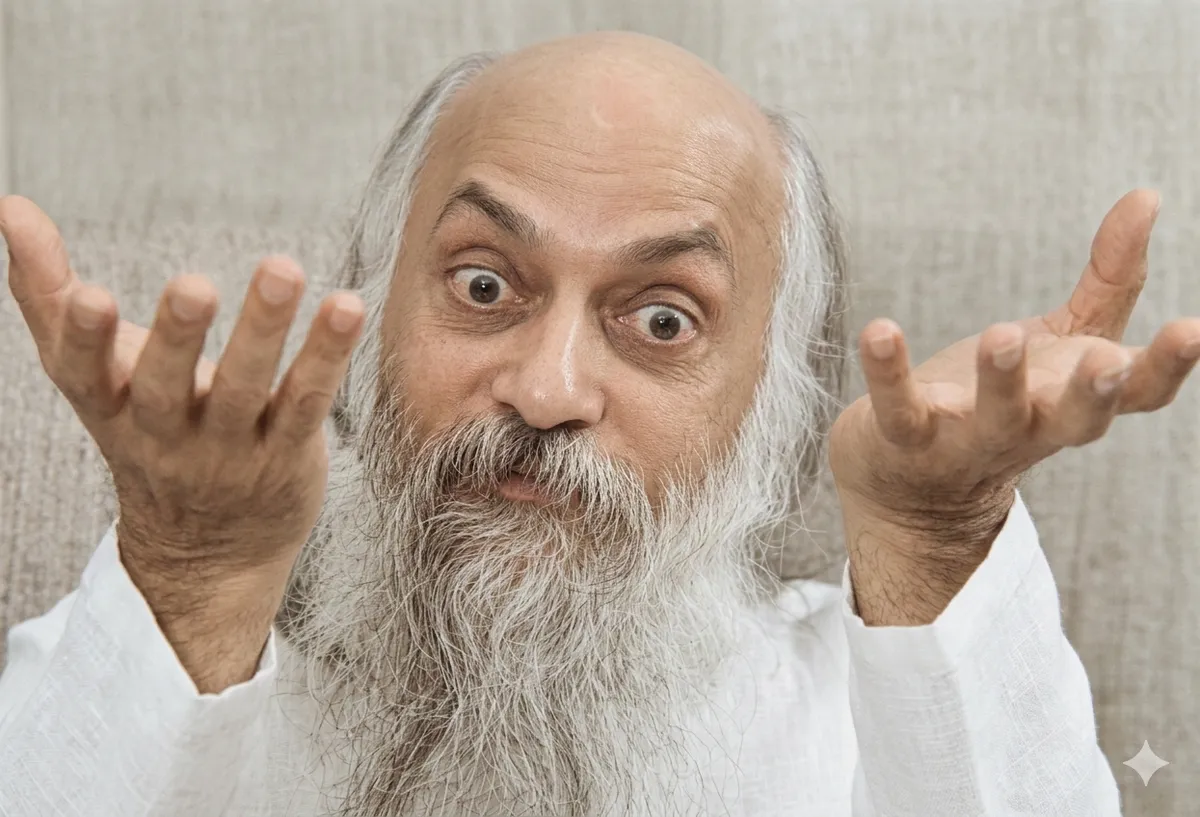
Vigyan Bhairav Tantra, Vol 2, is an expansive exploration into the enigmatic and transformative world of tantra as interpreted by the profound spiritual teacher Osho. This series delves into the ancient teachings of the Vigyan Bhairav Tantra, unfolding its direct and experiential approach to enlightenment. Osho's discourse transcends traditional spiritual narratives by illuminating the 112 meditation techniques laid out in the scripture, each serving as a gateway to the infinite consciousness. Through his unique perspective, Osho emphasizes the immediacy and practicality of these techniques, encouraging seekers to engage directly with their own inner realms rather than relying on philosophical discourse or rites. A primary theme is the dissolution of the duality between the body and consciousness, leading to a wholeness where spiritual understanding becomes an embodied experience. Osho challenges conventional dichotomies of sacred and profane, guiding listeners toward embracing a holistic view where every aspect of life is an arena for meditation and awakening. In this series, Osho weaves a tapestry of wisdom that invites individuals to encounter the divine presence within every moment, offering a profound shift from dogma to living vitality. His insights carry a timeless relevance, inducing a radical freedom that empowers authentic self-discovery and liberation.
-
Chapter 1: Be a witness not a judge
Practice uninterrupted awareness—at a sneeze, in fear, hunger—be a witness, not a judge; drop purity/impurity, prepare for sudden awakening.
-
Chapter 2: Alertness through tantra -- not principles
Alertness, not moral rules, is the root of meditation; ethics arise spontaneously from inner awareness — change sleep into wakefulness for true transformation.
-
Chapter 3: Finding the changeless through the changing
Find the changeless center by witnessing the ever-shifting periphery; remain inwardly the same while outwardly adapting—consume change through change.
-
Chapter 4: Tantra's secrets of love and liberation
Tantra: love is surrender, not possession. Modern doing‑mind and the fear of being possessed have killed the heart; allow yourself to be possessed.
-
Chapter 5: Remaining with the real
Destroy dreams and projections; mother your real knowings and doings in the present. Bondage and liberation are mind's reflections—see how you miss yourself.
-
Chapter 6: The tantric way to freedom from desires
Desire-even for liberation-is bondage; awareness that it is misery dissolves desire into no-desire, the door to true freedom; aspiration deceives.
-
Chapter 7: Tantric meditation with light techniques
Move sexual energy upward as light or lightning through the spine; cultivate feeling and sensitivity to awaken your unique supernormal self.
-
Chapter 8: The potentiality of the seed
Don't imitate masters; become your unique buddha. Be inspired, act in continuous awareness, balance giving and taking—your seed holds the awakened possibility.
-
Chapter 9: Conscious doing
Be present, not merely active: presence turns suffering into bliss; practice sky meditation, inner-space expansion and remembering yourself as light.
-
Chapter 10: Moving to the roots
Outer change cannot transform the inner; use outer aids but don't obsess - dig to the roots, bring hidden causes to light to end recurring suffering.
-
Chapter 11: Come back to existence
Enter blackness—embrace moonless night or inner darkness to dissolve ego, absorb passions and faults; cultivate attention and carry darkness as practice.
-
Chapter 12: Enter this moment
Thinking traps you in the past; seeing (darshan) and meditation are non-thinking presence—face lived problems like death with total presence, not philosophical thought.
-
Chapter 13: From death to deathlessness
Ego is the sole barrier to reality; through silence, deep exhalation and meditations—focus on fire rising through the body and world—ego dissolves into being.
-
Chapter 14: The fire of awareness
Vulnerability heals when openness dissolves resistance: by becoming truly aware the ego and fear disappear, leaving existence friendly and undivided.
-
Chapter 15: Only the unreal dissolves
Ego is unreal; it evaporates by feeling thought, I-ness and inner organs. Before desire and knowing there is no 'I' — dissolve into the gap of beauty.
-
Chapter 16: Discovering the emptiness
Emptiness is the divine source; don't seek to fill it with desire or ideas—be empty, discover your true center, and authentically transcend the ego's grasp.
-
Chapter 17: Searching for freedom
Toss attachment to the body and to thought: when attention has no object you become everywhere, free from limits; freedom is the very joy of being.
-
Chapter 18: In your hands
Are techniques against Tao? Yes - effort opposes nature, but surrender is the no-technique ultimate; if you cannot jump, use methods to decondition and awaken.
-
Chapter 19: Watching from the hills
Janus-faced: transcend animal/divine split by choiceless witnessing—contemplate beyond perception to meet the knower and feel 'I am' as illimitable existence.
-
Chapter 20: Liberation from yourself
Freedom is freedom from the ego: true liberation comes by surrendering the separate self, not to another, but into oneness with existence. God/guru are methods.
-
Chapter 21: Techniques to become one with the whole
House is on fire: wake from postponement and practice self-remembering—be both knower and known, expand to include breath, mind and world to become witness.
-
Chapter 22: Right now is the goal
Feminine surrender — be present without hurry; masculine effort — create urgency and total will. Choose the method authentic to your true nature.
-
Chapter 23: No map to follow
Human boredom arises from loss of instinct; life must be consciously created. Simple eye-touch returns energy to heart, revealing an etheric blue aura.
-
Chapter 24: Choicelessness is bliss
Choosing happiness invites suffering; choiceless witnessing of life's totality, accepting joy and pain like music's sound and silence, brings true bliss.
-
Chapter 25: Life is a mystery, not a problem
Life is a mystery, not a problem: drop thought, move from head to heart through thoughtless presence; put chitt in inexpressible fineness and be reborn.
-
Chapter 26: Enlightenment -- the most ordinary
Enlightenment is ordinary: let the ego dissolve into inner emptiness; meditation as playful, desireless de-hypnosis revealing simple timeless being.
-
Chapter 27: Neither mind nor matter
Mind and matter are forms of a third reality; through directed imagination—sadness→bliss→cosmic saturation—enter and feel your body filled with the Divine.
-
Chapter 28: If you get serious you lose the point
Imagination as play, not desire: meditation is leela - divine play, not a means to an end; drop seriousness and treat gurus, love and life as games of freedom.
-
Chapter 29: You are unknown to yourself
Discover essential aloneness: solitude dissolves socially‑given ego, ending mind's pressures; abide in endless space and envision the plenum as your bliss body
-
Chapter 30: Aloneness is pain
Aloneness dissolves ego through painful TAPAS; resist diversion, witness fear without action so the social persona dies and the true, whole self is born.
-
Chapter 31: Forget the periphery
Fill the heart-space between the armpits with deep peace, drop attachment to the surface, and from that centered silence feel yourself pervading all directions.
-
Chapter 32: Falling in love with an enlightened person
Buddha's love is nondual compassion—cool being, not relationship; love lives in insecurity and can become a sadhana that transcends life and death.
-
Chapter 33: Fear of transformation
Fear of transformation blocks true meditation: die to the old, break the breathing-bridge to witness desire, and reclaim inner omniscience and power.
-
Chapter 34: The greater the sensitivity, the greater the detachment
Heightened sensitivity through meditation deepens awareness and dissolves attachment; love becomes an unconditional gift. Be witness to the body; surrender.
-
Chapter 35: The search for the rhythm of the opposites
Tantra unites opposites as life's rhythm; use imagination to spiritualize inner and outer, bring whole consciousness to desire's first stir and realize oneness.
-
Chapter 36: Buddha's inner orgasm
Sex in Tantra means life-energy: meditation is an inner sexual union of opposites yielding a Buddha-like inner orgasm; choose a system and techniques or radical no-technique.
-
Chapter 37: Become each being
Transcend the ego: feel others' consciousness as your own, drop concern for self and become each being through empathy, prayer and inner guidance.
-
Chapter 38: The inner guide
Trust and innocence, not techniques, awaken the inner guide: catharsis frees repressed forces so the guide reveals presence, bliss and wholeness.
-
Chapter 39: Sunyawad -- the philosophy of emptiness
Suppose your passive form is an empty room—drop supports, play with the mind, and enter supportless emptiness; only when the ego disappears does true silence arise.
-
Chapter 40: All and nothing mean the same
All and nothing mean the same: the inner void is both Being and non‑Being. Name it as you need; enlightened action arises choicelessly from totality.