
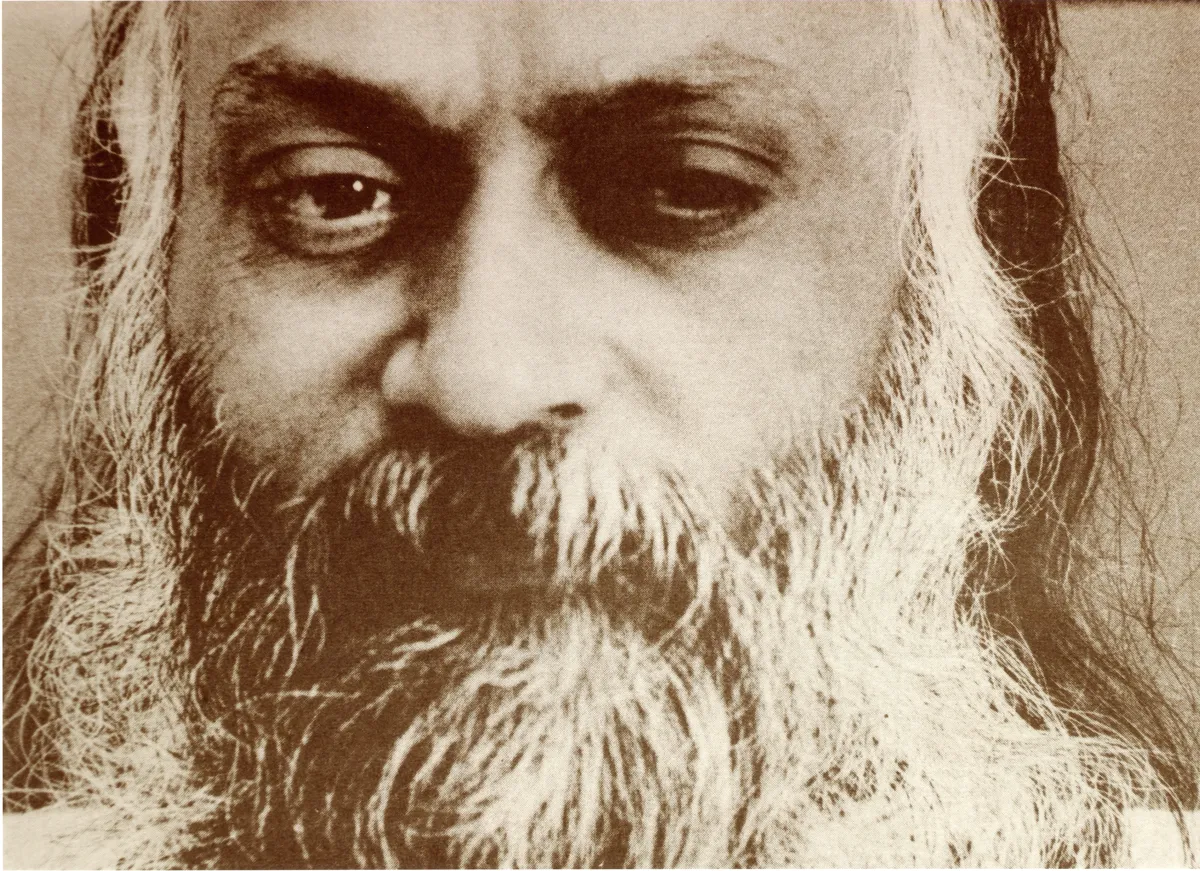
"Vigyan Bhairav Tantra, Vol 1" is an enlightening exploration of ancient tantric wisdom through the contemporary lens of Osho's profound insights. This discourse series delves into the esoteric teachings of the Vigyan Bhairav Tantra, a revered scriptural text composed of 112 meditation techniques said to be bestowed by Shiva upon Parvati. Osho illuminates these techniques, revealing practical pathways to transcendence and self-realization. He emphasizes a holistic approach that harmonizes the spiritual and the mundane, insisting that divine experience is readily accessible in everyday life. Osho's unique perspective demystifies Tantra, presenting it not merely as a collection of practices but as a radical art of living that fosters deep awareness and brings one into communion with the cosmos. Through his articulate discourse, Osho challenges conventional spiritual paradigms and encourages seekers to embrace direct experiential understanding, beyond the confines of ritualistic dogma. By interpreting the abstract and metaphorical verses into relatable narratives, Osho crafts a bridge that connects ancient wisdom with modern existential inquiries, offering readers guidance on how to unlock their latent spiritual potential and live with a profound sense of freedom and harmony.
-
Chapter 1: The World of Tantra
Tantra is a science of technique to transcend mind into pure being; through love and 112 methods Shiva shows how to clear doubt and realize the formless.
-
Chapter 2: The Path of Yoga and the Path of Tantra
Yoga suppresses; Tantra accepts, indulge with awareness. Surrender has no method; true growth brings inner disturbance then a real transformation
-
Chapter 3: Breath -- a bridge to the universe
Breath is the bridge to the present: by noticing the tiny pauses and turns between inhalation and exhalation, mind stops and truth dawns not by seeking.
-
Chapter 4: The deceptions of the mind
You are already divine; awakening is discovery, not attainment: simple awareness of the breath's gap can reveal the hidden treasure by removing mind's fears.
-
Chapter 5: Five techniques of attentiveness
Attention at the third eye turns mind into witness; prana fills the head, showers as light, making imagination real - mastering dreams, death, and inner rebirth
-
Chapter 6: Devices to transcend dreaming
Dreaming pervades waking life; transcend it by treating the world as a dream and by self‑remembering 'I am' — devices to awaken beyond sudden shocks.
-
Chapter 7: Techniques to put you at ease
Learn three Tantra techniques—become the caress to enter timeless love, stop senses like an ant’s creep, and feel weightless to transcend mind and be at ease.
-
Chapter 8: Total acceptance and non-division
What does tantra mean by purity? Purity is undivided innocence: accept all impulses without moral division; experiencing them transforms and dissolves the ego.
-
Chapter 9: Techniques for centering
Root yourself in the hara: melt five-colored senses into an inner point or focus on the lotus-thread of the spine; concentrated attention dissolves the mind.
-
Chapter 10: Fulfillment through becoming centered
Self-actualization is the basic need: become centered in the navel, balanced and at ease; meditation transcends thought via contemplation and concentration.
-
Chapter 11: Techniques to penetrate the inner centers
Close the seven head openings to awaken the all-inclusive third eye; draw senses into the heart-lotus and keep the mind poised in the middle until no‑mind is realized.
-
Chapter 12: Beyond mind to the source
Centering anywhere draws consciousness back to the navel as the existential root; be authentic, choiceless and heartful to transcend mind and polarity.
-
Chapter 13: Entering the inner centering
Center consciousness inward through indirect techniques—love, bodily sensitivity, rhythmic movement, and piercing—to transcend senses and awaken inner being.
-
Chapter 14: Changing the direction of energy
Centering gathers scattered energy into the navel to trigger an 'explosion' into samadhi; methods, not descriptions, guide inward; love can be the natural path.
-
Chapter 15: Toward the untouched inner reality
Disidentify from past and projections: witness memories as dreams, unwind your mind backward, use single-object focus to reach inner void and remain centered.
-
Chapter 16: Beyond the sin of unconsciousness
Use moods—anger, desire—as paths inward: neither suppress nor vent them but return their energy to its source; unconscious identification is the true sin.
-
Chapter 17: Several stop techniques
Sudden stoppage of impulses converts outward-moving energy inward, revealing the center of being; stop, consider, or exhaust actions to touch true awareness.
-
Chapter 18: Remaining with the facts
Be authentic by considering and confronting your facts—anger, sex, violence—through awareness and unconditioning; grace comes when helplessness follows effort.
-
Chapter 19: A Technique for the intellectual and a technique for the feeling type
Mind itself is the disease; transcend it by witnessing imagined death or exhaustion at the instant of deprivation, or surrender in devotion—devotion frees.
-
Chapter 20: Ordinary love and the love of a buddha
Love is a state of being, not an act—like breathing; attachment springs from fear and possession; tantra transforms sexual energy into devotion.
-
Chapter 21: Three looking techniques
Eyes are the gateway to the self: stop eye movement to see your inner being; fix on whole form to return to the witness; see as if for the first time.
-
Chapter 22: The third eye and psychic eye power
Redirecting eye-energy into the third eye opens the subtle world; stop ordinary eye-movement, feel sourceless light, and beware burning sensations and misuse.
-
Chapter 23: Several more looking methods
Turn senses inward: awareness of death and meaning frees the mind; simple practices—look into the empty sky, listen to master, peer into a well—bring serenity.
-
Chapter 24: Doubt or faith, life or death; the bases of different paths
Know your type: intellect uses doubt; feeling uses faith. Use birth or death as poles to transcend both; death-like stillness prepares the inward turning to the deathless.
-
Chapter 25: From words to pure sounds to being
Identification with mind causes misery; move from words to pure sounds to subtle feeling and then be free — visualize letters, bathe in sound or plug ears.
-
Chapter 26: Tantra: an acceptance of the peaks and the valleys
Accept and understand the animal within instead of suppressing it; Tantra transforms instincts by saying yes, not by control, and makes them creative energy.
-
Chapter 27: Soundlessness, soundfulness and total awareness
Intone Aum slowly to move from sound into soundlessness (soundfulness): use the mind as a jumping board, remain intensely alert to avoid mantra-induced sleep and hypnotic illusion.
-
Chapter 28: Meditation: an unburdening of repressions
All social faces are false; meditation is thoughtless witnessing to release repressions, reveal the original face, and reclaim mastery over inner robotic self.
-
Chapter 29: Sound methods for the dropping of mind
Intone and progressively silence a beloved sound to drop the mind into the heart; total acceptance of the world frees energy for inner awakening.
-
Chapter 30: Surrendering to a master
Total acceptance dissolves ego and transforms repression into wholeness; surrender—first seen in sex—opens one to a master and to awakening.
-
Chapter 31: From sound to inner silence
Tantra is a subjective science: use sound and breath as technology—silently intone 'AH', emphasize exhale and body-awareness to touch inner silence.
-
Chapter 32: The path of surrender
Tantra is the path of total surrender, not will; it turns sex and life into meditative alchemy by flowing with nature, making 'you' the central subject.
-
Chapter 33: The spirituality of the tantric sex act
Use sexual energy to dissolve the split between mind and feeling: stay in the warm beginning, avoid release, enter shaking and remember union to become whole.
-
Chapter 34: "Cosmic orgasm" through Tantra
Tantra is an amoral science: use sex as a doorway to timeless, egoless, natural bliss—enjoy rather than sacrifice, turning orgasm into meditation.
-
Chapter 35: Turning inward toward the real
Turn inward from mind's reflections to self-remembering: be aware you are, actualize moments of satisfaction, catch the waking-sleep gap to touch the ever-living.
-
Chapter 36: From maya (illusion) to reality
Self-remembering uproots the false ego, restoring your real center so the world ceases to be maya; the guru disturbs dreams to awaken true being.
-
Chapter 37: Techniques to witness the flux-like film of life
Remain the undisturbed witness amid extreme desire; view life as a picture-show, stay between pleasure and pain, and accept desires in you and others.
-
Chapter 38: Toward the authentic being
Pure mind is formless awareness; identification with name, memory and roles creates suffering — accept states, wait, and authenticity replaces falsehood.
-
Chapter 39: From the wave to the cosmic ocean
Become a wave in the cosmic ocean: breathe consciousness as inner breath, use the wandering mind and senses as doors to turn inward drop ego and witness oneness.
-
Chapter 40: Sudden Enlightenment and its obstacles
Enlightenment is a sudden discontinuity, not gradual: practice removes barriers to make you available; the final leap dissolves mind, desire and self.