
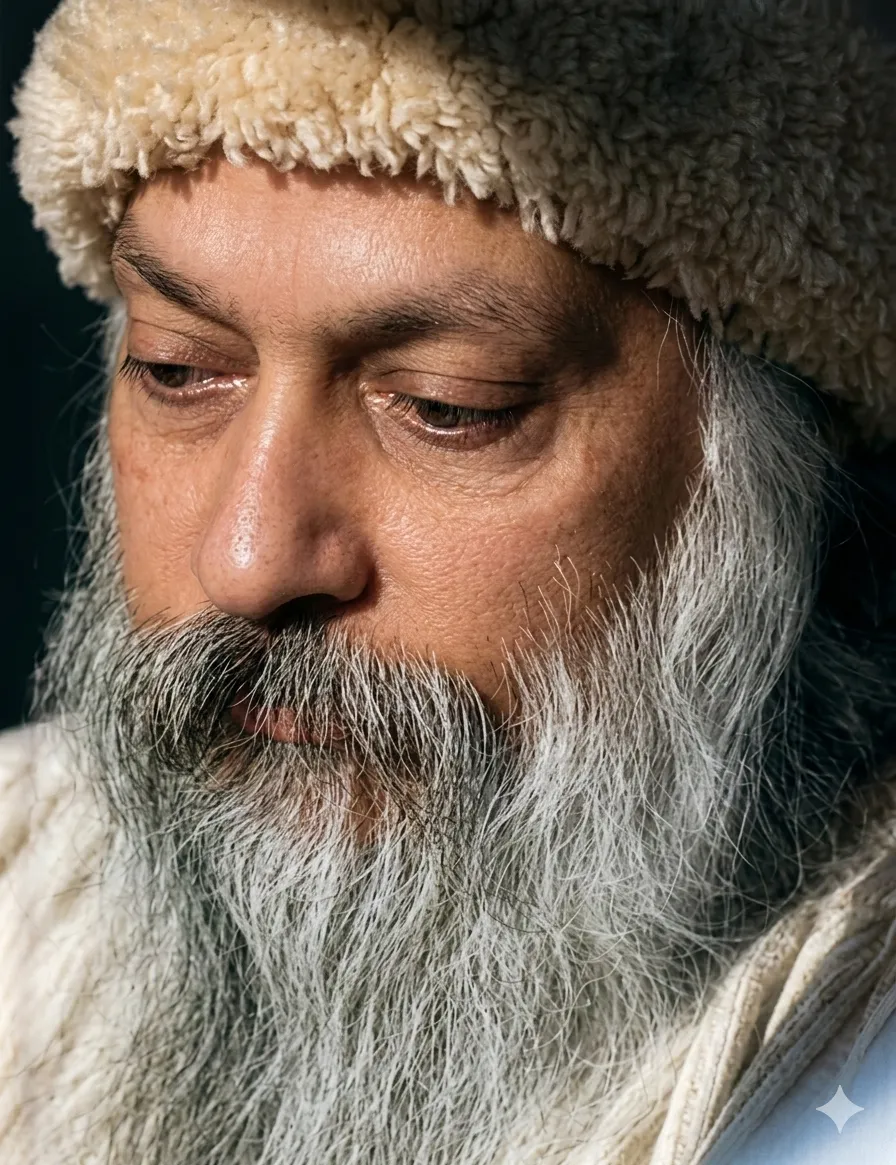
"Vedanta: Seven Steps to Samadhi" is an enlightening exploration into the profound spiritual philosophy of Vedanta, masterfully interpreted by Osho. This discourse series delves into the wisdom of the ancient Upanishads, offering a transformative journey towards self-realization and inner tranquility. Osho’s teachings illuminate the path to Samadhi, the ultimate state of meditation and spiritual ecstasy, emphasizing the importance of transcending the ego, embracing truth, and realizing the interconnectedness of all life. Osho underscores the significance of going beyond intellectual understanding to experience direct, lived wisdom. He articulates the seven steps as a framework for awakening the soul, each step deepening the seeker’s insight into the self and the universe. Through poetic language and penetrating clarity, Osho invites individuals to break free from societal conditioning, encouraging a return to simplicity, innocence, and authenticity. The series is a call to awaken the dormant potential within, to engage life with compassion, awareness, and presence. Osho’s unique perspective serves as both a challenge and an inspiration, guiding spiritual seekers towards liberation and the blissful peace of realizing one's true nature.
-
Chapter 1: Towards the Truth
Truth is nearest, not distant: drop guilt and self-condemnation, accept yourself, become a witnessing consciousness, cease outward seeking and be present.
-
Chapter 2: Attaining Real Eyes
Only choiceless, mirrorlike seeing (chakshusmati vidya) removes projections: drop judgments, become self-seeing and behold reality, not illusion.
-
Chapter 3: With Your Total Heart
Surrender wholly to one master for transformation; reason must be transcended so the heart can trust — halfhearted wandering among teachers breeds confusion.
-
Chapter 4: The Supreme Knowledge
Supreme knowledge cannot be taught; it arises within. See the one Brahman behind all waves, become the ocean not the wave — the seeker's 'teach me' plea.
-
Chapter 5: In Deep Patience
Be absolutely sure about yourself, not the guru; surrender born from inner certainty transforms. Deep patience in solitude drops desire and reveals being.
-
Chapter 6: With the Grace of the Sages
Prioritize feeling (heart) before thought: move from surface to center, learn from sages, cultivate right listening, conduct and discrimination toward samadhi.
-
Chapter 7: You Become the Offering
Grace flows when ego and doing cease; surrender and non-doing open you to existence's blessing—drop yourself as Manjushree did to receive it.
-
Chapter 8: The Unwavering Mind
Nonattachment arises when the mind is fixed on meaning through discipline and living with a guru; this frees desire-based fixation and grants a glimpse of satori.
-
Chapter 9: The Means is the End
Means are the end: make nonattachment both method and goal; exhaust conscious effort until effortlessness arises; prepare fully, realization occurs suddenly.
-
Chapter 10: Sublime is the Spontaneous
Two kinds of nonattachment: ordinary witnessing, seeing past deeds and not reacting; sublime is spontaneous, effortless being when technique drops into silence.
-
Chapter 11: One in the Many
Life is a purposeless cosmic play; value is intrinsic, not goal-oriented; love paradoxically unites I and Thou; true action is undivided doing and witnessing.
-
Chapter 12: Only Knowing Remains
Advaita: through heart's bliss, single-pointed thought and dispassionate witnessing the ego and will die—then even nonduality vanishes, leaving only knowing.
-
Chapter 13: When the Coin Disappears
When the ego disappears all divisions vanish - inner/outer, love/hate; the mystic simply exists beyond introversion and extroversion, the coin is gone.
-
Chapter 14: The Motionless Flame of a Lamp
After effortful first stages surrender replaces will: open like a womb, allow grace to shatter the ego; samadhi unfolds spontaneously into a motionless flame.
-
Chapter 15: God Seeks You
Faith, love and surrender are the same heart-knowledge beyond reason; wait ecstatically like a lover, for God or the master seeks you when you are ready.
-
Chapter 16: The Art of Dying
Videhamukti: die consciously by surrendering body, ego and activity; inner silence replaces compulsive thought, merging into AUM — the Upanishadic art of dying.
-
Chapter 17: Valleys and Peaks
Ego dissolves in present awareness; don't make egolessness a goal or expect constancy. Accept peaks and valleys, witness activity, let ego drop.