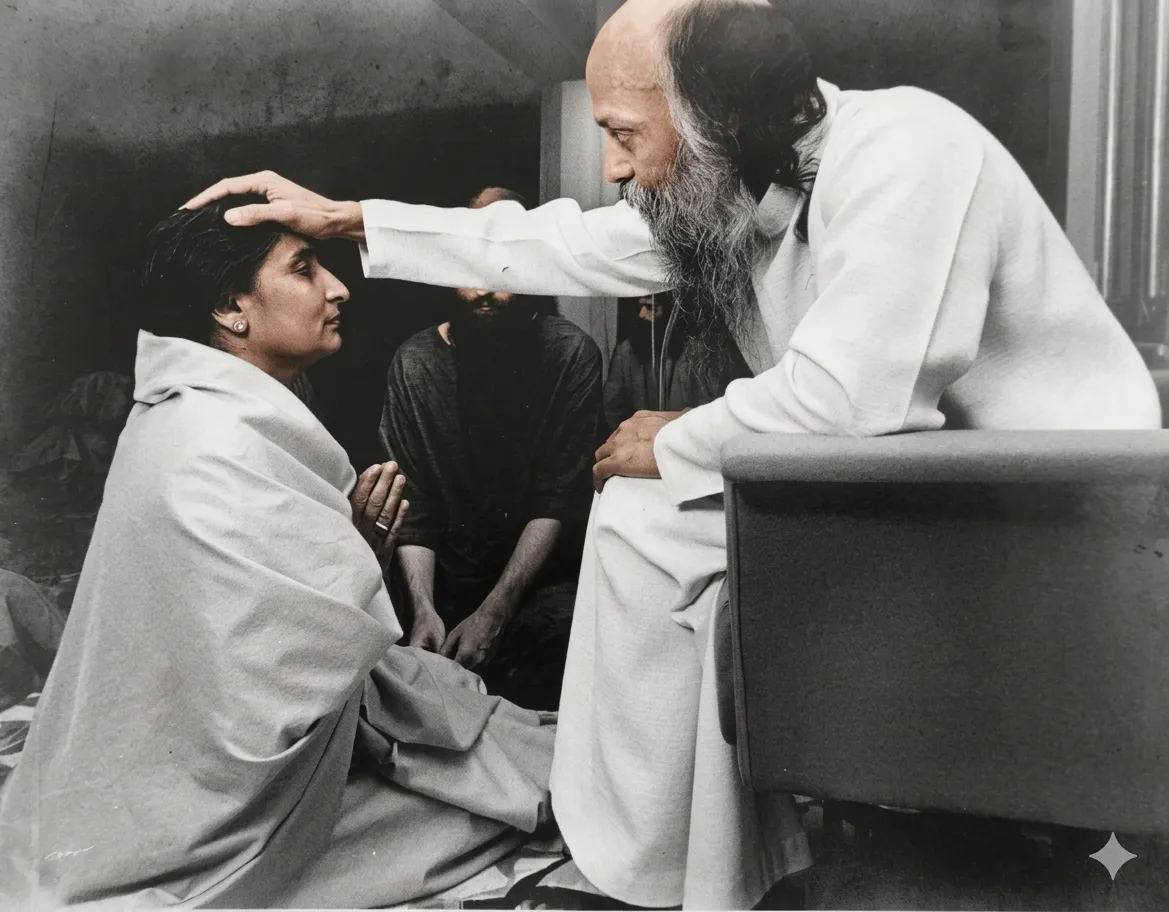
Explore Osho’s teachings across key topics such as meditation, love, ego, and awareness. Each topic contains structured questions, quotes, and insights derived from discourses.
Embracing the essence of Osho's teachings, one finds that true transformation arises not from suppressing or projecting hatred onto others, but from acknowledging it within oneself, ultimately turning that energy into compassion and understanding.
In the essence of Osho's teachings, the true trinity for meditators transcends the patriarchal confines of Christian doctrine, revealing a harmonious relationship among body, mind, and the genderless witness, where awakening liberates us from earthly identifications and reconnects us to our divine nature.
Willpower flourishes through the gentle practice of small commitments, as each vow upheld nurtures self-trust, while broken promises erode our resolve; thus, embracing simple, consistent disciplines—like focusing your gaze—becomes the true path to inner strength.
Osho embraces the left-hand path, revealing that anger, desire, and sexuality, when skillfully transformed, can lead to divine insight; he advocates for the conscious alchemy of all energies, turning even 'poison' into nectar through awareness, rather than mere indulgence.
In the dance between heart and mind, Osho invites us to simply observe, recognizing that we are the awareness fueling their conflict; by refraining from allegiance to either, we cultivate the freedom and clarity that allow true understanding to flourish.
The unconscious mind, a dreamlike wave of inherited memories and conditioning that governs our lives through pain, finds its tumultuous challenge in the dark night of the soul, where the innermost self breaks free, leading to a profound awakening into the universal.
In the spirit of Osho's teachings, the name 'Ram' transcends mere words; true spirituality blossoms when we embrace the essence of Ram within our hearts, where silent love and presence flourish, rendering even the simplest utterance a profound liberation.
In the vision of Osho, true democracy flourishes not through the mere selection of party lines, but by nurturing an enlightened citizenry that chooses individuals of integrity, transcending divisive labels and liberating society from the toxic grip of political machinery.
Osho suggests that while Krishna views birth as a bondage tied to attachment, true freedom emerges not from renouncing action but from embracing the present, allowing liberation to blossom naturally rather than as a sought-after prize.
Rationalization weaves intricate narratives that mask our true feelings and motives, shielding the ego while deflecting blame; it transforms fear and anger into justifications, yet true awakening lies in embracing our raw emotions—only then can we step into honesty and spiritual clarity.
In the spirit of Osho’s teachings, the blooming lotus transcends mere floral imagery, embodying the awakening of our inner essence, where its vibrant colors reflect the profound shifts in consciousness and the rich tapestry of our emotional landscape.
A saint embodies the Divine, living egoless and boundless, their very essence a rebellion that incinerates the ego, igniting profound transformation and steering humanity away from competition towards the serenity of meditation and the freedom within.
Confessing a past offense honors the present's call for truth, allowing acceptance to transform guilt into liberation; as Osho suggests, in this sincere admission, even our mistakes become pathways to growth, healing, and profound inner peace.
Timing transcends mere moments; it is the inner thirst for truth that ignites enlightenment, as Osho reminds us that we are the light waiting to be recognized, urging us to leap into our own awakening without hesitation or delay.
Individuation, as envisioned by Osho, transcends Jung's mental constructs of conscious and unconscious divisions, revealing a profound oneness where the multiplicity of the mind dissolves into pure, timeless consciousness, experienced through meditation rather than mere theory.
In the spirit of Osho's philosophy, true charity transcends guilt-driven acts; it flourishes as joyful sharing, where giving—be it love, knowledge, or resources—nurtures our own consciousness and spreads like a fragrant essence to those around us.
In the dance of existence, the notion of a beginning reveals itself as an illusion, for every start is merely a continuation of what was, intertwined with an endless journey where boundaries dissolve and nothing emerges from true nothingness.
In the dance of existence, Zorba's earthy vitality nurtures the roots of sensuality, while Buddha's blossoming awareness and compassion reveal the sacred unity of life; embracing both the seed and the flower transforms raw energy into love and insight, honoring the wholeness of being.
Enlightenment, as Osho suggests, gives rise to true ethics, where authentic conduct flows effortlessly from inner awakening, transforming morality from a rigid imposition into a compassionate expression of freedom that resonates with the essence of consciousness.
Fainting, much like sleep and even death, reveals that while the body may fall into unconsciousness, the witnessing consciousness remains unwavering, quietly affirming, “I am,” even in the depths of stillness.
In the realm of understanding, arrogance often arises from the listener's misinterpretation; when truth is spoken plainly, the unenlightened may perceive pride, while the enlightened recognize it as clarity, for truth transcends the dualities of arrogance and humility.
Human stupidity manifests in our rigid attachment to roles, beliefs, and institutions, overshadowing the vibrant truths of love and reality, turning us serious and dutiful, while the true essence of intelligence remains playful, free, and loving, forever challenging our conditioned perceptions.
In the dance between religion and politics, where politics embodies the ego's relentless quest for power, true religion emerges as a profound surrender to existence, suggesting that genuine transformation flourishes in the space of egolessness rather than in the clutches of control.
In the therapeutic relationship, the client and therapist exist as separate entities, akin to a mind-plumber and patient, yet in the realm of the disciple and Master, the disciple dissolves into oneness, transcending the need for techniques, surrendering instead to the profound presence of the Master.
Don't have an account? Sign up