
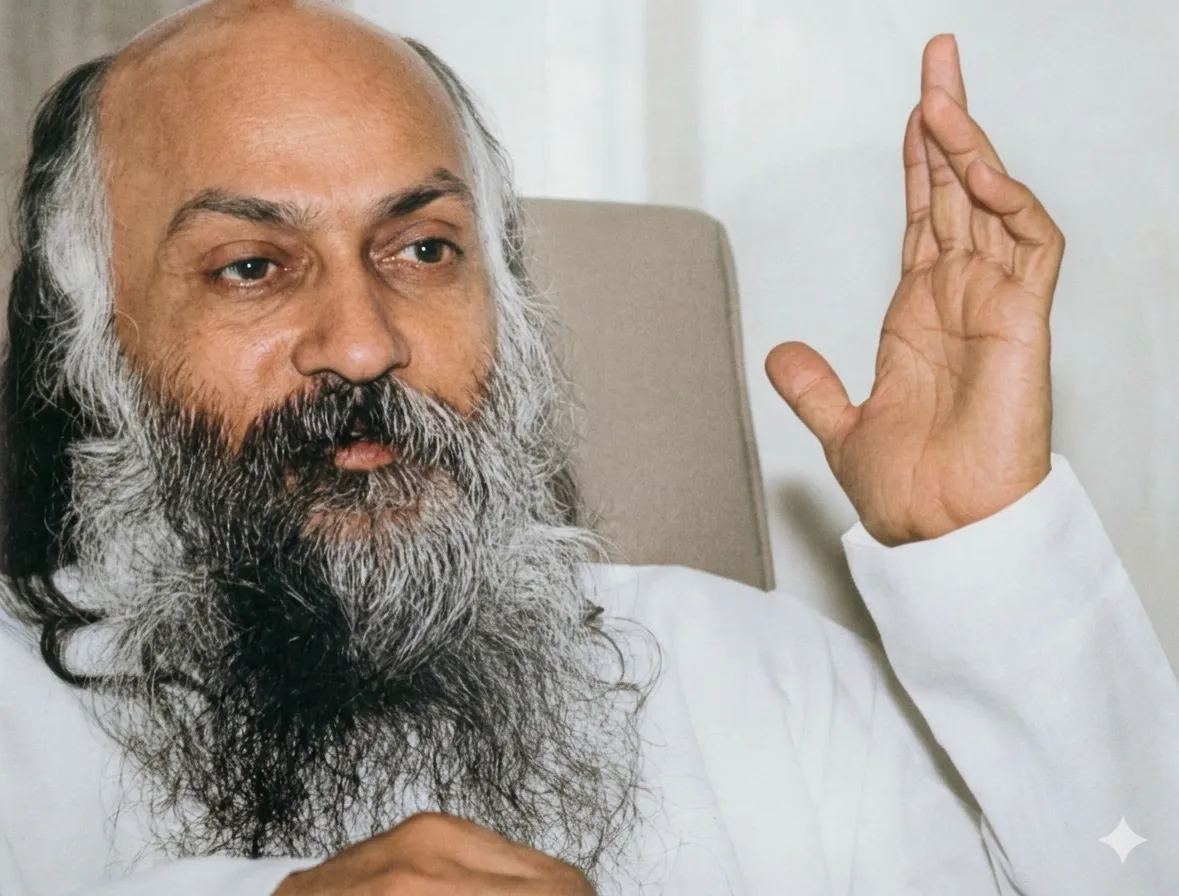
"The Sword and the Lotus" is an evocative exploration of dualities, intricately woven by Osho to awaken deeper awareness and transformation. At the heart of the discourse is the paradoxical relationship between sword and lotus—symbols representing strength and serenity, action and meditation, earthliness and transcendence. Osho delves into the intrinsic tension between these forces, revealing how they coexist in the human experience and spiritual journey. Osho's teachings challenge conventional dichotomies, urging the seeker to embrace life's contradictions as pathways to higher consciousness. Through his lucid, poetic narratives, he dismantles the illusion of separation between the material and the spiritual, fostering an understanding of their inherent unity. Encouraging a fearless confrontation with one's inner complexities, Osho illuminates the potential for profound awakening when strength is harmonized with compassion. This series transcends mere intellectual discourse, inviting a lived experience of wisdom where the sharpness of the sword is softened by the tenderness of the lotus. Osho's unique perspective unveils an alternative vision of balance—one not achieved by avoiding life's challenges, but by engaging with them fully, transforming every encounter into a meditative practice that nurtures both individual and collective evolution.
-
Chapter 1: An individual revolution
Joy is the true revolution: be cheerfulness incarnate to break ideologies that breed misery, touch the fearful by example and forgive oppressors.
-
Chapter 2: Don't sow wrong seeds
Human longing for Utopia stems from an inner wound; God and perfect societies are consolations—forgiveness heals, growth not perfectibility, is life's way.
-
Chapter 3: The science of the inner soul
Priests and politicians hide a dark future; only scientists, artists and living masters can awaken humanity, end repression, and birth a new, conscious humanity.
-
Chapter 4: The only secret there is
Sannyas means rejoicing, not renunciation: embrace life with playfulness, awareness and love; silence—letting go—is the only secret to enlightenment.
-
Chapter 5: Something of the sacred
Differences between men and women are complementary: women embody deeper love, serenity and sacred sexuality; men must learn reverence and patience.
-
Chapter 6: All is
Awakened not messiah: consciousness, personal responsibility over saviors; life has no purpose—be fully alive and share inner truth, in reply to 'Who are you?'
-
Chapter 7: The ecology of existence
Matter is energy; shaktipat (transmission) arises from presence and friendship, not enforced surrender - masters give without loss; love should be a free let-go.
-
Chapter 8: Truth is not far away
Challenging doctrines invites misunderstanding; drop lies and witness your mind—truth is within, masters wake the sleeping divine so you can awaken.
-
Chapter 9: One boat is enough
Reject riding in two boats—worldly pleasures and spiritual renunciation; integrate body and soul, enjoy life fully and reach the inner center.
-
Chapter 10: No question of I
Witnessing is safer than self-remembering because the ego can masquerade as the self; self-remembering needs a master. Transform sexual energy, don't repress it.
-
Chapter 11: Godless and yet so godly
Promises of masters create spiritual slavery; truth must be earned. Drop surrender, seek understanding like Buddha, and walk alone to liberation.
-
Chapter 12: The golden mean
Be a mirror: live spontaneously, reflecting without doing; drop desire and ego to find the golden mean—extremes kill, witnessing frees, desire breeds misery.
-
Chapter 13: Almost ready to steal the truth
Upanishad is silent readiness: truth caught not taught. Aesthetic joy is fleeting; enlightenment transforms. Save the world through meditation and peace.
-
Chapter 14: The last word in meditation
Guidance helps but cannot substitute personal effort; a true master frees rather than owns. Meditation's last word is wordless gratitude and silence beyond logic.
-
Chapter 15: A meditator is a rain cloud
Madness of meditation is going beyond the mind: a meditator overflows like a rain cloud; the absolute is not caused but remembered, and a master reassures the seeker.
-
Chapter 16: Life is a school
Fear of ignorance drives preaching; life is a school to learn self-knowledge through present, direct experience, not borrowed beliefs or promises.
-
Chapter 17: A device to find yourself
Men's cultural repression has denied women spiritual mastery; enlightenment is found not in ritual but in inner silence and meditation — discover who you are.
-
Chapter 18: The art of living
Trust and let go, not ego-driven struggle: float with existence, turn religions' renunciation into the art of living, surrender and watch the ego dissolve.
-
Chapter 19: A simple thank you
Be a light unto yourself: take responsibility for your freedom, shed conditioned guilt and dependence, and embrace love, innocence and gratitude.
-
Chapter 20: Reaction never brings freedom
Reaction merely reverses error; true freedom arises from understanding and meditation—synthesis of opposites creates the new man, not counter-reaction.
-
Chapter 21: Something deeper than the mind
Freedom from conditioned ego: the master helps you remember a deeper, nonjudgmental awareness beyond mind, fear, books and imposed religions.
-
Chapter 22: The sword and the lotus
Embrace the inner woman and man to dissolve imposed roles: tears heal, love opens, and integrating opposites frees individuals, relationships and society.
-
Chapter 23: No beginning -- no end
Existence has no beginning or end; reality is dialectical - male and female complementary; sex is sacred; inner unity transcends egoistic gurus.
-
Chapter 24: The master is at the door
Friendship with a master holds reverence and love; when the master stands at the door it signals ego's death and rebirth into the true self—welcome him.