
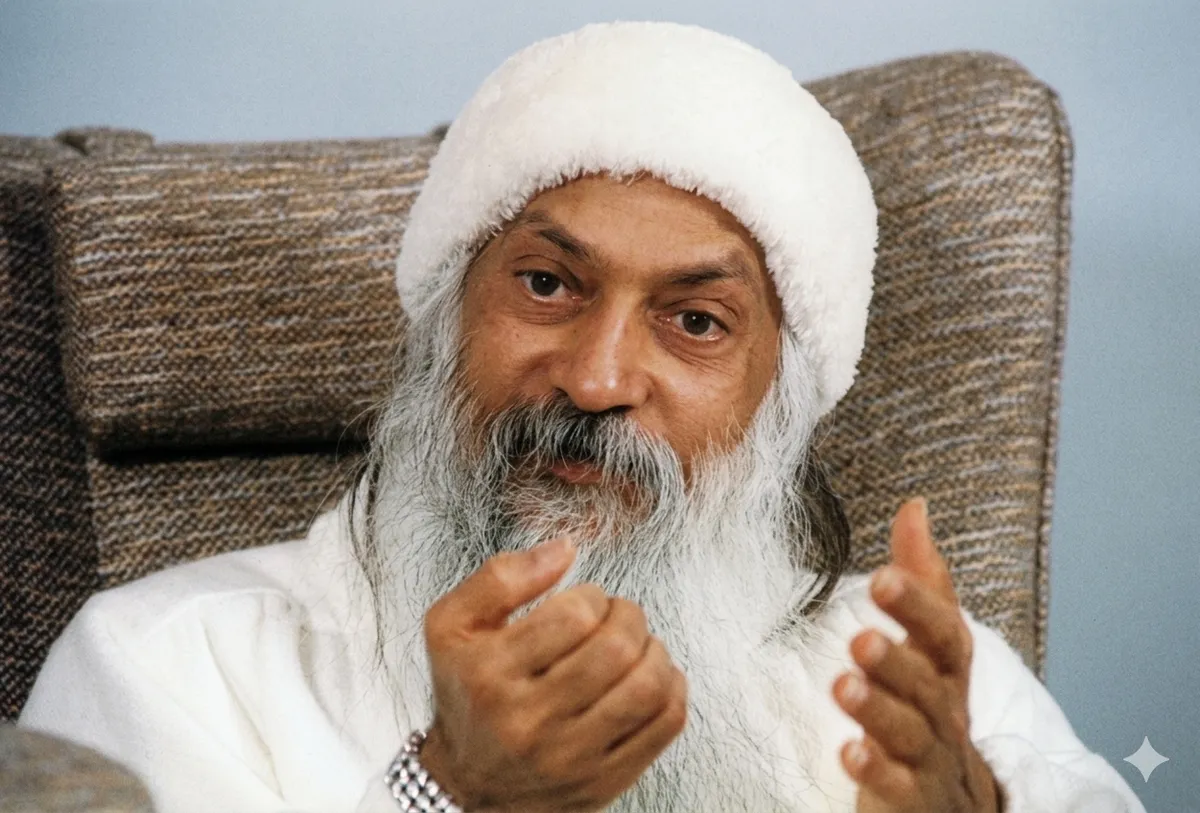
"The Secret of Secrets, Vol 2" is a profound exploration of the esoteric teachings of the Taoist sage, Lao Tzu, through the insightful lens of Osho’s spiritual guidance. This series delves into the timeless wisdom of the Tao Te Ching, embracing themes of harmony with existence, the balance between action and inaction, and the unfolding of one's inherent nature. Osho, with his characteristic blend of humor and depth, unravels the complexities of Taoist philosophy, urging listeners to transcend societal conditioning and embrace their authentic selves. He emphasizes the simplicity and spontaneity of life, advocating for a return to innocence and naturalness. The discourse encourages a shift from intellectual understanding to existential experience, fostering a deeper connection with the universal flow. Osho’s unique perspective illuminates the subtleties of living in accordance with the Tao, where surrendering to the flow of life leads to true freedom and inner peace. Through engaging narratives and transformative insights, this series serves as a blueprint for integrating serenity and balance into the modern chaos, inviting individuals to discover their own 'secret of secrets' within.
-
Chapter 1: A little bit of sky
Bliss is within; cultivate it patiently - relaxed, balanced meditation avoids torture, coldness or chasing thoughts, as the hermit savours a little sky.
-
Chapter 2: Love is the only friend
Love and prayer heal by restoring wholeness, responsibility and freedom; prayer reconnects you to existence, whereas therapy merely adjusts you to society.
-
Chapter 3: The golden flower is opening
Total surrender dissolves the ego; the golden flower buds into timeless joy and clarity, calling the awakened to redeem all beings as bodhisattvas.
-
Chapter 4: Words cannot contain it
Enlightenment is already your nature; seeking it is the greatest joke. Truth arrives in wordless silence and cannot be contained by words. Embrace silence.
-
Chapter 5: The spirit returns and touches heaven
Three signs—'gods in the valley', 'empty chamber light', and 'spirit touches heaven'—reveal meditation's emptiness, radiant knowing and ego-free action while living in the world.
-
Chapter 6: Aloneness is ultimate
Aloneness is ultimate freedom: what feels like loneliness is a misinterpretation—dive into aloneness to transform love, meditation and life.
-
Chapter 7: The moon gathers up the ten thousand waters
Centering, witnessing, fluid receptivity and union of polarities crystallize the spirit; action-in-nonaction arises and 'now-here' becomes the true home.
-
Chapter 8: I sure dig you, man
Intelligence is innate heart-seeing, destroyed by imitation and schooling; be reborn, drop the head's program and live from the heart—this is true intelligence.
-
Chapter 9: With emptiness, the matter is settled
Emptiness settles the matter: enlightenment is received when the ego dissolves—like Chiyono’s broken pail—practice prepares but cannot force the divine to enter.
-
Chapter 10: Because of love, we are together
Integrate East and West: accept body and soul, love and awareness; drop dogma, experiment in life and love so wholeness and God arise through disappearance.
-
Chapter 11: The contemplation of emptiness
Contemplate emptiness, delusion, and the center: see the world as a dream, withdraw attention to crystallize your center; death reveals no coming or going.
-
Chapter 12: Tao is already happening
Tao is already happening: drop will, ambition and the doer; live herenow, trust life's spontaneity—then love, joy and God arise without effort.
-
Chapter 13: Where the positive and negative meet
Tao is immediate undivided reality: meet inner opposites (yin/yang, anima/animus), transform sexual energy upward to bloom Golden Flower and reunite with Tao.
-
Chapter 14: This very world the paradise
Embrace sensuous presence: the immediate is the ultimate—this shore is the other; dancing meditation alchemizes ordinary life into paradise when trusted.
-
Chapter 15: The festive dimension
Life is God; celebrate body and sex as a path to transcendence—reject priestly repression; sexual stages lead from autosexuality to brahmacharya and samadhi.