
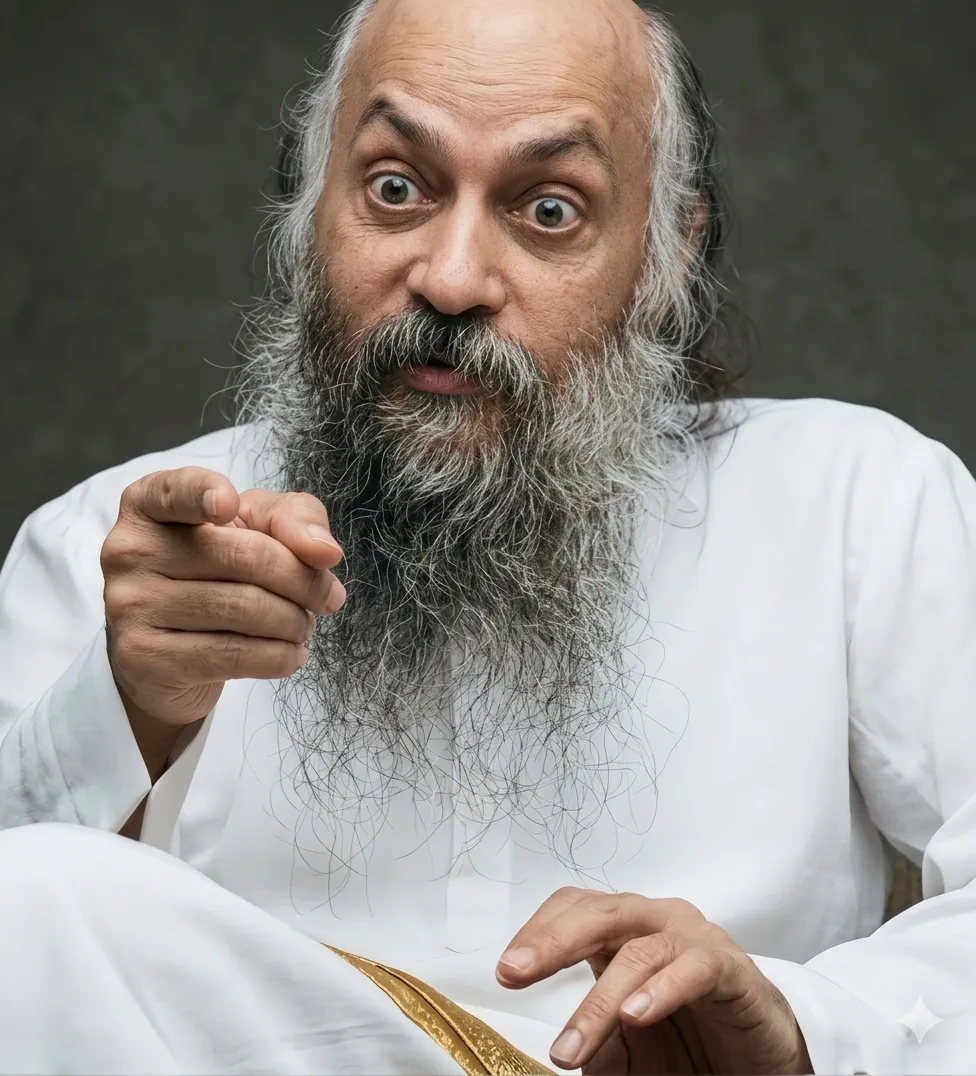
"The Secret" is a profound exploration of inner consciousness, where Osho delves into the enigmatic layers of the self and the universe. Throughout the series, Osho uncovers the intricate relationship between the outward realities we perceive and the inner truths we possess yet often overlook. He challenges conventional perceptions of existence, urging individuals to transcend surface-level experiences and seek deeper meanings within themselves. Central to the discourse is the theme of awakening to one's true nature, shedding the compounded layers of social, cultural, and psychological conditioning that obscure genuine self-awareness. Osho emphasizes the importance of meditation as a key tool for this inner revelation, promoting it as the ultimate path to unlocking the mysteries of life and attaining spiritual liberation. He discusses the necessity of embracing uncertainty and vulnerability, seeing them as gateways to profound personal transformation. His teachings encourage a fearless approach to living, advocating for authenticity, spontaneity, and a harmonious balance between individuality and universal oneness. Osho's insights invigorate a shift from living with intention towards living with awareness, guiding practitioners to not just understand "The Secret" intellectually but to truly experience its transcendental reality.
-
Chapter 1: La Illaha Ill Allah
La illaha ill Allah: existence is God; Sufism is the path of ishq — total, self‑annihilating love. A master turns undigested teachings into living wisdom.
-
Chapter 2: A Chance To Pour My Grace Into You
Love's pain is transformation: it forces ego-death, opening the way to bliss and God; surrender, true education and non-doing lead from darkness to light.
-
Chapter 3: Wisdom Is An Awakening
Freedom, not mere perception, liberates: society's priests, politicians and pundits substitute the false for the real; wisdom is wakeful, immediate being.
-
Chapter 4: I Declare Myself Bhagwan
Answering Morarji Desai's charge, Osho calls sex a sacred natural energy, exposes repression as domination, and affirms 'Bhagwan' as self‑realized.
-
Chapter 5: Accept Your Reality
Accept your reality: drop ideals that hide your inner violence and blame, take responsibility — answer 'From where do you come?' by waking into awareness.
-
Chapter 6: Life Is An Empty Canvas
Life is an empty canvas: trust means relaxing into the present—not passive or active—and loneliness, faced in meditation, can transform into joyous aloneness.
-
Chapter 7: These Letters Have No Meaning
Thinking substitutes for inner depth; drop meanings and scripts, risk aloneness to discover your center — the real question is: Who am I? Start asking.
-
Chapter 8: The Cool White Shine Of His Beloved
Trust, not doubt, is the disciple’s intelligence; unconditional surrender dissolves ego, turning puzzles into meditation, and a living Master awakens inner truth.
-
Chapter 9: Truth Simply Is
Truth simply is: timeless, present-only. Drop past and future, as Bahaudin's lamb-stew parable shows-old/new don't change the eternal taste of truth.
-
Chapter 10: No Lower, No Higher
Simplicity is effortless presence, living without ideals, character or repression; be here-now to reclaim intelligence, energy and inner unity.
-
Chapter 11: The Lion And The Fox
Man invents a false self from others' opinions; the real self must be discovered inwardly — the essential question: Who am I? leads to freedom.
-
Chapter 12: The More Mysterious It Becomes
Mysticism is knowing life as poetry, not logic: an unknowable experience to be lived, not grasped; dissolve into the beloved and let science and religion meet.
-
Chapter 13: The Mirror Goes On Reflecting
Truth reflects without proof: a Master is a mirror revealing ego's masks and unconsciousness; surrender and fearless trust allow inner extinguishing and rebirth.
-
Chapter 14: Forget The Dancer And Be The Dance
Experiences like auras are illusory; drop spiritual spectacles and desire - the seer (witness) is the truth; realization replaces experience, not visions.
-
Chapter 15: Trust In The Master
Trust inwardly, doubt outwardly: surrender to a Master’s strange commands to die as ego and be reborn; obedience can reveal truth and rescue the lost.
-
Chapter 16: Now, Something Beyond The Machine
The future is hopeful: technology and capitalism can free humanity from labor, atom-bomb deterrence ends war, and love must transcend machines.
-
Chapter 17: Are You Willing To Be Made Nothing?
Drop the self and cease seeking outward; God is your own being. True awakening requires disappearance and fearless surrender, not moral fixes.
-
Chapter 18: The Master Is A Metaphor
Fear of Tantra and Encounter springs from society’s repression of sex and death; embracing both as one polarity dissolves ego, awakens presence and bliss.
-
Chapter 19: Infinite Patience
Infinite patience is the gateway: the seeker must stop coveting and hurry, embrace this-moment presence; the Fruit of Heaven grows once in 30 years, 30 days.
-
Chapter 20: The World Of No-Thing
The no-self (anatta) is the true self: negate the ego, celebrate 'no-thing' to become presence beyond things; choose negative symbols to awaken.
-
Chapter 21: The Secret
Return to your source: the goal is the origin. Ayaz's locked room with rags, staff and bowl teaches non-seeking, inner-poverty and secret remembrance (zikr).