
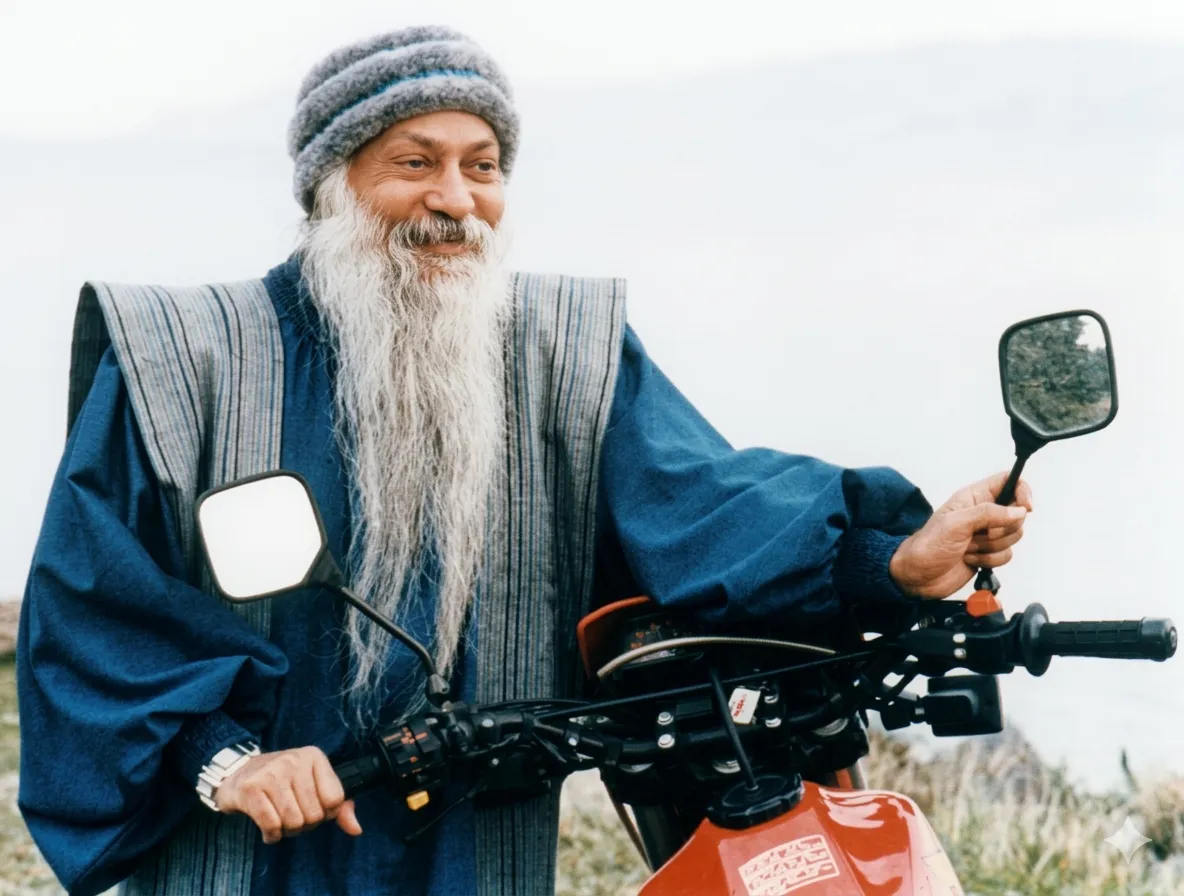
"The Path of the Mystic" by Osho is a profound exploration of the essential journey of self-discovery and inner transformation. This discourse series delves into the mystic's path, not as a predefined route but as an individual, experiential odyssey towards enlightenment. Osho invites seekers to transcend the constraints of societal norms and intellectual constructs, encouraging a direct encounter with the depths of one's own consciousness. Central to the series is Osho's assertion that true spirituality is a personal awakening that arises from within, rather than through adherence to dogma. He emphasizes the importance of awareness, meditation, and the embrace of uncertainty as catalysts for spiritual growth. The mystic's journey, as articulated by Osho, is one of trust and surrender, where the seeker learns to dance with the mysteries of existence and finds union with the divine through inner silence and understanding. Infused with Osho's characteristic wit and insight, "The Path of the Mystic" challenges conventional perceptions and inspires a radical shift in perspective, urging individuals to live authentically and courageously. It is a potent reminder that the mystical experience is available to all who dare to venture beyond the known and awaken to the limitless possibilities within.
-
Chapter 1: Thoughts are always subversive
Thinking is subversive; society fears it. Freedom comes from shedding imposed personality, becoming an individual, and realizing immortal consciousness.
-
Chapter 2: Start the journey from the heart
Desire blocks enlightenment; a taste of desirelessness in the master's presence dissolves the mind and lets truth arise — begin the inner journey from the heart.
-
Chapter 3: Enchanted with the unknown
Mind's 'madness' can be a passage beyond the known: fear of the unknown from birth must be faced; silence and surrender protect and reveal true sanity.
-
Chapter 4: Reality is always fragile
Disasters reveal reality's fragility and offer opportunity: awaken to the only moment, use fear to become totally present and find inner security beyond death.
-
Chapter 5: The moment truth compromises, it dies
Zen is pure witnessing, dhyan: an inward letting-go beyond doctrine; group consciousness can uplift or annihilate - compromise kills truth and power.
-
Chapter 6: The flower of discipleship
Awakening reveals a witness beyond the body; cultivate that distance toward mind and heart, and discipleship blooms when ego exhausts itself into surrender.
-
Chapter 7: Between these two dreams
Bardo: stay awake in the death-gap between life-dreams, let go to be reborn consciously; watchful awareness dissolves many personalities and reveals true self.
-
Chapter 8: A longing for the beyond
Mind is ancient layers around consciousness; each life gives a new brain. Meditation strips those layers to reveal timeless awareness and a longing for the beyond.
-
Chapter 9: Grateful to existence
Born 'almost enlightened,' Osho says gratitude and unconditional trust free one from suffering; accept existence — even crucifixion — with joy. He recalls school episodes.
-
Chapter 10: You are not to be somebody
Conscious mind represses to unconscious; only the superconscious can dissolve conditioning and integrate all levels so you are not trying to be somebody.
-
Chapter 11: Ego is the greatest bondage
Ego is the greatest bondage: naming virtues can feed it unless they’re experientially realized; encourage curiosity, meditation and increasing consciousness.
-
Chapter 12: Mind is the whole problem
Mind is the problem: abandon techniques—watchfulness (witnessing) reveals truth, dissolves hallucinations, and frees you from the wheel of samsara.
-
Chapter 13: Misery is nothing but choice
Misery arises from choosing and clinging to transient ecstasy; cultivate choiceless awareness, witness love without possession, allow rests and longing, and pain dissolves.
-
Chapter 14: Just by celebrating
Enlightenment isn't a choice; a nondecisive individuality expresses into mastery. Masters arise when unique voice serves existence; celebrate light, not fight.
-
Chapter 15: The real riches
Relaxation can lead to sharp superconscious awareness or restorative sleep—both necessary; accept what arises, transform yourself into a living silence that heals.
-
Chapter 16: Treasures or dragons
Unconscious stores our fears; the superconscious holds spiritual treasures that hypnosis can reveal. Truth and freedom require courage and responsibility.
-
Chapter 17: Existence has no hurry
Body, mind and heart form one organism: change anywhere ripples everywhere; the body ultimately follows awareness, not mind — existence has no hurry.
-
Chapter 18: Intelligence is our only treasure
Mind is inevitably judgmental; true clarity and intelligence arise only by transcending the conditioned mind into witnessing silence, not by forcing nonjudgment
-
Chapter 19: The bliss of aloneness
Loneliness is absence; cultivate inner aloneness like bringing light into darkness—be whole, share from fullness, and fear of isolation dissolves.
-
Chapter 20: Tears of gratitude
Uplift and longing: a spontaneous taste of superconsciousness brings cleansing tears—gratitude, not pain. Remain awake, trust life’s mysterious visitations.
-
Chapter 21: Only if love allows
Sexual energy is natural and must be accepted and sublimated with meditation; love, not law, guides relations, and orgasm can open no-ego consciousness.
-
Chapter 22: The watcher is not amused
Every act can become sacred through total presence - be like the Zen tea ceremony; the silent watcher only observes, never takes part or is amused.
-
Chapter 23: Fall into trust
Witnessing is not in the brain but uses it; awakening leaves a thin, persistent awareness that can disturb the body—even cause death—yet it spreads.
-
Chapter 24: Meditation is a revolution in religion
Sitting silently, doing nothing - meditation suspends the mind, lets an inner spring awaken and life grow by itself; East's silence meets West's mind.
-
Chapter 25: Stealing the truth
Love and trust are stepping stones to a nameless at-one-ment beyond relationship; truth must be 'stolen' from the master-effort makes it ultimately yours.
-
Chapter 26: I don't answer your questions, I answer your hearts
True surrender is not submission but a meeting of presences that enriches the self; despite Poona misuse, the heart cannot ask directly, it triggers the mind.
-
Chapter 27: Something that knows no going back
After enlightenment Osho entered deep silence, later spoke to awaken a new synthesis of Zorba and Buddha; transformation once begun 'knows no going back.'
-
Chapter 28: Nowhere to go
Silent waiting cultivates the master's presence within: absence is a test of trust; use solitude to open inwardly and let inner communion arise.
-
Chapter 29: New skies to fly in
Religions' manyness is dying; truth is one. Religiousness must be lived, not inherited; the old order closes doors but a new, free man will be born.
-
Chapter 30: The name is love, but the game is politics
Love must arise from the heart beyond mind's love-hate politics; true love grows in equality and frees both women and men from domination and dependency.
-
Chapter 31: I cannot leave my garden unfinished
Take refuge in the here-and-now: mind deceives with past/future doubt. When life feels difficult, present silence is genuine life, not escapism.
-
Chapter 32: My vision is of the whole
Stop the East-West pendulum: unite material richness and meditation so neither hemisphere dominates; spread meditation globally to unify humanity
-
Chapter 33: More dangerous than nuclear weapons
Awakening awareness cannot be stopped by power; transforming individuals into 'no-mind' dissolves institutions. Trust transcends love—invite silent presence.
-
Chapter 34: The word cannot be crucified
A new humanity must replace false belief-systems with free, unique individuals; the living word must be spread everywhere—truth cannot be crucified, only lived.
-
Chapter 35: Nothing to lose
Crystallized consciousness can transcend the body, Gurdjieff's deliberate crash proves it; free repressed emotions, reject fake gurus, know your true Self.
-
Chapter 36: A tiger is also a guest
Staying with the master requires real courage: moving from darkness to light frees fear, while turning back into darkness is harder and foolish, Osho warns.
-
Chapter 37: A silent equilibrium
Balance heart and mind: silence the mind for devotion, sharpen it to resist society, then transcend both into a silent equilibrium of freedom.
-
Chapter 38: Death is others' opinion about you
Spread the awakened word to transform individuals, not society; a true master's word becomes sound then silence, dissolving fear, cruelty and death.
-
Chapter 39: My words are only indicators towards silence
Freedom is illusory—political, economic and spiritual slavery persist; nations are puppets (Uruguay/US blackmail). My words point to silence and inner freedom.
-
Chapter 40: The thought of silence excites nobody
Fear of silence arises from identification with the running mind; meditation halts conditioning, reveals the true self, the lion‑in‑sheep parable illustrates.
-
Chapter 41: The secrets of life are very simple
Life's secrets are simple: mind complicates; love, acceptance and relaxed stillness heal where analysis fails—stop denying experience, embrace compassion.
-
Chapter 42: Politics is a disease
Politics is a disease; sannyas means fearless openness, not hidden exposure. Politicians hide crimes; live life-affirming instead of seeking political fame.
-
Chapter 43: Unnecessarily barking at each other
Artists near enlightenment yet lose themselves in beauty; watchfulness dissolves false separations - we are mere reflections, barking at each other.
-
Chapter 44: I am talking to transform your heart
Respond without anger: a fightless fight is spontaneous, actionless action - transform hearts by living the truth, not forcing beliefs; let people ask.