
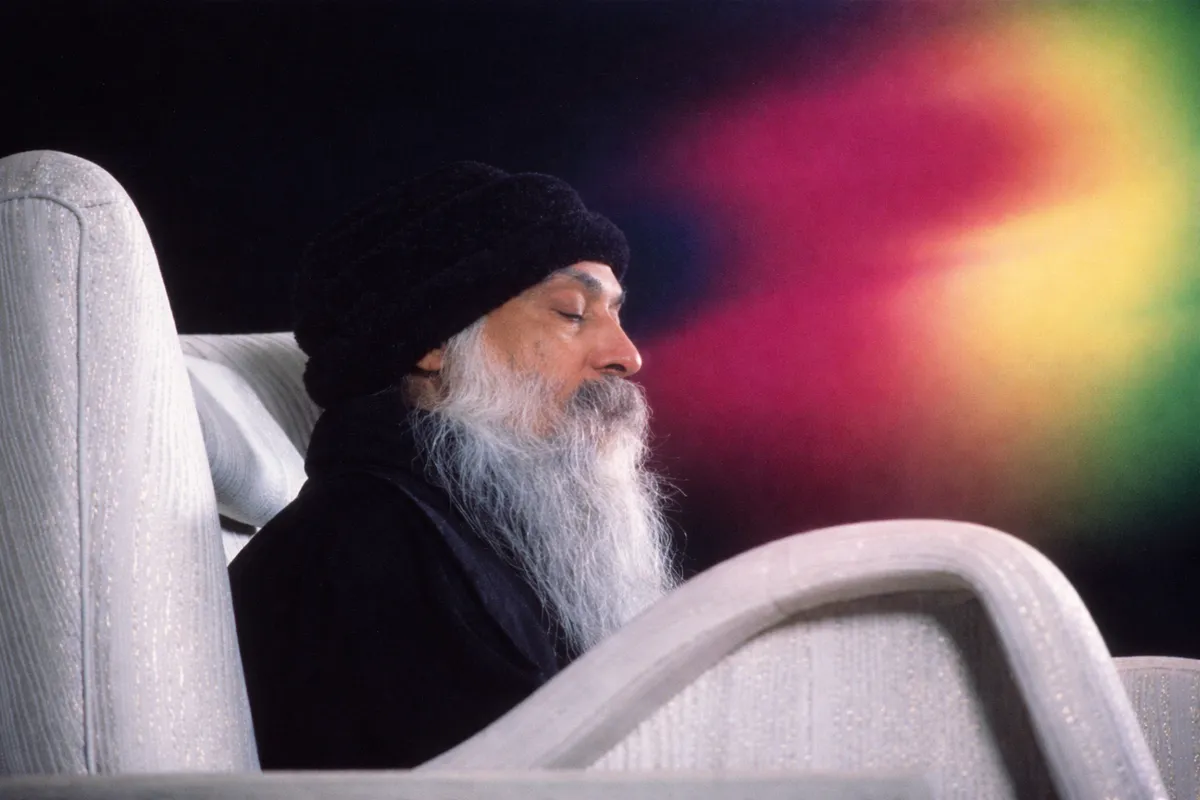
"The Messiah, Vol 1" offers a profound exploration of spiritual awakening and the essence of true enlightenment through Osho's unique and incisive perspective. In this discourse, Osho delves into the transformative journey of becoming a 'Messiah'—not in the traditional sense of a religious savior, but as an enlightened being who embodies pure consciousness and unconditional love. Osho dismantles conventional religious dogmas, urging seekers to transcend rigid beliefs and embrace their own intrinsic divinity. He emphasizes the importance of personal experience and inner transformation over blind adherence to external rituals or doctrines. Throughout the series, Osho invites listeners to cultivate a deep, intuitive awareness that transcends the superficial labels of organized religion, aiming to foster an understanding of life's interconnectedness and the universal oneness that binds us all. By challenging the status quo and advocating for a more personal and experiential approach to spirituality, Osho guides readers towards realizing their potential to live authentically and harmoniously. His teachings in this series offer not only a critique of traditional messianic figures but also an empowering blueprint for personal and collective spiritual evolution, deeply connecting the individual soul with the cosmic narrative.
-
Chapter 1: A dawn unto his own day
Almustafa's waiting shows true return needs patient receptive surrender: joy opens the heart, yet departure brings a wound of love for those left behind.
-
Chapter 2: A boundless drop to a boundless ocean
A realized soul must obey the universe's call: compassion binds him to others yet movement into the boundless is life; to tarry is to die.
-
Chapter 3: A seeker of silences
A seeker of silences: realization radiates like a flame; the awakened cannot give enlightenment—only invite, sow seeds, and become an empty lantern.
-
Chapter title
Almustafa symbolizes pure religiousness beyond organised faiths; genuine spiritual awakening dissolves mediators, and separation reveals love’s true depth.
-
Chapter 5: Disclose us to ourselves
Truth is already within; the innocent recognize it while the learned remain blind. Disclose us to ourselves: what moves between birth and death?
-
Chapter 6: Speak to us of love
Love is life's priceless fire: follow it despite pain, pruning, and loss of security; reject purchased love and risk freedom for real transformation.
-
Chapter 7: Love possesses not
Almustafa (Kahlil Gibran) shows that true love gives only itself, cannot be possessed and multiplies in freedom; possession kills love and breeds unfreedom.
-
Chapter 8: Let there be spaces
Let there be spaces in togetherness: marriage must be based on freedom not possession; love deepens when partners keep individuality and give without binding.
-
Chapter 9: Your children are not your children
Children are not possessions but life’s longing made human; give them love, not your thoughts or religion—let them find their own future. Echoing Gibran.
-
Chapter 10: When you give of yourself
Speak to us of giving: give of yourself, not possessions; abandon ego-ambition, trust existence, give unasked from joy or pain - then your hands become God's.
-
Chapter 11: Life gives unto life
Give from abundance; life gives to life - stop judging who deserves. True charity honors the courage to receive; thief-and-blanket story reveals compassion.
-
Chapter 12: The wine and the winepress
Responding to the plea to 'speak of eating and drinking,' Osho condemns killing for food, rejects religious compromise, and urges radical reverence for life
-
Chapter 13: Speak to us of work
Work is sacred creativity: by labor done with love you keep pace with the earth, bind yourself to life and to God — work as music, not burden.
-
Chapter 14: Work is love made visible
Work is love made visible: true creativity springs from your innermost being, not from seasonal love; only meditation makes love unconditional and eternal.
-
Chapter 15: Beyond joy and sorrow
Joy and sorrow arise from the unconscious mind; through meditation and silence one transcends their contradiction and discovers a fearless, timeless joy.
-
Chapter 16: From house to home from home to temple
A house is dead until filled with love; a home breathes and when your heart is pregnant with God a home becomes a temple — make it an inner sanctuary.
-
Chapter 17: The boundless within you
Are your houses graves or homes? Osho urges transcending the mind, reclaiming the boundless within, using comfort but never being its slave.
-
Chapter 18: Shame was his loom
Clothes, woven from shame, hide beauty and cut us off from life; reclaim nakedness to restore bodily vitality, truthful sexuality, and free mind from modesty.
-
Chapter 19: The gifts of the earth
Beautiful words without methods are empty; real change needs inner transformation—meditation to awaken love and justice, not poetry about markets.
-
Chapter 20: Crime: a crowd psychology
Crime and punishment stem from crowd psychology; virtue and responsibility arise in aloneness and inner awakening - your god-self is an ocean and sun.
-
Chapter 21: Leaves of a single tree
Judgment is irreligious: saints and sinners are leaves of one tree; rightness follows awareness — what awakens you is right, what numbs you is wrong.
-
Chapter 22: Sinners and saints: the drama of sleeping people
Judging sinners vs saints ignores inner causes; faithfulness is often slavery, marriage breeds pretence, and true justice sees the entwined roots of deeds and remorse.
-
Chapter 23: Except Love, There Should be No Law
Laws made from fear bind and beget more injustice; only love dissolves law. Break yokes, follow your nature - dance, don't stumble on another's chains.