
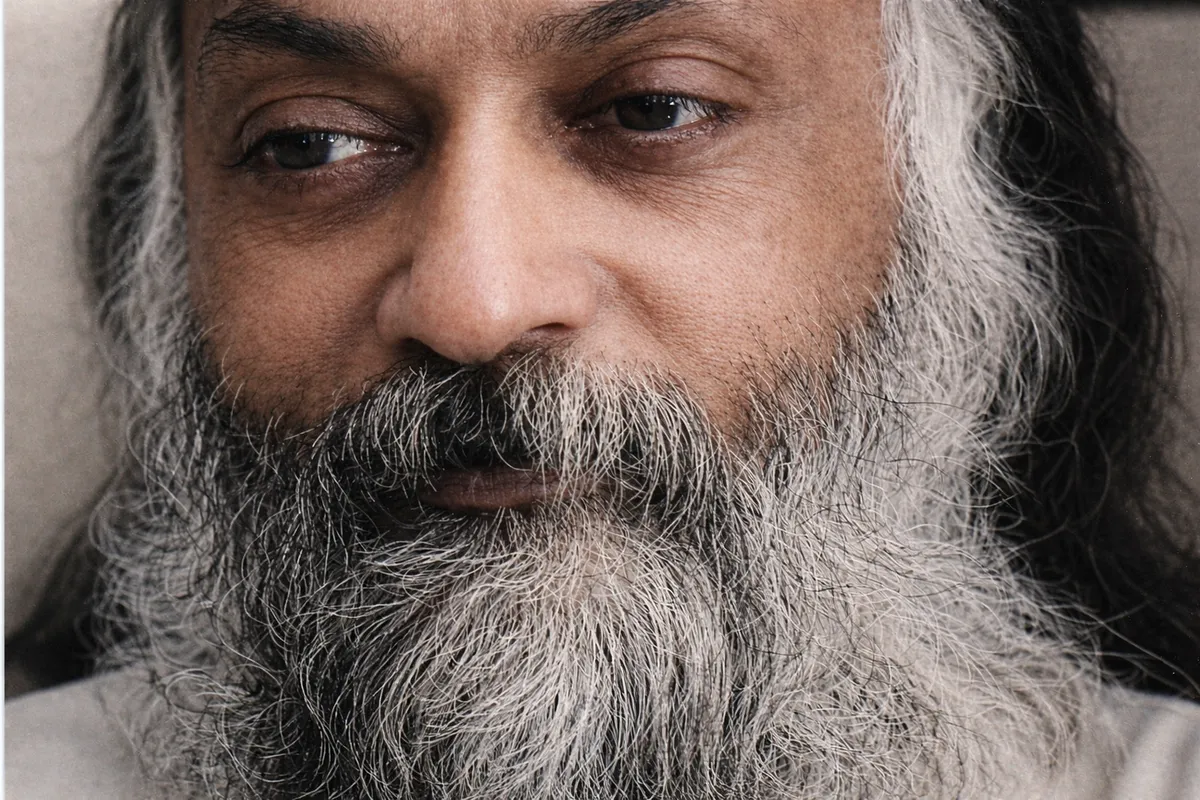
"The Last Testament, Vol 5" is a profound exploration of spirituality through the lens of Osho's illuminating discourse. This series delves into the intricate dynamics of human consciousness and the perennial quest for ultimate freedom. Osho masterfully examines the paradoxical relationship between individuality and the collective, urging seekers to transcend conditioned societal norms and embrace a life of authenticity and inner harmony. He challenges conventional religious dogmas, encouraging a direct, personal experience of the divine rather than adherence to inherited beliefs. Through incisive dialogue, Osho uncovers the layers of the human psyche, inviting individuals to dissolve their egoic boundaries and tap into a deeper sense of unity with existence. The discourse reflects Osho's radical vision, one that emphasizes mindfulness, the power of silence, and the transformative potential of meditation. His teachings beckon us to experience life fully, with awareness and joy, cultivating a state of being that is both liberated and deeply connected. "The Last Testament, Vol 5" stands as a testament to Osho's unwavering commitment to guiding humanity towards a future rooted in consciousness and love.
-
Chapter #1
Freedom arises when the mind drops conditioning and rests in silent witnessing; how can one live moment-to-moment without clinging to the ego?
-
Chapter #2
Living moment-to-moment, deprogramming belief into understanding: listen without interpreting, reject organized religion, use the world as bridge.
-
Chapter #3
India must abandon outdated beliefs, embrace technology and birth control, transform caste and transmute sexual energy into higher consciousness to survive.
-
Chapter #4
Osho denounces American hypocrisy and political fear, urges inner science and meritocracy, defends communes and sacred sexuality as paths to consciousness.
-
Chapter #5
The commune endures invisibly; freedom and individuality must replace rigid structures and money-worship, and power is powerless before love.
-
Chapter #6
Osho defends Rajneeshpuram, blames U.S. harassment, redefines sannyas as 'rejoicing the world,' and vows a larger independent island commune and open university.
-
Chapter #7
Life is a search, not a finding; truth is individual and dies in institutions - reject successors; expose Church hypocrisy and its stand against contraception.
-
Chapter #8
Wordless enlightenment is lost in words and priestly distortion; make meditation simple, tied to silence, love and ordinary needs so the well meets the thirsty.
-
Chapter #9
Osho proposes an independent island commune to model anarchism - not by destroying government but by transforming people so governance becomes unnecessary.
-
Chapter #10
Government fear and exile, communes as models of joyous, moneyless, self-reliant life; plans to relocate to an independent island to continue work.
-
Chapter #11
Rajneeshpuram's crucifixion showed love's power over state force, proved anarchist-communist unity; taught embracing uncertainty and meditation as witnessing.
-
Chapter 12: In the presence of truth
Devotion lowers love; honor self-respect and express fully—tears or laughter; rise to friendship and satsanga, cherish aloneness rather than mob adoration.
-
Chapter #13
Silent presence creates synchronicity—darshan can transform. Education must be revolutionized: body, mind, heart, soul with meditation, diet, and doubt.
-
Chapter #14
To seek truth one must drop conditioned beliefs and social fears; sannyas is courageous individuation, fueled by meditative bio-energy shared in communes.
-
Chapter #15
Refusing exile and anti-life renunciation, neo-sannyas celebrates sexual creative energy while staying centered; challenge conspiracies and free media.
-
Chapter #16
Religion must dissolve itself so individual meditation alone connects man to existence; drop God and priesthood, embrace silent meditation as freedom.
-
Chapter #17
Osho defends communal, money-free meditation living, criticizes political and religious hostility, recounts US arrest and press support, affirms being awakened.
-
Chapter #18
Live spontaneously, not as a follower; destroy blind beliefs and superstition with reason; accept sex and life naturally; be oneself and find bliss.
-
Chapter #19
He denies being a prophet or messiah, rejects God, calls himself a mirror reflecting others, and insists he has friends, not followers, to protect dignity.
-
Chapter #20
De-programming conditioned beliefs to reclaim innocence and individuality; live fully in the present—be now here—to find true happiness and authenticity.
-
Chapter #21
Conservatism's resurgence is a last gasp against transformation; true spiritual change requires sharp intelligence and deep discontent, not mere wealth.
-
Chapter #22
Existence is a divine fullness, not 'zero'; we emerge from and return to potentiality—think positively, cultivate awareness, compassion, transformation.
-
Chapter #23
A Buddha can be jailed or killed; buddhas are human and vulnerable, priests mythologize them to retain power, but truth awakens through lived experience.
-
Chapter #24
Living enlightened beings are rejected; dead saints are idealized; mind has no beginning but ends in meditation; East and West should unite science and inquiry.
-
Chapter #25
Prophets have insulted women; equality and ending sexual repression are required. Meditate here-and-now to transcend fear, find inner immortality and love.
-
Chapter #26
Rejecting organized religion as dead, he proclaims 'religiousness'—an individual, adjective-free inner freedom beyond priests; renunciation, awareness and joy transform life.
-
Chapter #27
Live moment-to-moment, reject past authorities and create whole man—Zorba the Buddha—uniting body and spirit; start a world tour to challenge corrupt states.
-
Chapter #28
Western psychology's ego traps people in ambition and restlessness; meditation reveals the no-mind and true self beyond ego, offering real healing.
-
Chapter #29
Radical commune dissolved family, money and nations to create a classless, ecological society; meditation is spontaneous total awareness underpinning freedom.
-
Chapter #30
Possessive marriage suffocates love; communes and free sexual exploration cultivate non-possessive love, honest choice, and fuller human awakening.