
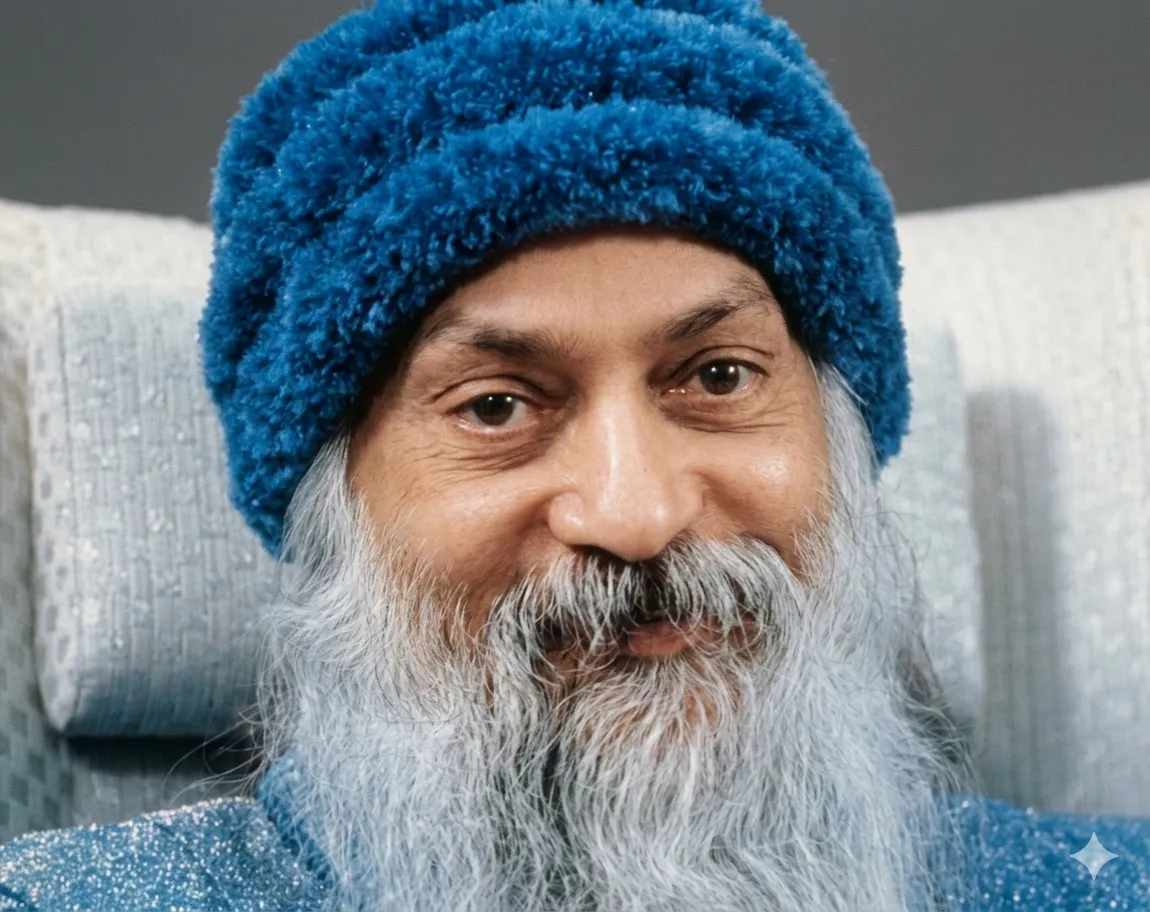
"The Last Testament, Vol 4" is a profound exploration of spiritual revelations articulated by Osho, a modern-day mystic known for his unique synthesis of Eastern and Western philosophies. In this discourse series, Osho delves into themes of spiritual freedom, the transcendent nature of consciousness, and the journey toward self-realization. He challenges conventional paradigms, encouraging seekers to transcend societal and religious constraints to discover their authentic selves. Osho's teachings emphasize living in the present, embracing the here and now as the doorway to enlightenment. His discourse invites listeners to dismantle the inner constructs of attachment and fear that obscure true awareness. Within this series, Osho provides insights into the interconnectedness of all life, highlighting the unity underlying the apparent diversity of existence. With his signature blend of incisive wit and profound wisdom, Osho guides individuals to awaken to their innate potential and the boundless joy that arises from true self-awareness. This volume serves as a transformative invitation to engage with life more deeply, question established norms, and embark on a path of inner liberation and profound inner peace.
-
Chapter 1: The Last Before The First
Science cannot study living religious experience; religions are corpses—religiousness must be lived via meditation. Osho calls this his 'Last Testament.'
-
Chapter #2
Every scientist should be trained as a meditator so science becomes inner as well as outer; universities must require meditation to align technology with life.
-
Chapter #3
Rejecting organized religion and prophets, embrace individual enlightenment as healthful wholeness; transform consciousness to avert collective destruction.
-
Chapter #4
Religiousness is alive; organized religion is a corpse. Truth is unlabelled and contagious. Osho breaks silence, undoes Rajneeshism and defends the commune.
-
Chapter #5
Few authentic hearts, not masses, create a living commune; love, silence and inner experience - not dead religions or leaders - will renew humanity
-
Chapter #6
Drugs answer an ancient spiritual hunger; prohibition fails. Used wisely under guidance they can be a stepping‑stone into meditation and real freedom.
-
Chapter #7
Returning to India felt like home; true freedom is becoming witness through meditation; communes proved paradise and threatened politicians, and urged the pill.
-
Chapter #8
Awareness via meditation spreads without conversion; transform sexual energy inward. Political idols, repression and outdated symbols hinder paradise.
-
Chapter #9
India's essence is darshan—love of experience, not philosophy; cherish Upanishads, discard Manu's orthodoxy, and reunite sex and spirituality as natural unity.
-
Chapter #10
Live moment to moment: I am complete and unrelated, free of past and future; no communes, no claims — I even pleaded guilty to free my people.
-
Chapter #11
No future plans; live unplanned and find the inner still point to witness life. Freedom, India’s renewal, and nonviolence hinge on inner transformation.
-
Chapter #12
Reject violence, dissolve armies, curb population, end priestly exploitation and reform education; true freedom arises from inner awareness and unconditional love.
-
Chapter #13
Accepted false guilt out of compassion to free his disciples; challenges superstition, defends Western seekers, honors women as 'Ma' to sacralize love.
-
Chapter #14
Society is a name; focus on individual, transform sexual energy into spirituality, and build meritocratic communes to abolish poverty and politicians' power.
-
Chapter #15
Rejects ideology, proposes sannyas as deprogramming to recover the innocent self; meditation is witnessing that transforms life, even sex, into lived godliness.
-
Chapter #16
The Himalayas embody ancient spiritual heritage for Osho; he denies being 'guru of the rich,' arguing poverty blocks inner seeking while he offers godliness.
-
Chapter #17
America's hypocrisy shown by Osho's arrest; true freedom means inner renunciation, sexual liberation, nonviolence-as-power, and equal opportunity.
-
Chapter #18
Truth is experienced, not believed: grow through doubt, reason and meditation; learn to watch thoughts and feelings to become the witnessing self.
-
Chapter #19
Osho rejects national labels, turns persecution into teaching, exposes American hypocrisy, and urges tantra to transmute desire into consciousness.
-
Chapter #20
Osho recounts brutal jail harassment exposing American hypocrisy, defends the Rajneesh commune's humane experiment, and renounces Rajneeshism as religion.
-
Chapter #21
Embrace unplanned, spontaneous living: freedom unites matter and spirit, advocates affluence, tantric openness to sexuality, and creative communal life.
-
Chapter #22
Conscious witnessing — the 'fourth' — frees one from fear; reject organized religion, combine sex with meditation, free women and end poverty.
-
Chapter #23
Consciousness must remain unchanged amid life's storms; Bhagwan is the highest human potential, not God; dismantle ideologies and transform sexual energy.
-
Chapter #24
Drug use reflects humanity's search for escape; Osho urges inner joy via meditation, purified compassion for addicts, and education to prevent suffering.
-
Chapter #25
Existence is impartial; enlightenment doesn’t shield from illness or humiliation. Each must own responsibility, live authentically and freely without imposed duty.
-
Chapter #26
Protect children's innocence; stop imposing identities; heaven is being yourself. Free press must uplift good. India must embrace birth control and tech.
-
Chapter #27
Always at home inwardly; poverty is not blessed—stop population growth, turn weapons and war economies into life, and make the world one now.
-
Chapter #28
Rejecting belief and belonging, individuality, present meditation transform society; Osho defends his Oregon commune, explaining why enemies feared its joy.
-
Chapter #29
Osho defends the Oregon commune as a health-based refuge and model for dissolving family, abolishing money and marriage, showing how state fear meets living love.
-
Chapter #30
Humanity's gullibility to religions and politics breeds exploitation; only doubt, inner awakening and a few enlightened people can radically transform society.