
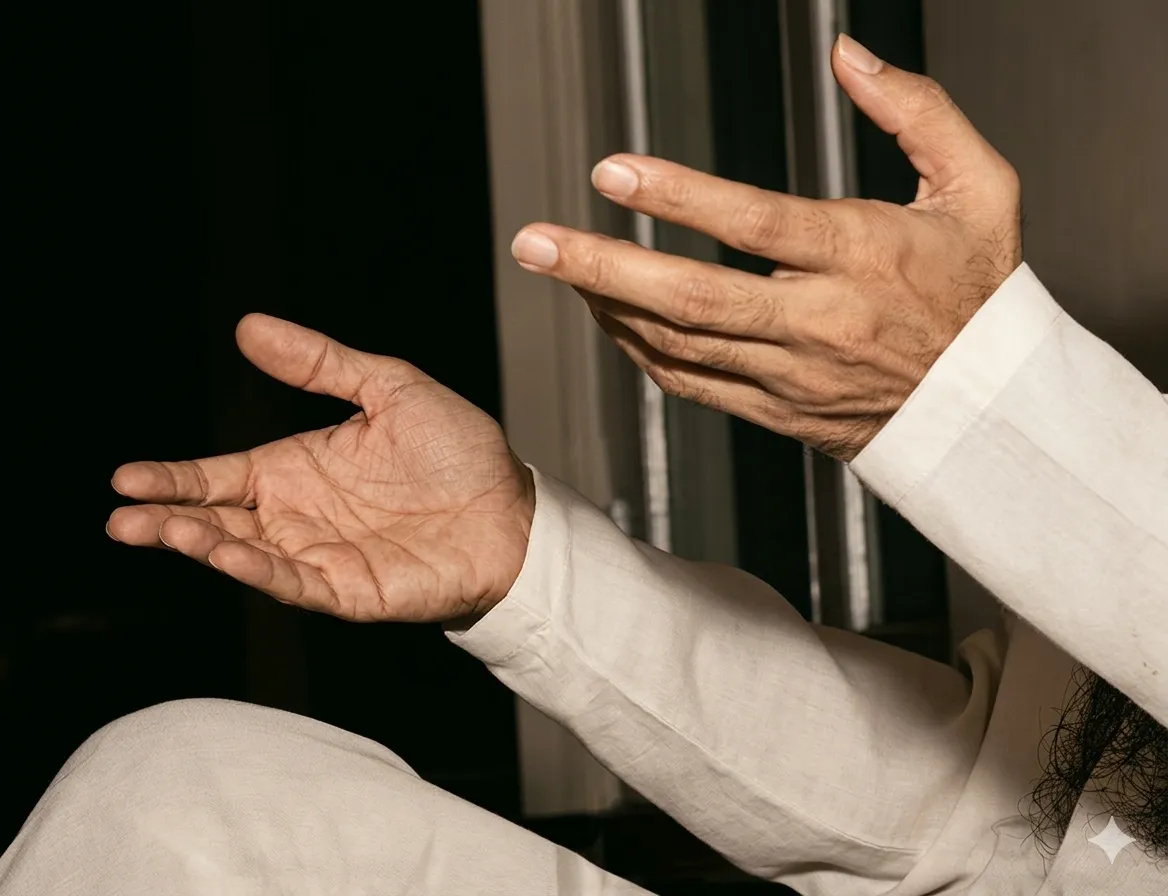
"The Language of Existence" invites seekers into the mystical realm where silence speaks louder than words. In this series, Osho explores the ineffable connection between the individual and the cosmos, emphasizing how true understanding transcends verbal expression and resides in the profound experience of being. Osho challenges the conventional reliance on language as a means of understanding by highlighting how existence communicates through subtle, non-verbal gestures—a breeze caressing the skin, the rustle of leaves, the profound stillness of the stars. He posits that this 'language' is spoken by all beings, offering a universal dialogue that can only be comprehended through deep awareness and meditation. At the heart of the discourse series lies the notion that enlightenment is not a distant pursuit but an ever-present potential within, waiting to be realized through tuning into this silent, existential language. Osho's unique perspective is both liberating and transformative, urging individuals to unlearn societal constructs and return to a state of childlike wonder and direct perception. By doing so, individuals can bridge the gap between themselves and the divine, embracing a life of authenticity and spontaneous aliveness, where existence, in its purest form, guides the soul toward ultimate truth and liberation.
-
Chapter 1: Remember, remember!
Create your own path — don't follow ancient roads; jump from place into inner space, remember; sannyas is absolute freedom: simply be yourself.
-
Chapter 2: Go like an arrow
Forge straight ahead into yourself like an arrow: persist without pausing to reach inner taste of being; right method yields true samadhi, not drug illusions.
-
Chapter 3: Seek nothing outside
Seek nothing outside: the Buddha is discovered inwardly through no-mind and watchfulness; outward seeking is a house on fire. On drugs: purify, don't prohibit.
-
Chapter 4: Beyond life-and-death
Life and death arise from the same hidden root; only by digging into the heart's root — not techniques but real inner witnessing — can one transcend both.
-
Chapter 5: The gateway of the buddhas
Contemplating impermanence can lead to hedonism or sterile thought; true liberation is meditative no‑mind — dissolve the thinker and meet the buddha within.
-
Chapter 6: Be a rare person
Despite Bankei's water metaphor, enlightenment is a sudden awakening—not a transferable gift; masters inspire, but each must turn inward to find and drop into one’s own no‑mind.
-
Chapter 7: Now you have it
Drop beliefs and thoughts, awaken the witnessing buddha within; intimate transmission burns ego into awakening—remember you are buddha and live from it.
-
Chapter 8: Please, settle for no-self
Stop seeking and drop the question: find the questioner—your awareness. The self dissolves into no‑self like a dewdrop in the ocean, revealing buddha nature.
-
Chapter 9: Lovers of tao
Tao has no followers, only lovers: Zen strips away the false self so pure existence can sing. Rinzai's philosophical rhetoric often obscures what is immediately known.