
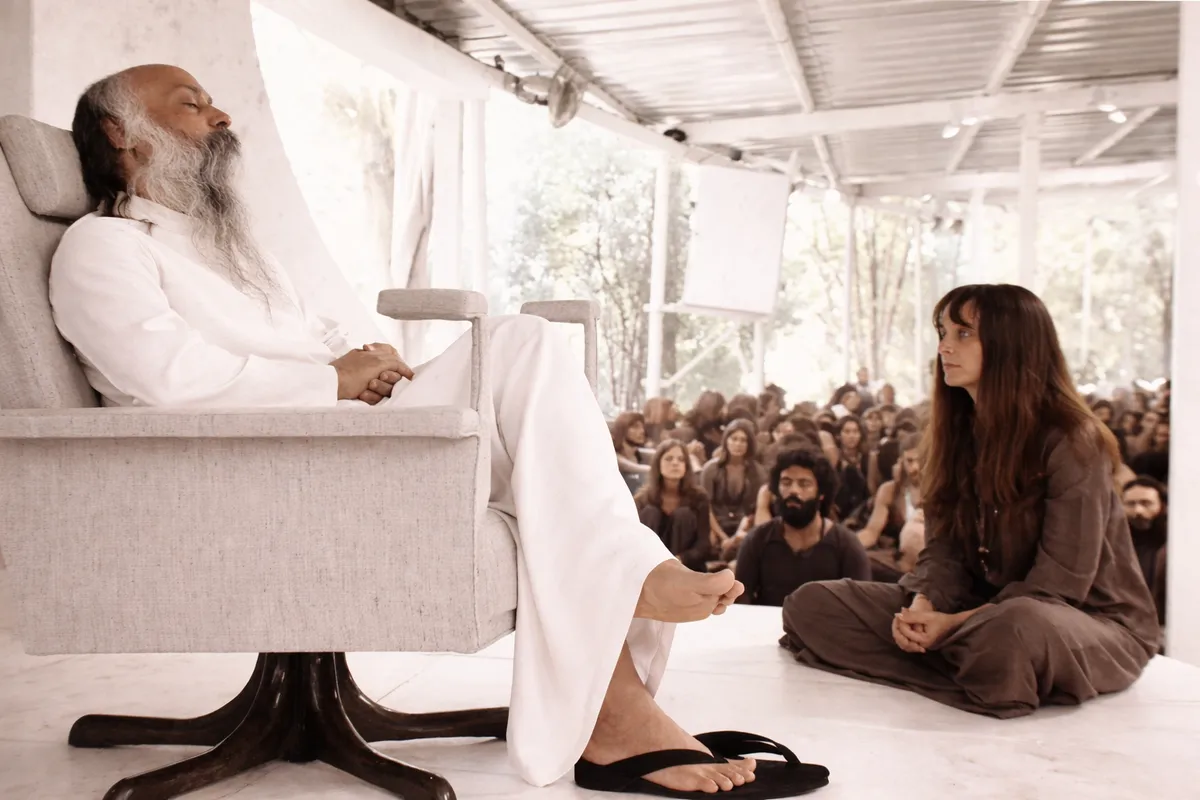
The discourse series "The Great Zen Master Ta Hui" captures Osho's profound engagement with the teachings of Ta Hui, a revered figure in Zen Buddhism. Osho delves into the wisdom of Ta Hui, emphasizing the enigmatic yet accessible nature of Zen as a pathway to enlightenment. Through these discourses, Osho explores themes such as the dangers of intellectualism and the importance of direct experience. He highlights Ta Hui's humility and insight, depicting him as a bridge between deep spiritual truths and the everyday seeker. Osho expresses that true understanding comes not through scholarly pursuits, but through a silent, witnessing mind. Osho infuses the series with his characteristic flair, making complex Zen principles resonate with contemporary audiences. He speaks to the transformative power of meditation and the necessity of transcending the ego. By invoking Ta Hui's teachings, Osho invites listeners to embrace spontaneity and presence as gateways to liberation. This series is a contemplative journey that challenges the seeker to let go of habitual thinking patterns and embrace the nothingness from which all things arise. In essence, Osho uses Ta Hui's legacy to craft a compelling invitation to dive into the depths of consciousness and experience the profound simplicity of Zen.
-
Chapter 1: Clear the mind
Empty the mind to reach no-mind: trust (nishchaya), let the ego die, accept resurrection; Ta Hui exemplifies a teacher's clarity and final silence.
-
Chapter 2: Insight
Tend the ox: withdraw awareness from thinking instead of battling right/wrong; meditation uproots mind and returns you to joyful, compassionate life.
-
Chapter 3: Power
True power arises from immediate awareness, not moral doing; withdraw identification from the mind to dissolve past and stop mechanical good/evil—awareness heals.
-
Chapter 4: Trust
Reject reliance on intellect and borrowed teachings; awaken inner no-mind through trust and a living master so truth arises from personal experience, not words.
-
Chapter 5: Non-attainment
Nothing to attain: enlightenment is discovery, not a goal; the mind's craving keeps you seeking. Buddha's silence and Zen's blows point to the true self.
-
Chapter 6: Innocence
Nothing to attain: awakening is original innocence, not an intellectual achievement or will; it dawns suddenly, incorruptible awareness frees one from birth and death as in Maitreya.
-
Chapter 7: The source
See the moon, forget the finger: words are pointers; true insight is no-mind — Zen shocks (the one-hand koan's wake) stop thought and reveal the self.
-
Chapter 8: Delusion
Scholarly words can't replace direct experience: drop clinging and dualities, don't repress passion; meditation cures, buddha is innate being.
-
Chapter 9: Illusion
Ta Hui calls Buddha and Dharma illusory; Osho counters that words are provisional, intellectual negation misses true awakening that transcends good and evil.
-
Chapter 10: Clinging
Intellect imitates; intelligence awakens when witnessing replaces clinging. Enlightenment dissolves the self so compassion and spontaneous right action arise.
-
Chapter 11: Emptying
True meditation is non-effortful emptiness beyond mind and concentration; Osho criticizes Ta Hui's intellectualism and urges living open, ungrasping awareness.
-
Chapter 12: Non-duality
Awareness alone is real; the world is maya, changing not unreal. Live fully with watchful awareness: from no-mind one frees oneself amid life's burning house.
-
Chapter 13: Nothingness
Masters only point the road and strip away false selves; enlightenment is non-attainment: losing the seeker reveals a timeless, ego-less presence.
-
Chapter 14: Clarity
Profound clarity is not intellectual depth but lived silence: meditation requires relaxation, watchful non-judgment, not control of the mind.
-
Chapter 15: Suchness
Where do we come from and where do we go? Osho urges existential inquiry until mind stumbles, then sudden glimpse reveals timeless self beyond birth and death.
-
Chapter 16: Before seeking
Return to childlike pre-thought consciousness by abandoning scriptures and instruction; observe the nothingness before seeking and trust your own awakening.
-
Chapter 17: No goal
Don't consciously await enlightenment; drop desire and goals, use the koan 'from where/to where' to tire the mind so awakening arises naturally.
-
Chapter 18: No guilt
Chao Chou's 'Yes' declares every being - even a dog - has buddha-nature; that 'Yes' severs birth-death doubt and exposes the mind's censor and Ta Hui's guilt.
-
Chapter 19: Radiance
True teaching radiates from one's own awakened heart—no missionary converting, but a spontaneous overflowing of presence that transforms seekers.
-
Chapter 20: Affliction
Affliction becomes meditation: investigate the roots of anger and sorrow, exhaust buried energies, rediscover original being and the inner, nondual power.
-
Chapter 21: Understanding
Be fully present where you are: drop knowledge and concepts, let knowing replace memory; presence reveals the sacred and awakens enlightenment.
-
Chapter 22: Witnessing
Discriminating mind binds us to fear, calculation and drama; abandoning thought to pure witnessing—childlike, nonjudging silence—is the only true wisdom.
-
Chapter 23: So very close
Truth is your own being; seeking with the mind misses it by 'eighteen thousand miles.' Silence the mind—what you seek already speaks and shines within you.
-
Chapter 24: The inescapable
When illusion falls away the inescapable real remains; effortless watchfulness lets reality possess you—don't examine it, allow merger and clap with joy.
-
Chapter 25: Two awakenings
Zen's terse dialogues trigger awakening only after deep meditative preparation; drop the self—put down or pick up the tense mind and realize emptiness.
-
Chapter 26: Wordlessness
There is no second person: ultimate truth is wordless; silence reveals the ever-present, fuel-less spiritual light that melts separation into organic unity.
-
Chapter 27: Just being
Who is in the way? Your ego. Drop seeking, wake to the witnessing self - just be with childlike alertness; Ta Hui’s 'Boss' reminds you to arouse and remember.
-
Chapter 28: Mindlessness
Mindlessness is not mere stilling or repression but watchful no-mind: let go, witness thoughts without fighting, shown in Ta Hui's Shantinath and Buddha stories.
-
Chapter 29: Faith
One Suchness and faith: drop beliefs, choose determined will and choiceless love so self and other dissolve into a single effortless acceptance.
-
Chapter 30: Be thorough going
Be thoroughgoing: stake everything on single-pointed awareness, live as if life is at risk; you are both the question and the answer. No false thinking.
-
Chapter 31: Release
Release from the self-made prison: freedom is your responsibility; awakening is recognition—sudden yet prepared gradually, triggered by a silent, timely push.
-
Chapter 32: Desirelessness
Release arises when desire and thinking cease; ripe disciples awaken through intimate, wordless transmission—original face revealed in silence.
-
Chapter 33: Serenity
Empty attachment to the real and stop inventing the unreal; true masters live awareness, false teachers teach dead words — freedom is simple serenity.
-
Chapter 34: Enlightenment
Enlightenment is the radical key that destroys religious fictions and priestly power, revealing human consciousness as the ultimate reality and freedom.
-
Chapter 35: Discontinuity
Drop all nests of security - an abrupt, complete break is required to attain true one-suchness; accept life's insecurity and live fully, not merely survive.
-
Chapter 36: Compassion
Compassion compels transmission despite words' inadequacy: the infinite adapts to the mind's ladle; bodhisattva's effort vs arhata's silence.
-
Chapter 37: This moment
The present is the golden gate: die to past-made realities, drop consistency and craving for marvels, become nobody and respond freshly to each moment.
-
Chapter 38: Transformation
Authentic meditation discards borrowed doctrines and politeness: become no-mind, trust inner sufficiency, let go of self and wake into immediate truth.
-
Chapter 39: Prologue
Ta Hui demolishes conceptual knowing to reveal immediate no-mind: meditation as vigilant non-action, dropping the self to meet reality as it is.