
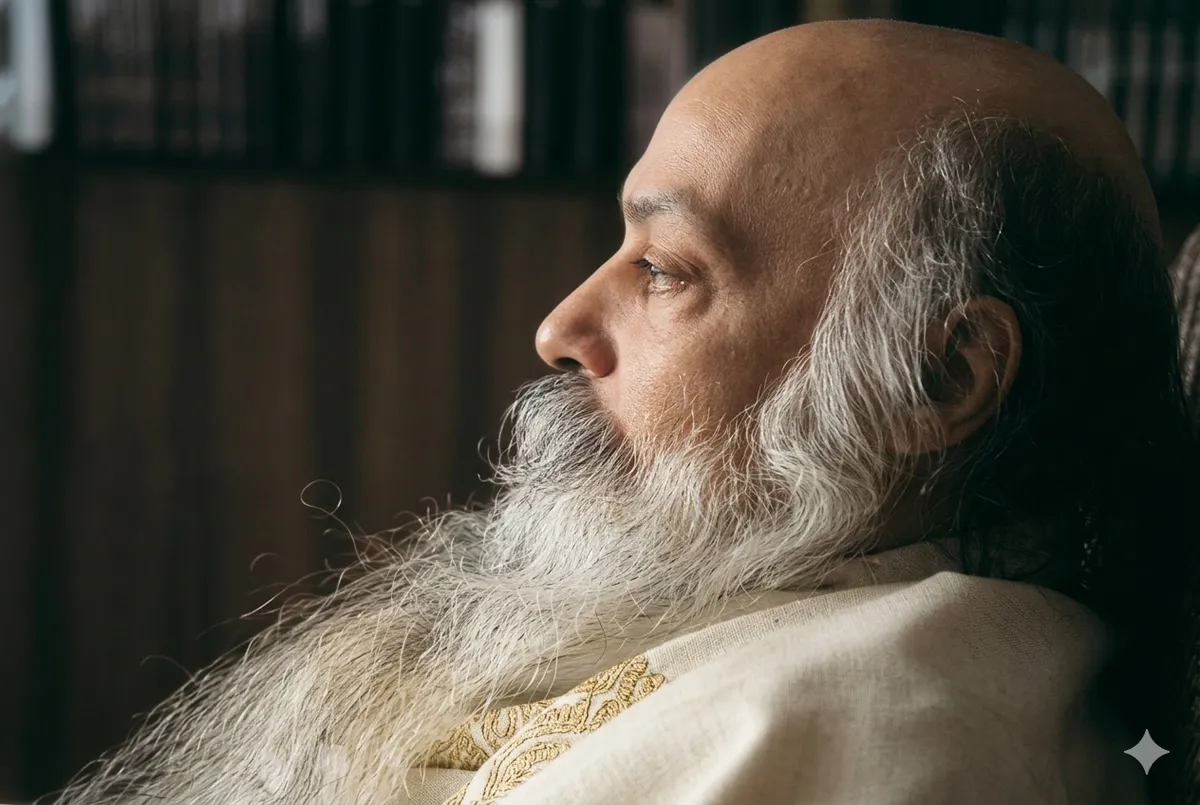
"The Great Transcendence," a profound discourse series by Osho, delves into the essence of moving beyond the limitations of the ego-centric self to reach a state of universal consciousness. With his distinctive approach, Osho articulates the necessity of transcending the dualities that entrap the human spirit, advocating for a journey inward towards self-realization. He challenges conventional spiritual paradigms, encouraging seekers to explore the depths of emptiness and presence as pathways to awakening. Central to the discourses is the illumination of the interconnectedness between the individual and the cosmos, suggesting that true freedom arises not from escapism, but from an intimate understanding and acceptance of the present moment. Osho's teachings navigate the delicate balance between action and meditation, proposing that the synthesis of the two can lead to profound inner harmony. Through anecdotes, paradoxes, and meditative insights, this series invites participants to dissolve the barriers of mind and embrace the boundless expanse of being, ultimately guiding them towards a life enriched with authenticity and bliss.
-
Chapter 1: Always Sing the Song of the Divine
Let go of learned words and accumulation; become empty, sing the song of the Divine — silence, devotion and inner remembrance save you at death.
-
Chapter 2: The Attraction of the Transient
Mind and heart unite: knowledge clears the soil, devotion sows seeds; transiency attracts yet breeds misery; true surrender empties ego and reveals eternity
-
Chapter 3: Aloneness Through Satsang
Satsang wakes you to aloneness; aloneness dissolves attachment, steadies mind and leads to liberation — ponder: Who are you, whose are you, whence did you come?
-
Chapter 4: Every Step Is The Destination
All creeds are doors to one inner temple; dissolve ego and attachments, sing the divine to awaken not to escape, and find unity beyond labels.
-
Chapter 5: The Bondage of Hope
Hope binds the seeker: outer renunciation or heavenly pursuits mean nothing without self-knowledge; true renunciation is inner and proven by abiding bliss
-
Chapter 6: Truth is not a debate
Debate cannot reveal truth; Shankara used logic to remove scholarliness and open hearts—defeat of intellect made room for devotion, surrender, and real knowing.
-
Chapter 7: The Song of Life
A single lived insight — one sincere bow or one drop of inner Ganges — dissolves ego and death's hold; understanding, not scripture-counting, reveals the divine in all.
-
Chapter 8: The World is a School
Seeing death awakens sannyas: only when you see life's futility can attachment end; the world is a school where inner death births true freedom.
-
Chapter 9: The Mirror of Misery
Drop sex, anger, greed and attachment; ask 'Who am I?' — free yourself from Narcissus-like ego, rediscover inner freedom and sing the divine.
-
Chapter 10: One Moment Is Sufficient
Life flows between expansion and return; awareness of pranayama/pratyahara dissolves desire and dream-suppression, so one moment of witnessing is sufficient.