
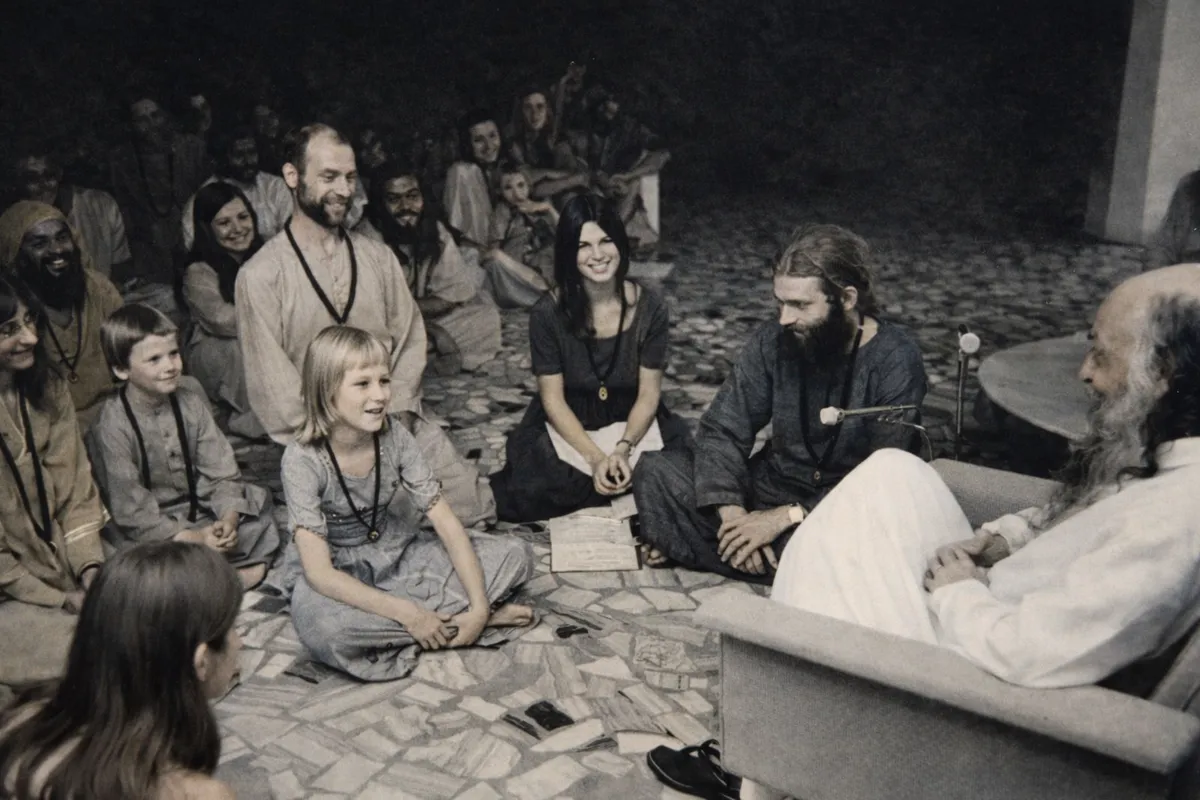
"The Eternal Quest" series by Osho delves into the profound spiritual journey that lies at the heart of human existence. Osho, with his characteristic blend of philosophical depth and approachable wisdom, invites seekers to explore the intrinsic longing that propels humanity toward greater understanding and fulfillment. He navigates through the layers of our being—mind, body, and soul—offering insights that aim to dissolve the illusions of separateness and self-limitations. Central to the series are themes of awakening, self-realization, and the breaking of societal conditioning that often obscures our true nature. Osho emphasizes the importance of meditation as a tool for inward exploration, encouraging individuals to become silent observers of their minds, thus experiencing a direct connection with the present moment. Through his discourse, he articulates that the "eternal quest" is not a search for external answers but a profound inward journey towards self-discovery and spiritual enlightenment. In this series, Osho's unique perspective sheds light on the essence of spiritual liberation, encouraging individuals to embrace their authentic selves and live in harmony with the divine flow of life.
-
Chapter 1: Religion: The Door of Feeling
Basic Indian philosophy: religion — the door of feeling. Know reality by total, unifying feeling beyond science and philosophy; meditate to drop the self.
-
Chapter 2: Discovering Your Own Path
Intellect can't solve existential problems; live them. Choose an absolute path—trust or doubt, and apply the right technique matched to your nature to reach oneness.
-
Chapter 3: A Psychological Approach
A psychological, scientific yoga: release repressions through catharsis and body-rooting so sex-energy ascends into meditation, enabling true wholeness.
-
Chapter 4: Hatha Yoga: A Valid Approach?
Starting with the body is necessary but not sufficient; modern suppressed bodies need catharsis and new bodywork before Hatha Yoga can lead to meditation.
-
Chapter 5: Freedom From Suppression
Freedom from suppression must come first, then freedom for expression; society's suppression breeds violence, discipline should enable spontaneous growth.
-
Chapter 6: Religious Scriptures: History or Myth?
History records horizontal progress, but true evolution is vertical-nontemporal, individual and mythic; time-bound records miss the living, inner reality of spiritual awakening.
-
Chapter 7: The Disease Called Seriousness
Seriousness freezes life; true religiousness is playful innocence and fluid intensity — flow without conditions, accept win or loss and be alive.
-
Chapter 8: A Quest, Not a Questioning
Reality is a nondual creative process; good and evil, life and death are human evaluations. True religion is a quest to know 'what is' beyond thinking.
-
Chapter 9: The Need for Authenticity
Belief arises from ignorance; authentic religion is inner knowledge—experiment, don't accept doctrines; make truth your own through direct realization.
-
Chapter 10: If You Take the Whole out of the Whole
How can we become one with reality? Division is mental; drop fragmented minds and past associations—mindless, innocent seeing makes you one with the whole.
-
Chapter 11: A Meeting with the Hare Krishna People
Absolute truth is inconceivable—only lived by dropping the thinking ego; scriptures and sects cannot contain it, authority is one's own direct knowing.
-
Chapter 12: Right Questioning
Ask from conscious ignorance, not from conditioned knowledge; create inner space so existential questions can arise and authentic answers can penetrate.
-
Chapter 13: Moving Between Polarities
Weakness stems from craving imagined opposites; accept and observe your present facticity instead of dreaming, and freedom replaces strength or helplessness.
-
Chapter 14: The Alchemy of Religion
Suffering is broken harmony between mind, body and being; recognizing dukkha and transcending the ego through meditation reunites you with the cosmic whole.
-
Chapter 15: The Last Flowering
Worship fuels fake sadhus; authenticity cannot be imitated—religion flowers when affluence allows inner seeking, and falsehood vanishes without worship.