
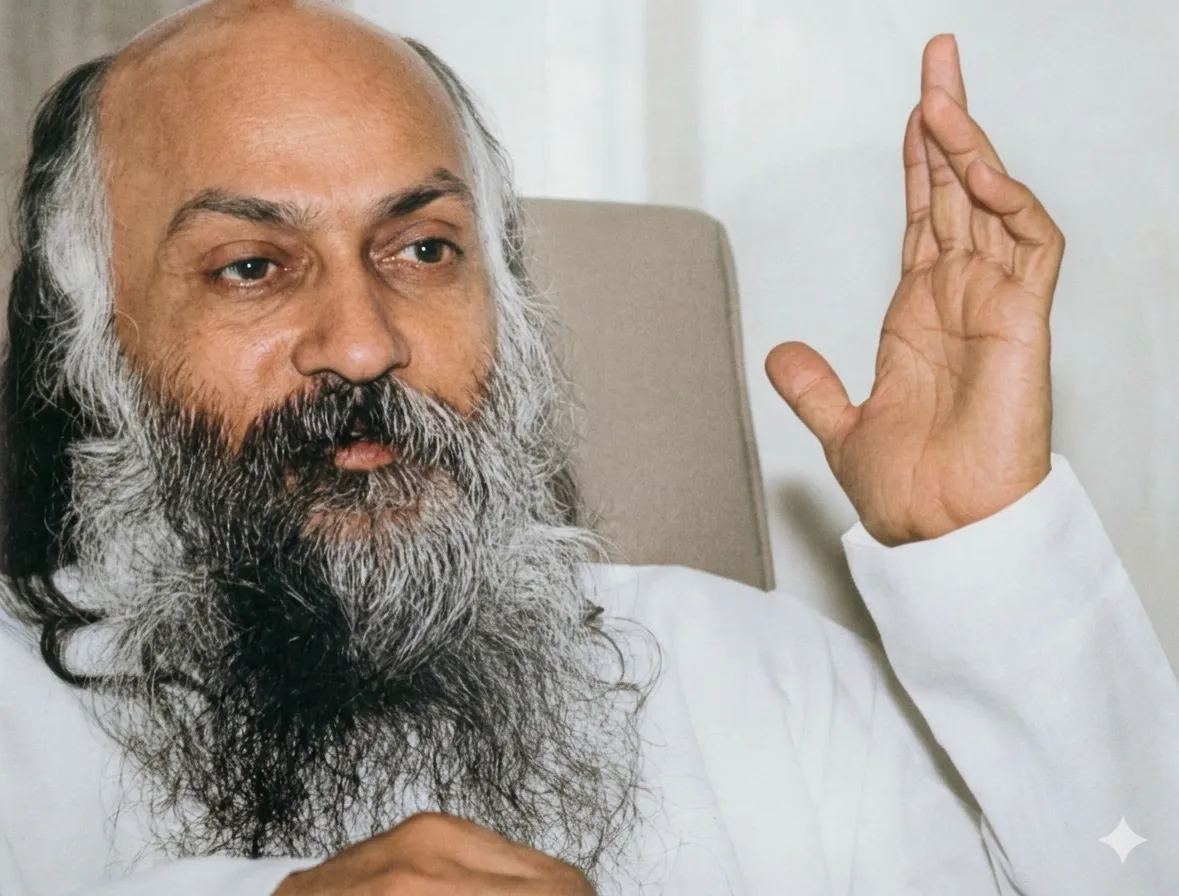
In "The Dhammapada: The Way of the Buddha, Vol 3," Osho delves profoundly into the timeless teachings of the Buddha, illuminating their relevance in contemporary spiritual exploration. With his distinctive eloquence, Osho guides listeners beyond the literal words of the Dhammapada, revealing the essence of Buddha's wisdom as a path of transformation and inner awakening. Central to this series is the exploration of mindfulness and meditation as tools for transcending the ego and attaining a state of pure awareness. Osho emphasizes the importance of living in the present moment, releasing attachments, and embracing impermanence, thereby inviting practitioners to experience life with a sense of openness and fluidity. Furthermore, Osho's discourse challenges conventional beliefs and encourages a direct, experiential understanding of spirituality, free from dogma and intellectual constructs. By drawing parallels between Buddha's teachings and contemporary existential questions, Osho invites seekers to embrace a life of freedom, compassion, and authenticity. This series not only once again showcases Osho’s ability to adapt ancient teachings to modern life but also serves as a guide to living a life of truth, centeredness, and spiritual awakening.
-
Chapter 1: Knowledge is not knowledge
Knowledge is borrowed info that binds the ego; wisdom is firsthand seeing - renounce bookish knowing, drink deeply from a living master to become your light.
-
Chapter 2: A watcher on the hills
Trust and doubt are two poles created by the mind; transcend both through choiceless, witnessing awareness—be a watcher on the hills and find true trust.
-
Chapter 3: Be a buddha!
Desire breeds misery; watch desire without reacting and rest consciousness in its own being — bliss arises. Become a buddha: awake beyond craving, untouched.
-
Chapter 4: I am a drunkard
True love is not learned but revealed when ego's jealousies and possessiveness are removed; meditation uncovers the inner spring of love and freedom.
-
Chapter 5: Freedom contains all
Freedom from desire and ego is the Buddha's goal: live empty and knowing, not seeking God, truth or bliss, but breaking free to become the master of your consciousness.
-
Chapter 6: There is no evolution
Life has no ultimate goal; it is the present. Drop goal‑orientation, live the immediate, dissolve the mind in the now and meet the center now.
-
Chapter 7: He is the charioteer
Man is a seed of buddhahood: awaken through mindful awareness, tame senses and pride to become charioteer and find freedom beyond life and death.
-
Chapter 8: A good belly laughter
Sannyas is a playful uninitiation—relax into life, laughter and love; don’t try to become a sannyasin by effort, leap from the heart and be unconditioned.
-
Chapter 9: A small candle
One true, peace-bearing word or presence outweighs endless hollow scriptures; awakening is sudden, inner conquest matters more than worldly victories.
-
Chapter 10: Vast as the sky
Transcending East-West opposites is a qualitative revolution: not half-and-half but a whole dialogue; food and means must become prayer and self-knowledge.