
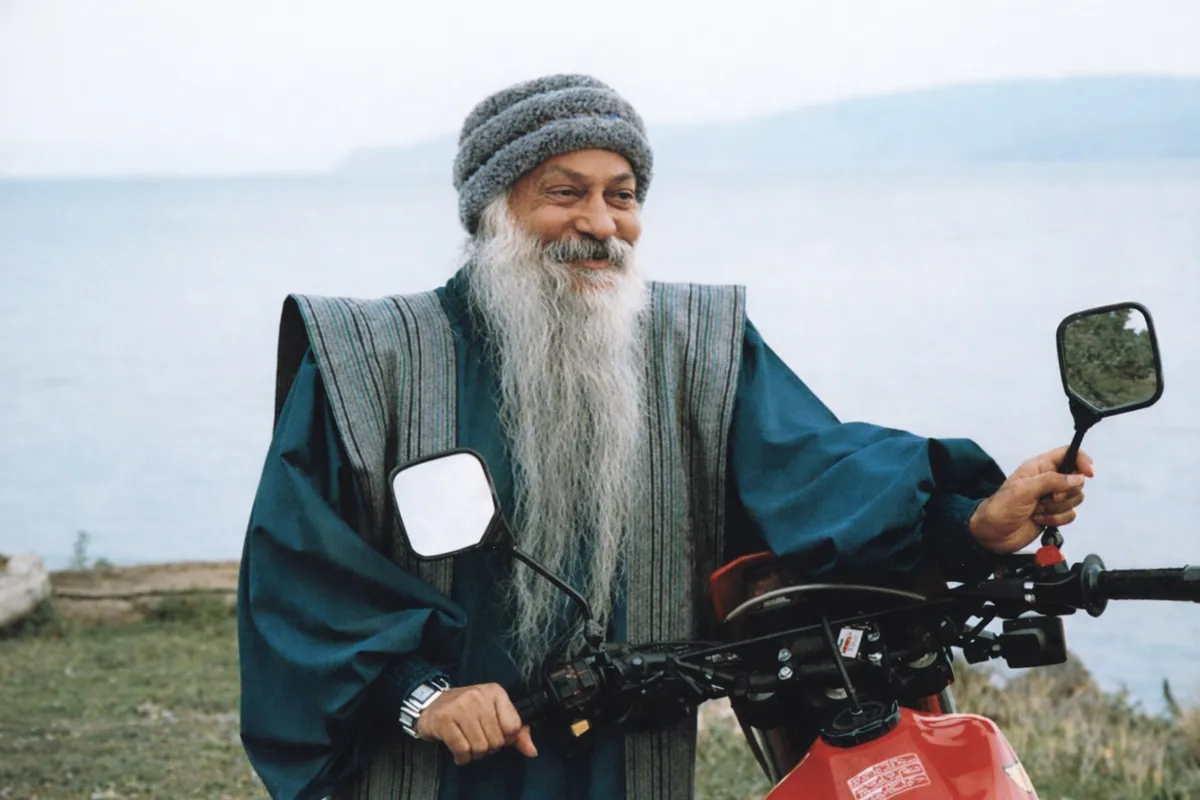
That Art Thou is a profound exploration of self-realization and the mystical unity of the individual soul with the universal consciousness. In this discourse series, Osho delves into the ancient wisdom of the Upanishadic phrase "Tat Tvam Asi," which translates to "Thou art that." With his unique style, Osho dissects the layers of illusion that separate the ego from true identity, guiding listeners on a transformative journey toward inner awakening. Through incisive commentary and personal anecdotes, he illuminates the path to realizing one's oneness with existence, emphasizing the dissolution of boundaries between the self and the cosmos. Osho's insights reflect an integration of Eastern spiritual traditions with contemporary existential concerns, providing his audience with timeless yet accessible wisdom. He challenges conventional beliefs and invites individuals to transcend societal conditioning, urging them to experience their own intrinsic divinity. This series is not just an intellectual exploration but an invitation to experience life in its full authenticity, shedding the misconceptions that obscure one's true nature. Osho's teachings encourage a profound transformation, offering a pathway to live with greater freedom, love, and understanding in harmony with the universe.
-
Chapter 1: Sarvasar Upanishad
To know and to be are one: spiritual growth is growth of consciousness, not knowledge. Master and disciple must endure the birth-pain together to awaken.
-
Chapter 2: Sarvasar Upanishad
Prayerful enquiry turns doubt into a path; freedom begins by knowing bondage, vidya are true methods, avidya false doors, and turiya is pure being beyond wake, dream, sleep.
-
Chapter 3: Sarvasar Upanishad
Ego is a projected identity (avidya); vidya is the positive practice that dissolves it. The formless Self transcends parts; meditative energy work frees you.
-
Chapter 4: Sarvasar Upanishad
Consciousness has four states—awake, dreaming, deep sleep, turiya; dreams are fulfilments of unfinished desire, and meditation negates dreams to reveal being.
-
Chapter 5: Sarvasar Upanishad
True consciousness is not object-bound waking, dreaming or deep sleep but the unchanging fourth (turiya); awaken through double-arrowed awareness to know self.
-
Chapter 6: Sarvasar Upanishad
Physical and vital bodies are layers: food shapes a heavy or transparent body, austerity shifts mastery inward, and breath and company purify vital energy.
-
Chapter 7: Sarvasar Upanishad
Mind is a crowd; purify it into consciousness, then bliss bodies so the no-body source appears - awareness by meditation leads to transcendence and grace.
-
Chapter 8: Sarvasar Upanishad
Consciousness mistakes itself for the body through identification with pleasure and pain; awareness of their unity dissolves this bondage and frees the soul.
-
Chapter 9: Sarvasar Upanishad
Mind, life-lust and desire form the knot (seed-body) that hides the Self; meditation is becoming no-mind and readiness to die to touch the ocean of existence.
-
Chapter 10: Sarvasar Upanishad
Three faces of the Self - sakshi (witness), kutastha (eternal), antaryami (innermost) - witnessing dissolves ego's virtue and do-gooder persona.
-
Chapter 11: Sarvasar Upanishad
Pure consciousness reverses the center from 'I' to 'Thou': truth is the eternal witnessing awareness beyond forms, freeing us from possession and expectation.
-
Chapter 12: Sarvasar Upanishad
Brahma is knowledge beyond subject-object relation: drop the known and knower to become consciousness itself and realize inner, causeless bliss.
-
Chapter 13: Sarvasar Upanishad
Ego is a shadow; true transformation requires moving from 'I' to 'thou' to 'that' and finally into pure existence beyond names and negations.
-
Chapter 14: Sarvasar Upanishad
Maya is the mind's auto-hypnosis: life is our projections on a screen; meditation is de-hypnosis that stops projections, revealing the gap and Brahman.
-
Chapter 15: Sarvasar Upanishad
I am not body, senses, mind or ego but pure am-ness—an ever-knowing, unborn consciousness; regress through negation to rediscover the witnessing Self.
-
Chapter 16: Sarvasar Upanishad
Remain the witnessing host, not the guest: pain and pleasure arise from identification caused by nearness; how does bondage happen? Disidentify to be free.
-
Chapter 17: Sarvasar Upanishad
Knowledge must cease so true knowing can arise; by negating the ego and casting off accumulated knowledge, the question 'Who is in bondage?' dissolves.
-
Chapter 18: Kaivalya Upanishad
Kaivalya: total aloneness without loneliness—awaken by prayer, inviting the Whole, strengthening senses so you perceive the world's unity and inner freedom.
-
Chapter 19: Kaivalya Upanishad
Being matters more than knowing: true realization needs faith beyond reason, unconditional devotion, meditation-born silence, then yoga and embodied practice.
-
Chapter 20: Kaivalya Upanishad
Renounce striving; enter the cave of the heart to find life that precedes birth and outlasts death - find immortality by inwardness, not by fighting absence.
-
Chapter 21: Kaivalya Upanishad
True liberation lies in transcending the socially acquired mind—creating a meditative gap to reclaim pure consciousness and thereby reach Brahmalok.
-
Chapter 22: Kaivalya Upanishad
Transcend body-identification, purify the heart by accumulating positives, and meditate on space, purity and the griefless — meditation reshapes you.
-
Chapter 23: Kaivalya Upanishad
Dhyan is no-thought: drop all objects, even mantras; through intensified energy and kundalini awakening meditation reveals the formless, unknowable Brahman.
-
Chapter 24: Kaivalya Upanishad
Meditation is objectless: move from many thoughts to one, then to no-thought; use God or image as a temporary jumping-board, then drop it completely.
-
Chapter 25: Kaivalya Upanishad
Nameless reality must be called and personified; names/images are useful devices. Dissolving the ego into universal continuity frees one beyond life and death.
-
Chapter 26: Kaivalya Upanishad
Conscience and AUM (or hoo) are churning sticks: repeated inner sound kindles a fire that burns past and future, freeing one from bondage now.
-
Chapter 27: Kaivalya Upanishad
Self deluded by maya projects onto objects and lives hypnotically; meditation dehypnotizes, bringing back to centered bliss beyond happiness and unhappiness.
-
Chapter 28: Kaivalya Upanishad
Transcend the three bodies—waking, dreaming, deep sleep—through mindful witnessing; meditation makes you aware beyond body-states, freeing you from rebirth.
-
Chapter 29: Kaivalya Upanishad
Spiritual search begins with neti-neti: disidentify from body, mind and ego; eliminate all 'not-me' and the 'I am Brahman' appears and transcends duality.
-
Chapter 30: Kaivalya Upanishad
Becoming the witnessing consciousness frees you from identification: a pure mirror that reflects the world, revealing non-dual Brahman and how to attain it.
-
Chapter 31: Kaivalya Upanishad
Mind imposes patterns that cut the infinite; drop logic and the 'window' of thought, take a mad, illogical jump into meditation to meet the whole.
-
Chapter 32: Kaivalya Upanishad
Can the divine be known? Osho: the divine is absolute subjectivity—unknowable as object; to meet God one must be, surrendering mind in samadhi.
-
Chapter 33: Kaivalya Upanishad
The divine is both subject and source: Veda as inner science; existence is nondual—beyond virtue and sin, birth, body or mind, like the dancer who is the dance.
-
Chapter 34: Kaivalya Upanishad
Turn inward and make awareness continuous: use witnessing and yogic techniques to still thought and desire, transform energy and realize the formless Self.
-
Chapter 35: Adhyatma Upanishad
Words and knowledge are barriers; silence and surrender reveal immediate Brahman: dissolve the ego through expression, prayer and total, childlike waiting.
-
Chapter 36: Adhyatma Upanishad
The true Self is the unborn center hidden behind body-mind identification; cease desiring and doing to return to the heart—not by search but by non-search.
-
Chapter 37: Adhyatma Upanishad
Witness every action as a detached observer: remain the inner axis while the body whirls; this out-of-body witnessing reveals the true self.
-
Chapter 38: Adhyatma Upanishad
Know the body's filth to create distance; turn inward through consciousness and knock on the door of grace to meet the divine — where is the soul? Within.
-
Chapter 39: Adhyatma Upanishad
Freedom is the ending of desire: desire creates slavery and suffering; understanding desire dissolves it, transforming restless energy inward into divine being.
-
Chapter 40: Adhyatma Upanishad
Mind multiplies opposites; be choiceless - either accept both poles (love/hate, life/death) or refuse choice; this dissolves mind and reveals unity.
-
Chapter 41: Adhyatma Upanishad
Mind creates separate worlds; by dissolving the mind (as in dreamless sleep/sushupti) one realizes undivided Brahman—becoming blissful, conscious oneness.
-
Chapter 42: Adhyatma Upanishad
Knowing arises from authentic non-attachment: outward energy turns inward, crystallizes into an inner flame; total relaxation and silence reveal the incomparable Self.
-
Chapter 43: Adhyatma Upanishad
Reality is impersonal 'That', beyond masks of personality; 'I-and-Thou' is illusory. Liberation is Satchidananda via existence, consciousness, bliss.
-
Chapter 44: Adhyatma Upanishad
Right listening, yes-oriented thinking, contemplation and meditation form a four-step inner alchemy leading to samadhi — the realized truth: 'That art thou.'
-
Chapter 45: Adhyatma Upanishad
Leave the mind at the gate: samadhi dissolves knower and known into infinite consciousness, spontaneity and dharma bloom; afterward mind infers 'Tat tvam asi'—can it enter?
-
Chapter 46: Adhyatma Upanishad
Vairagya is not escape but desireless presence: with open eyes observe desires until they dissolve; when the ego stops arising you are jivanmukta.
-
Chapter 47: Adhyatma Upanishad
Jivanmukta transcends mind-made divisions, sees unity behind diversity, stops verbalization to commune with being and realizes 'That art thou'—self and supreme.
-
Chapter 48: Adhyatma Upanishad
Self is like the sky—untouched by clouds of karma; realization makes you a witness: past fruits will ripen yet no new karma binds, future falls away.
-
Chapter 49: Adhyatma Upanishad
Prarabdha is a borrowed illusion: when you are absent the world seems real; self-remembering, waking in the dream, dissolves body-identification and frees you.
-
Chapter 50: Adhyatma Upanishad
Scriptures speak differently to the ignorant and the knower: abandon body‑world identification, move from matter to energy to consciousness, become siddha.
-
Chapter 51: Adhyatma Upanishad
Cease dreaming: the world dissolves when you enter your center; inner knowledge yields bliss while outer knowledge breeds misery—will you leap into unknown?