
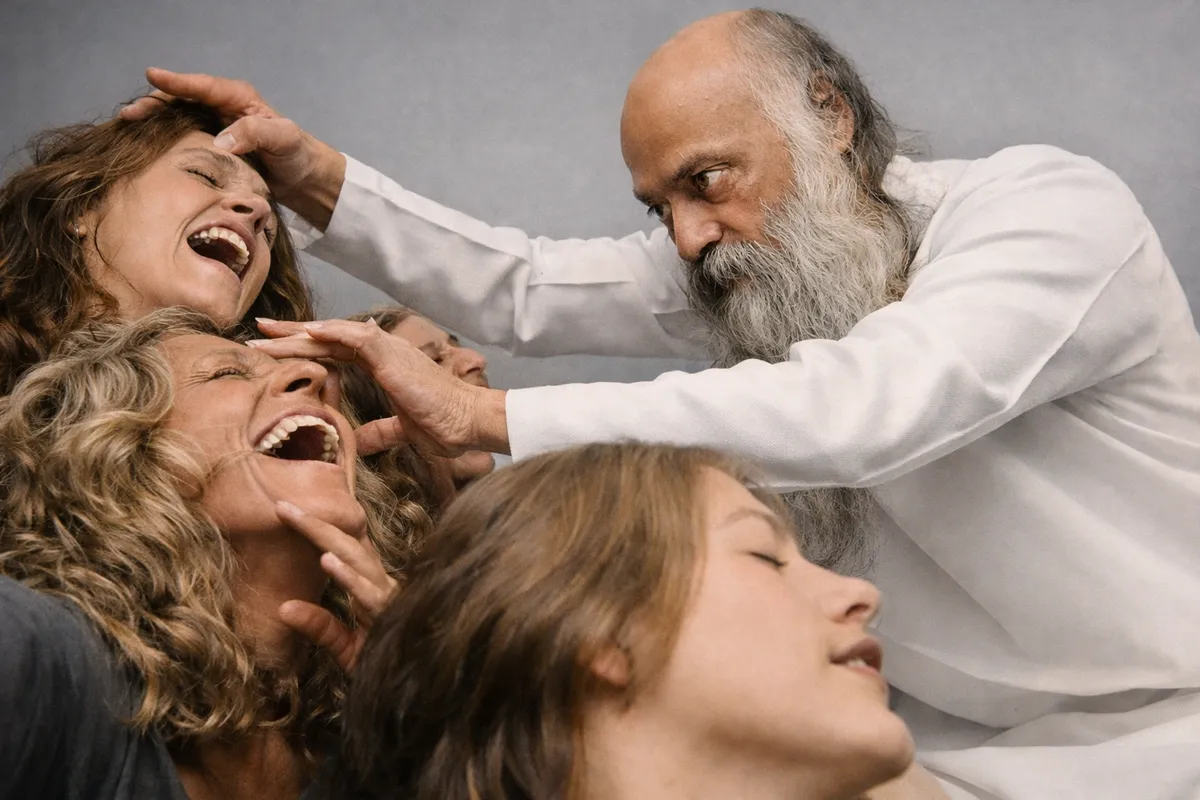
Satyam Shivam Sundram is a profound exploration into the nature of truth, divinity, and beauty, as guided by the illuminating teachings of Osho. In this discourse series, Osho delves deep into the essence of existence, reflecting on the intrinsic connections between Satyam (Truth), Shivam (Godliness), and Sundram (Beauty). He challenges conventional perceptions by inviting us to experience a more profound, inner understanding of these elements not as separate entities but as an interconnected triad that forms the foundation of a fulfilled life. Osho's unique perspective encourages a shift from intellectual understanding to experiential realization. He emphasizes that truth is not about facts or dogmas but about a harmony that resonates within us when we align with the universe. Divinity, according to Osho, is not a remote presence but an intimate experience accessible through deep meditation and self-awareness. He also redefines beauty as the blossoming of inner qualities rather than an external aesthetic. With his characteristic humor and keen insight, Osho dismantles societal illusions, guiding seekers on a transformative journey toward enlightenment. Satyam Shivam Sundram becomes a bridge to transcendental consciousness, offering a path to discover the divine beauty of existence in its purest form.
-
Chapter 1: Satyam, Shivam, Sundram
Satyam, Shivam, Sundram: a mystic's truth beyond mind becomes right action and beauty; boredom in love arises from expectations—rediscover childlike inner joy.
-
Chapter 2: My presence says all
Words are only invitations; truth is lived in presence and silence—become an insider, let the master's presence ignite love, tears, and urgent spreading.
-
Chapter 3: Learn the art of living with the eternal
Curiosity falls away as you move from student to disciple to devotee; true spirituality is recognizing your own being- learn the art of living with the eternal.
-
Chapter 4: A quality which is immeasurable
Love is not a quantity to be perfected but the fragrance of rising consciousness; transcend the measurable, meditate, and let love bloom spontaneously, perfect.
-
Chapter 5: Remember the art of let go
Workaholic societies repress our childlike let-go; learning to relax and receive love reveals the eternal self—letting go is the road to true spirituality.
-
Chapter 6: Every enlightened man has all the flavors of truth
Why do enlightened masters criticize each other? To keep disciples one‑pointed and committed; apparent attacks are compassionate, for truth blossoms in them.
-
Chapter 7: A beautiful servant, a dangerous master
Witnessing is the seed and no-mind the flower: watch thoughts without identifying so they die, gaps widen, and the mind becomes a fresh servant.
-
Chapter 8: Just learn to be yourself
Society conditions us to reject who we are; accepting yourself with courage and responsibility liberates growth, authentic joy, and new individual contribution.
-
Chapter 9: The great affair
Spiritual growth proceeds student→disciple→devotee; the devotee cannot self‑recognize — only the master can. Drop aspiration; surrender—trust transformation.
-
Chapter 10: Only the meditators comes to know his whole being
Thoughts - even 'noble' ones - are chains; freedom arises in thoughtlessness through meditation, which transforms sexual energy into an inner, continuous wholeness.
-
Chapter 11: You cannot hurt a humble man
True humility is egolessness: it cannot be hurt. False humility, shyness, or hiding are ego's masks; meditation dissolves ego and brings fearless gratitude.
-
Chapter 12: Buts, ifs and hows
Ego isn't an object to drop but a mind-made false self: witness it and it dissolves; surrender not to a person but to existence, not to Osho.
-
Chapter 13: A peace that passeth all misunderstanding
Surrender to the present; align with existence like a river or cloud. True religiousness is a living heart-quality; sensitivity is a birthright.
-
Chapter 14: Nuclear weapons, and a cowardly soul
Politicians' loud lies and priests' collusion mask a cowardly national soul; innocence, living truth and free communes expose hypocrisy more than missiles.
-
Chapter 15: Choose the flowers, leave the thorns
Give up suffering; choose the flowers, leave the thorns—meditation deepens perception, senses and women can aid awakening; only suffering blocks enlightenment.
-
Chapter 16: Going inwards, going godwards
Running from yourself creates misery; go inward through meditation and witnessing to dissolve conditioning and rediscover childlike dignity and inner ecstasy.
-
Chapter 17: You have to put aside your fear
Fear of "doing nothing" is the dewdrop's terror before the ocean; a courageous, total yes dissolves ego into vast being and reveals true life.
-
Chapter 18: The mystic rose
The mystic rose symbolizes spiritual evolution: nurture the seed of consciousness until it blossoms into an eternal inner flowering; what's the magic rose's secret?
-
Chapter 19: A blessing from beyond
Belief that sex equals life is false: when sexual energy drops naturally it becomes a blessing, releasing creativity, mature love and spiritual ascent.
-
Chapter 20: The radiation of enlightenment
The enlightened radiate a delicate, nonaggressive light that heals only receptive hearts; like Buddha's blind man, ego blocks the gift unless invited.
-
Chapter 21: Only the meditator knows there is no death
Waking fear of death signals deepening meditation - ego dies as true consciousness awakens; cultivate self-rooted trust, not borrowed assurances from outside.
-
Chapter 22: Unknown territories, unexplored skies
Sex fades; music can degrade into sex or flower into a doorway to the divine—become music. Watch the mind; when it stills, time stops and meditation begins.
-
Chapter 23: Jump into life's deepest waters
Fear of truly living masks fear of death; live totally so death becomes transformation, not end, and awareness sustains a steady 'yes' to life.
-
Chapter 24: A handful of dry leaves
Seize the urgency to move inward—no shortcuts. Understand a handful of leaves and leap into your core; inner fullness will dissolve miserliness and isolation.
-
Chapter 25: Just learn to be aware in all situations
Be the witnessing center: release identification and resist the mind's 'back door.' Awareness, not trying to see being, brings relaxation, silence and freedom.
-
Chapter 26: This great adventure
Rebel with a life-affirming 'yes': abandon violent revolutions for individual, meditative transformation; when the seeker finds itself, do nothing.
-
Chapter 27: Love: the conscious path of the ego
Love is conscious death of ego; fear shadows love. A true master hurts to dissolve the false self, urging trust, awareness and vigilant watching of mind.
-
Chapter 28: Become an outsider
Choose aloneness to rediscover yourself—be an outsider, love yourself first so authentic bonds arise; make meditation a continuous life, not mere minutes.
-
Chapter 29: Therapy, hypnosis and meditation
Hypnosis-condemned by Christianity-can be a doorway from therapy into meditation: self-hypnosis clears conditioning and gently leads to no-mind.
-
Chapter 30: In search of the ultimate new
Why is the new so scary? The mind clings to the old; meditation turns you into an explorer of fresh intelligence - drop guilt, the doer, and embrace let-go.