
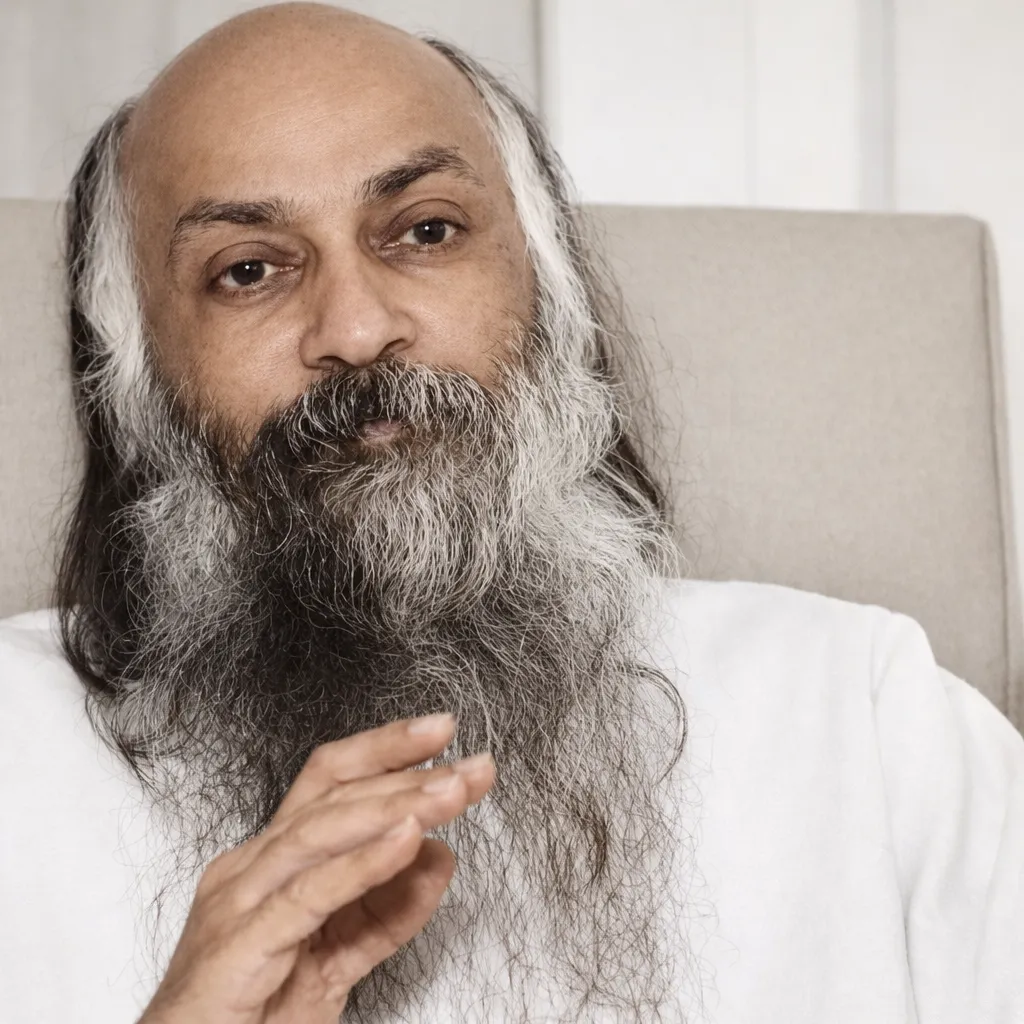
"Sapna Yeh Sansar," a discourse series by Osho, delves deeply into the existential journey of human aspiration and longing. Through poetic introspection and rich metaphors, Osho illustrates life as a perpetual quest—a seed striving to bloom into its fullest potential. This series is not merely an exploration of existential philosophy but a profound meditation on man's inherent yearning to transcend limitations and touch the infinite. Osho contrasts dead contentment—complacency and acceptance of the mundane—with living contentment, which is achieved when one's inner potential is fully realized, akin to a seed transforming into a flower. Despite worldly achievements in wealth and status, true fulfillment remains elusive unless one embarks on this inner journey. Osho's discourses offer an enlightened perspective on seeking genuine satisfaction beyond material success, portraying an urgent need for spiritual awakening amidst life's transient beauty and sorrow. The series emphasizes that while life is often caught in the struggle to awaken and smile through adversities, ultimate peace is found only in the harmonious union with one's deeper essence. Through "Sapna Yeh Sansar," Osho invites us to rediscover the purity of love and the boundless possibilities that arise when we transcend ordinary human limitations.
-
Chapter 1
Two paths to the Divine—solitary, austere jnana through dhyana, or surrendering bhakti rooted in the Satguru's compassion; choose your nature and trust.
-
Chapter 2
Enjoy fully then renounce—tena tyaktena bhunjīthāh: pleasure teaches its futility; awareness transforms enjoyment into awakening, not mere escape.
-
Chapter 3
Seed seeks to become flower: hurry into bhajan, let love's arrow dissolve the ego and transform possibility into truth before life's glass palace shatters.
-
Chapter 4
Hold to anukampa—surrender to Divine grace to dissolve ego; become witness to your questions until they dissolve; inner knowing, not borrowed answers, proves God.
-
Chapter 5
Surrender the ego, dive inward and die-while-living to taste the Divine; true religion is courageous inner awakening, not fear, rites, or empty beliefs.
-
Chapter 6
Scriptures mean nothing without firsthand meditation; truth must be poured from inner samadhi, not words—seek within, and even a broken man can attain the Divine.
-
Chapter 7
Longing ends when the seeker dissolves: true union comes not by acquiring but by effacing ego and dropping habitual identifications so the Whole can flower.
-
Chapter 8
Drop the 'self' - don't merely curb self-interest; plunge into love or meditation so the ego dissolves, the world becomes lotus, and true spring remains.
-
Chapter 9
The world is an insatiable illusory maze; awakening is an inner revolution - when will that day come? Surrender to Master cuts desire and reveals the Divine.
-
Chapter 10
Love's blindness is true sight: the heart's devotion dissolves the mind's ego, making every place a temple; surrender, not ritual, reveals God.
-
Chapter 11
Truth is nearer than near: stop the seeking, sit in non-action and bow to a living Sadguru who reflects the formless—how to meet the One? act now.
-
Chapter 12
Poetry-born intoxication must be joined with luminous awareness; Osho urges sannyasins to fuse devotional rapture and meditative clarity so God is realized.
-
Chapter 13
The Divine lies within and is known when questions fall away; renounce outer idols, descend into your heart, and surrender to a living saint to awaken.
-
Chapter 14
Can iron become the philosopher's stone? Osho says it's symbolic - iron is gold asleep; awakening in satsang and breath-witness reveals truth, not literal fact.
-
Chapter 15
Life squandered in glitter and postponement; the real miracle is the art of living now—so when God asks "What did you do with life?" have an answer.
-
Chapter 16
Appa Deepo Bhava: Buddha names the goal—be your own lamp; Osho gives the means—be full of rasa, dance, love and witness-meditation to kindle inner light.
-
Chapter 17
Mortality births dispassion: renounce the transient, tie remembrance to the Beloved, let love happen not be done; prepare to die and live as a non-doer.
-
Chapter 18
Prayer is its own answer: drop expectation and desire, live the present and surrender fully; true devotion is wordless, ecstatic, and without asking.
-
Chapter 19
Life is an inner journey: abandon company hostile to Hari-charcha, seek a Sadguru and satsang, transform the mind not rituals, and arrive at the Paramatma.
-
Chapter 20
Separation is ego's delusion; union already exists but must be revealed by passing through separation—surrender, remembrance and self-offering bring the Divine.