
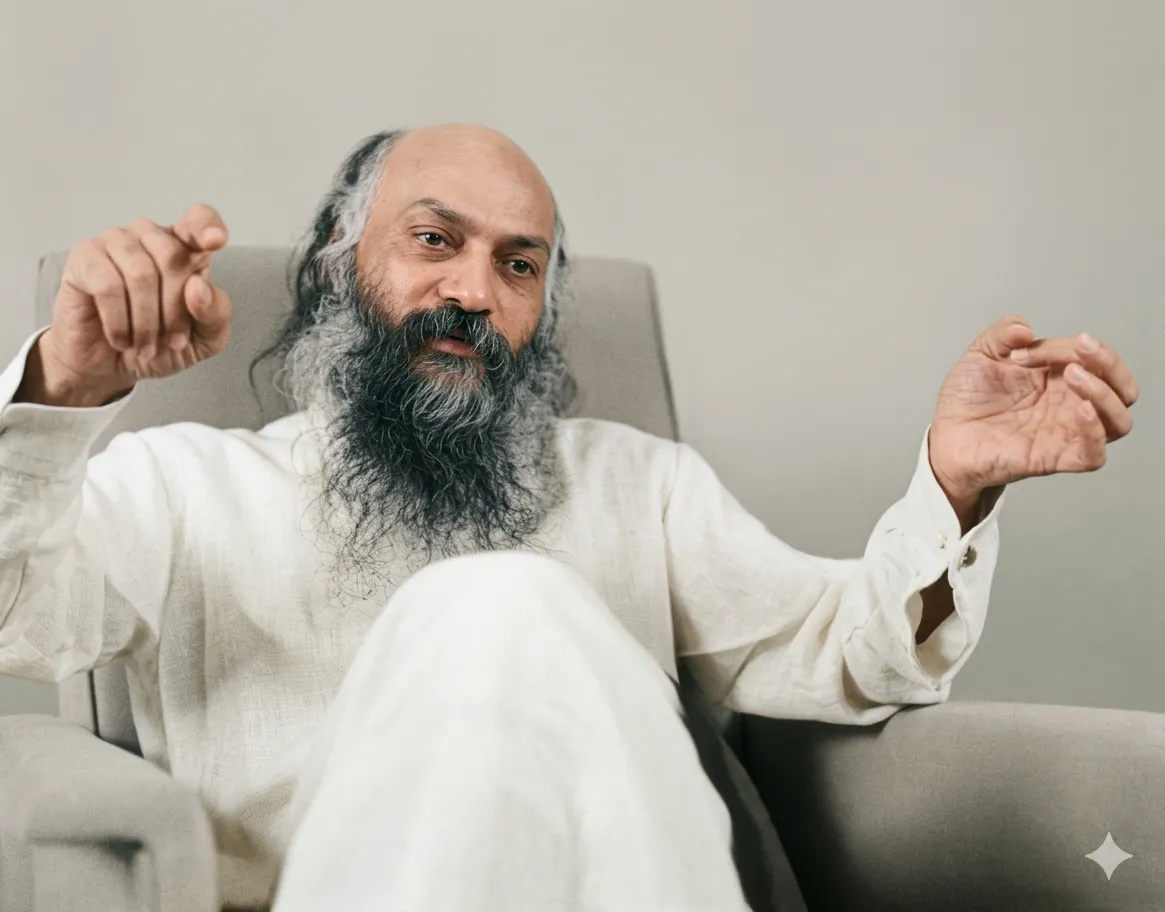
"Santo Magan Bhaya Man Mera" is a profound discourse series by Osho delving into the intrinsic simplicity and naturalness of life as exemplified in the teachings of Zen and other mystical traditions. Osho weaves stories of Zen masters like Bokoju and other sages, illustrating the transformative power of awakening to the present moment. At the heart of this series is the exploration of living life in effortless harmony with the natural flow of existence—a state Osho describes as sahaj-yoga or natural samadhi. By shedding the complexities and mental chatter that usually cloud human experience, one can attain a state of pure being, where actions are not mere rituals but rich, conscious engagements with reality. Osho eloquently argues that true enlightenment does not alter the external activities of life but profoundly changes one's internal state from sleep to wakefulness. This change endows each moment, mundane or otherwise, with profound significance and clarity—a practice of complete presence in everyday actions like eating or sleeping. Osho's unique perspective emphasizes that enlightenment is not an esoteric pursuit but a natural, accessible state available to all who dare to embrace the simplicity of existence deeply and sincerely.
-
Chapter 1
Freedom makes life heaven or hell; one instant—Rajjab abandoning his wedding for Dadu—turned worldly love into divine love. Will you choose?
-
Chapter 2
God and the world are not opposed; awakening is seeing the same reality. Drop frantic searching and practice—understand, love, and awaken now.
-
Chapter 3
Life’s pursuits leave the temple empty without Ram; true fulfillment comes when failure is seen, one turns inward, seeks a guru and stakes life for the beloved.
-
Chapter 4
A living tavern of ecstasy dissolves dead temples: true worship arises from inner intoxication, not ritual; sannyas is surrender and transformation, not escape.
-
Chapter 5
Bhakti is losing the ego to become an empty flute for divine intoxication; one-pointed remembrance of the One fills the heart and utterly liberates.
-
Chapter 6
Fear of the master's sword signals the call to lose ego; sannyas demands willing death, open eyes to truth through awareness, and love people as God.
-
Chapter 7
Make Contentment your beloved: drop discontent, live the present, surrender to the Divine will; freedom from endless desire ends suffering and awakens the Self.
-
Chapter 8
Words must fall away into wordless silence; love without reason becomes devotion; meditation is the daily dying into the void where the Divine is met.
-
Chapter 9
World is a market where all is sold but Paramatma; a living Guru awakens longing, severs the ego-head, and dyes the heart in bhajan and divine bliss.
-
Chapter 10
Language is secondary to felt presence: silence, resonance and the master's being convey the Divine; understanding is heart‑felt remembering.
-
Chapter 11
Reject hollow faith and ritual; only an inner thirst for the Beloved (Paramatma) makes life bearable. Cultivate longing, drop the ego to find union.
-
Chapter 12
All paths are one; awaken to the formless within, dissolve small loyalties, and let devotion and meditation transform worldly chains into anklets.
-
Chapter 13
Life is a graveyard of transient hopes; true freedom begins when one sees the world's futility and surrenders to a living Sadguru who breaks and remakes you.
-
Chapter 14
Experience must be total, not hollow ritual; pour yourself out once for true transformation—cultivate upasana, spontaneous devotion, tears to purify vision and avoid propaganda.
-
Chapter 15
World is love's error: forms deceive; use it as a window, not the goal. Burning longing and surrender to a Sadguru who dissolves the I reveal Divinity.
-
Chapter 16
Meeting a living Master turns life into discontent that awakens longing; he appears a slayer until the disciple consents to die, then becomes the ferryman.
-
Chapter 17
Suffering is intrinsic; don't wait for revolution—seek God now by devotion or meditation; surrender like a kite in the wind and find freedom.
-
Chapter 18
Welcome opens dormant being: receive without ego or analysis; the Divine is here now—no seeking elsewhere—accept the mystery and let it awaken you.
-
Chapter 19
Live simply and awake: eat when hungry, sleep when sleepy; do the same work yet fully present, speaking or silent as the moment asks—sahaj, effortless samadhi.
-
Chapter 20
Satsang is no‑thought meeting—heart‑opening that dissolves distance; be present, kindle fierce longing, see the world as divine not mud, and turn obstacles into steps.