
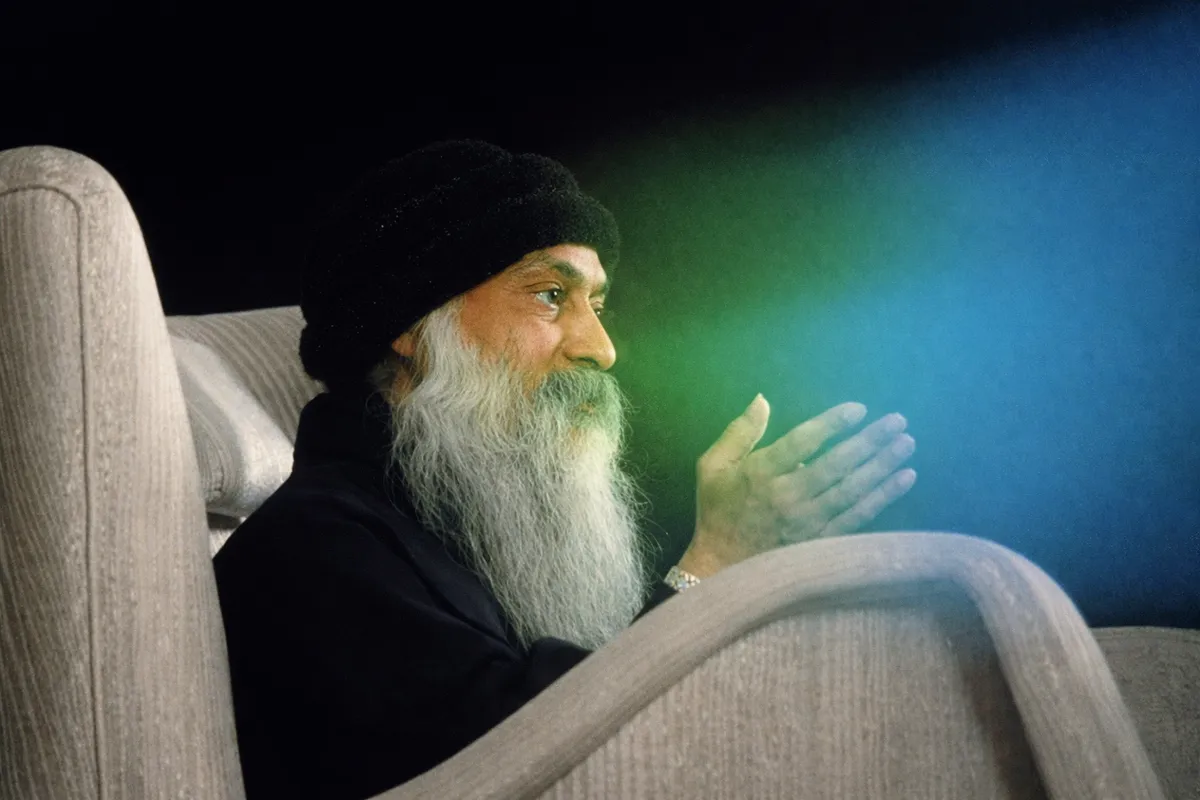
"Rom Rom Ras Peejiye" is a reflective exploration by Osho on the essence of spiritual learning and the relationship between the seeker and the guru. Osho challenges traditional paradigms, notably questioning the centrality of the guru in spiritual discourse. Instead, he emphasizes the intrinsic role of the disciple's own readiness and openness to learn. According to Osho, satsang—typically understood as a gathering around a spiritual teacher—should transcend the physical presence of a guru. It becomes a universal experience where life itself, in all its facets, teaches us. When one develops an authentic thirst for learning, life continually offers insights, and the mundane transforms into moments of grace. Osho critiques the traditional "gurudom," highlighting that it can become a pursuit of authority and ego rather than genuine wisdom. He argues that true enlightenment cannot coexist with a desire to become a revered teacher. In this series, Osho invites individuals to shift focus inward, cultivating an internal landscape ripe for learning, where every moment and interaction becomes an opportunity for spiritual growth and understanding. Through this, he urges us to redefine our approach to spirituality from dependency to self-awakening.
-
Chapter 1
Stop running; inner treasure is already where you stand — drop seeking and resistance, listen, speak less, and see if death finds your hands empty.
-
Chapter 2
Drop acquired knowledge and the ego; embrace honest ignorance so life’s mystery returns and true knowing awakens from the heart. Start this moment, not later.
-
Chapter 3
Do not teach children answers about God; kindle fearless inquiry and doubt instead—teaching belief breeds fear and stops the true search for God.
-
Chapter 4
Mixing religions creates a humbug; true religion is an individual, solitary discovery beyond sects and recitation-experience not organizational dogma.
-
Chapter 5
Knowledge and devotion both block truth; drop thought and imagination to empty the mind so true knowing can arise—what now remains beyond self?
-
Chapter 6
Meditation dissolves self-hypnosis by dropping mental shapes through a negative hypnosis; like removing a thorn, practice removes restlessness so the true self remains.
-
Chapter 7
Satsang centers on the disciple's open capacity to learn—make life your teacher; cultivate inner emptiness and silent insight; question and test teachings.
-
Chapter 8
Ego is an absence, not a thing—like darkness; through inner inquiry and awakening the illusory 'I' dissolves, revealing Atman and true union.
-
Chapter 9
Drop borrowed answers, live with your questions and dig within like a well; awaken awareness so inner knowing answers 'Who am I?' and transforms life.