
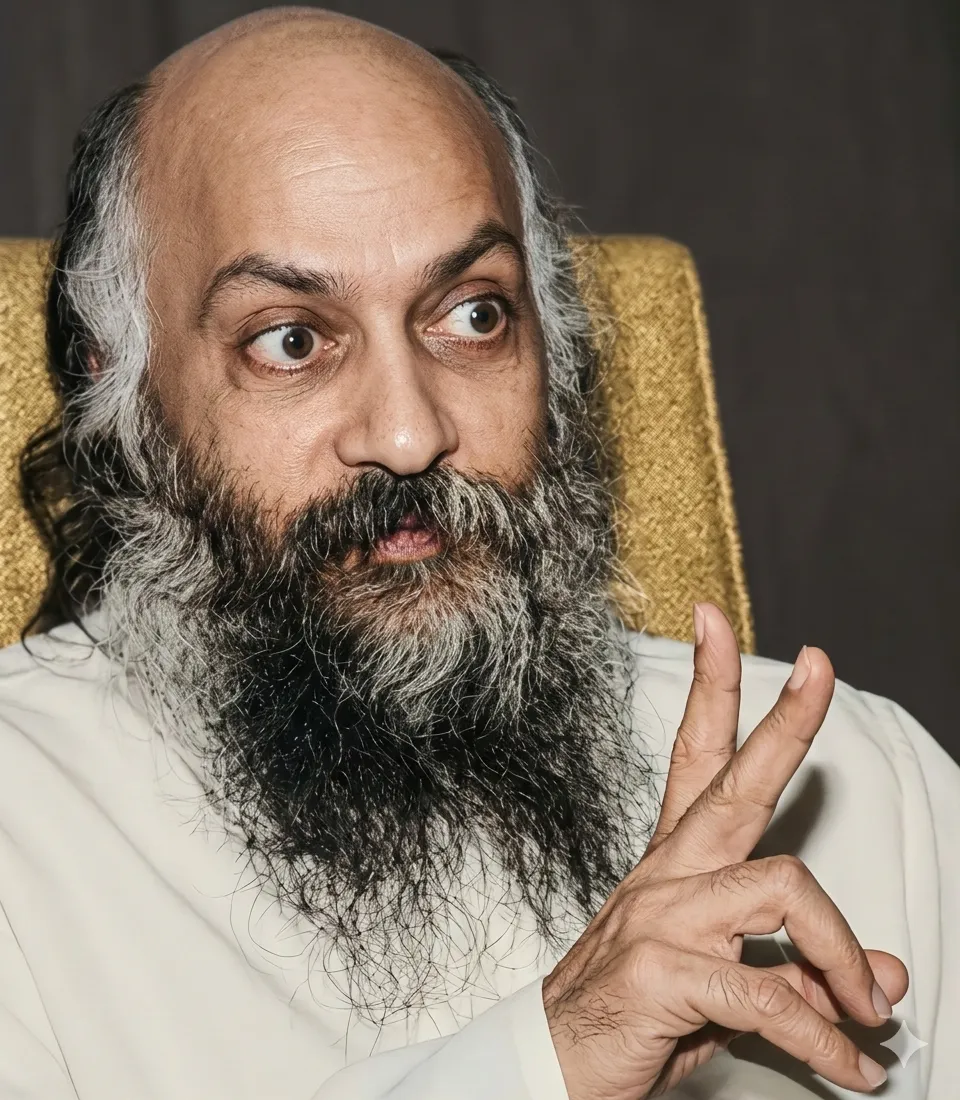
"Ramnam Janyo Nahin" is a transformative discourse series by Osho that delves into the intrinsic nature of discipline and enlightenment. Osho challenges traditional notions of discipline, arguing that it has shackled humanity rather than liberating it. He posits that discipline, as it is conventionally understood, involves external imposition—where individuals are guided by others and their paths are predetermined. This external control, according to Osho, suppresses the innate human potential for awakening by eliminating the essential process of trial and error. Enlightenment is presented not as a rare occurrence attainable by the disciplined few, but as a birthright accessible to all who dare to embrace their individuality and personal responsibility. Osho emphasizes the need for courage to break free from the chains of imposed discipline, advocating for a life driven by personal mistakes and genuine exploration. He likens the spiritual journey to the audacity of a gambler, suggesting that true awakening arises from the acceptance of one's own path rather than a borrowed instruction. Through this discourse series, Osho invites seekers to cultivate self-determination and authenticity as the true keys to spiritual flowering and ultimate liberation.
-
Chapter 1
Rahim's 'Ramnam janyo nahin' warns rituals and belief harm worship; true knowing makes the seed flower into death-transcending Ram, and sannyas asks courage.
-
Chapter 2
Thoughts are never new; experience is original. Reject philosophies and borrowed religion — live life directly; truth repeats across seers, not theft.
-
Chapter 3
Transcend logic; meditation leads to samadhi, from which true service, purity, renunciation, peace and love arise—avoid belief and ego-driven austerity.
-
Chapter 4
Ego isn't to be erased for reward; it's an illusion to be seen through meditation—light, not struggle, dissolves the false self and reveals true being.
-
Chapter 5
Compassion is freedom: awakenings cannot be forced; a master cannot drag the thirsty to the well—each must come when inner thirst arises, not before its time.
-
Chapter 6
Rejecting a priestly Yajurveda sutra, Osho teaches truth comes from awareness → initiation → true sannyas → faith, not from vows, offerings or hypocrisy.
-
Chapter 7
Dharma is a medicine: use it, then drop it—abandon beliefs and the self to reach wordless silence and freedom beyond religions, ideologies, and extremes.
-
Chapter 8
Divinity loves the manifest; hatred is nondivine - embrace the world as God’s visible poem and use body, mind and heart as the ladder to realization.
-
Chapter 9
Imposed discipline breeds hypocrisy; wakefulness and self-responsibility are the path to true sadhana. Reject borrowed vows—brahmacharya arises only from realization.
-
Chapter 10
Man's mystery is his simple, indivisible consciousness; transcend mind by meditation to live and recognize it—no scripture, doctrine or leader can know you.