
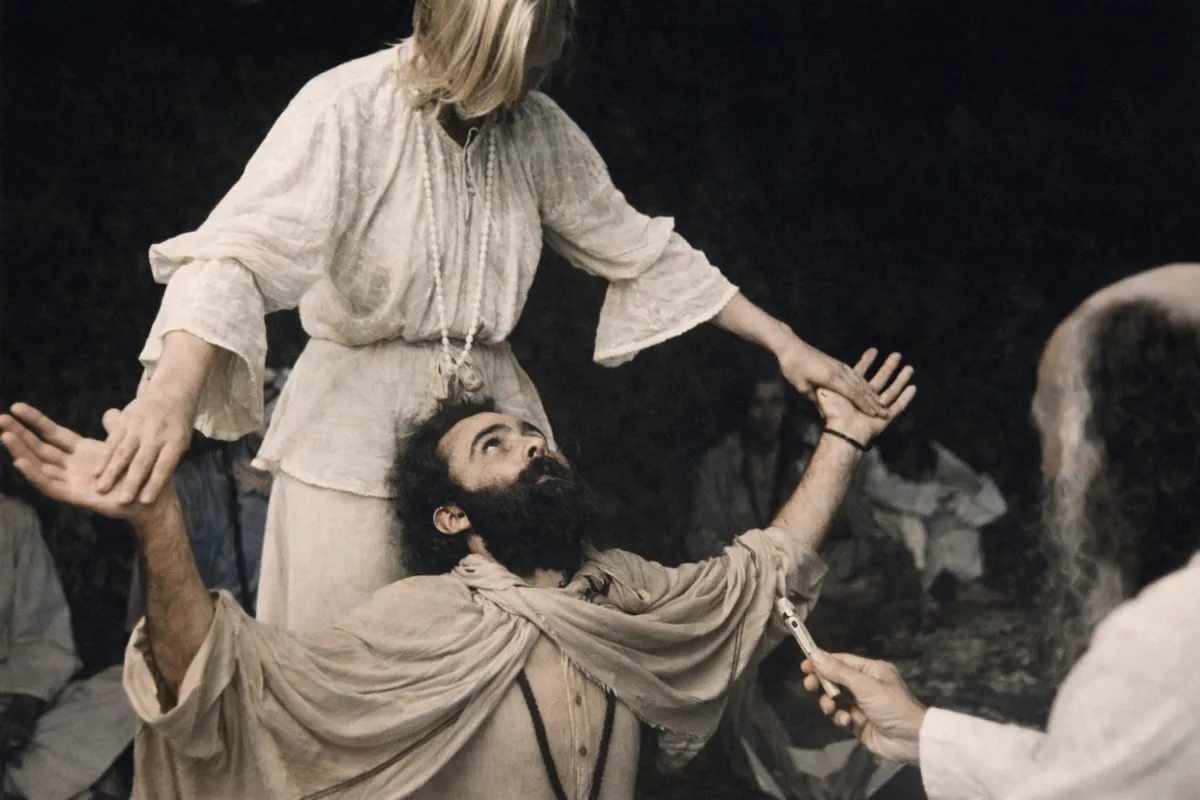
"Ram Duware Jo Mare," a discourse series by Osho, delves into the profound spiritual metaphor of a tree, exploring the interconnectedness and hierarchy of its parts to illuminate the journey towards self-realization and the essence of Dharma. Osho uses the imagery of roots, trunks, branches, leaves, and flowers to personify aspects of life and consciousness, emphasizing the often overlooked significance of the roots. Unlike the visible and celebrated parts of the tree, the root, representing the divine or the Paramatma, remains hidden and formless, symbolizing the subtle yet foundational presence of the divine in the universe. Osho suggests that true spiritual pursuit, or Dharma, is akin to nurturing the root, an act that requires moving beyond superficial appearances and distractions. He critiques the tendency to value the manifest—like trunks and branches—while losing sight of the invisible forces that sustain and nourish life. Through this allegory, Osho articulates his unique spiritual perspective that self-discovery and enlightenment are intrinsically about connecting with the unseen and cultivating a deep, silent awareness of the root, reinforcing that the ultimate truth lies beyond the material and the external, dwelling instead in the silent, unseen depths of existence.
-
Chapter 1
Radical surrender: 'Ramduware jo mare' - Malukdas teaches staking everything to know the Divine; reject ritual and calculation; seek a living sadhguru.
-
Chapter 2
Unite alert awareness with divine ecstasy—love’s paradox—so meditation can halt the breath in the Master’s presence; life then transforms into celebration.
-
Chapter 3
Krishna's flute plays but we remain a muddy pond; awaken the lotus within by surrender and dying to ego—meet Paramatma, true life and lasting bliss.
-
Chapter 4
A false sannyas can become the doorway to real transformation; the Divine meets longing unexpectedly, dawn already shines within — wake and trust.
-
Chapter 5
Drop the ego, bow and disappear so Paramatma—life’s fragrance and music—may dwell; awaken from inner darkness to taste oneness and true celebration.
-
Chapter 6
Ego, jealousy and hatred are purposeful: they estrange you so you suffer, remember and return to God; awakening (Buddhahood) dissolves them.
-
Chapter 7
Keep moving without maps or fixed goals; surrender ego, rites and gods, trust the river’s motion to reach Paramatma—experience dissolves I and Thou into pure being.
-
Chapter 8
Ego is a mere illusion like a snake on a rope; light the lamp of meditation, live in the present with continuity, and liberation arises through your effort.
-
Chapter 9
Seek the invisible root Paramatma through inner cleansing and no-mind; let the fourfold hearing dissolve into shunya; die at Ram's door, know your pain first.
-
Chapter 10
Let go of 'I' and 'you' so the Divine song can flow; ego blocks the rishi's flowering. Wake now - choose inner awakening over worldly politics.