
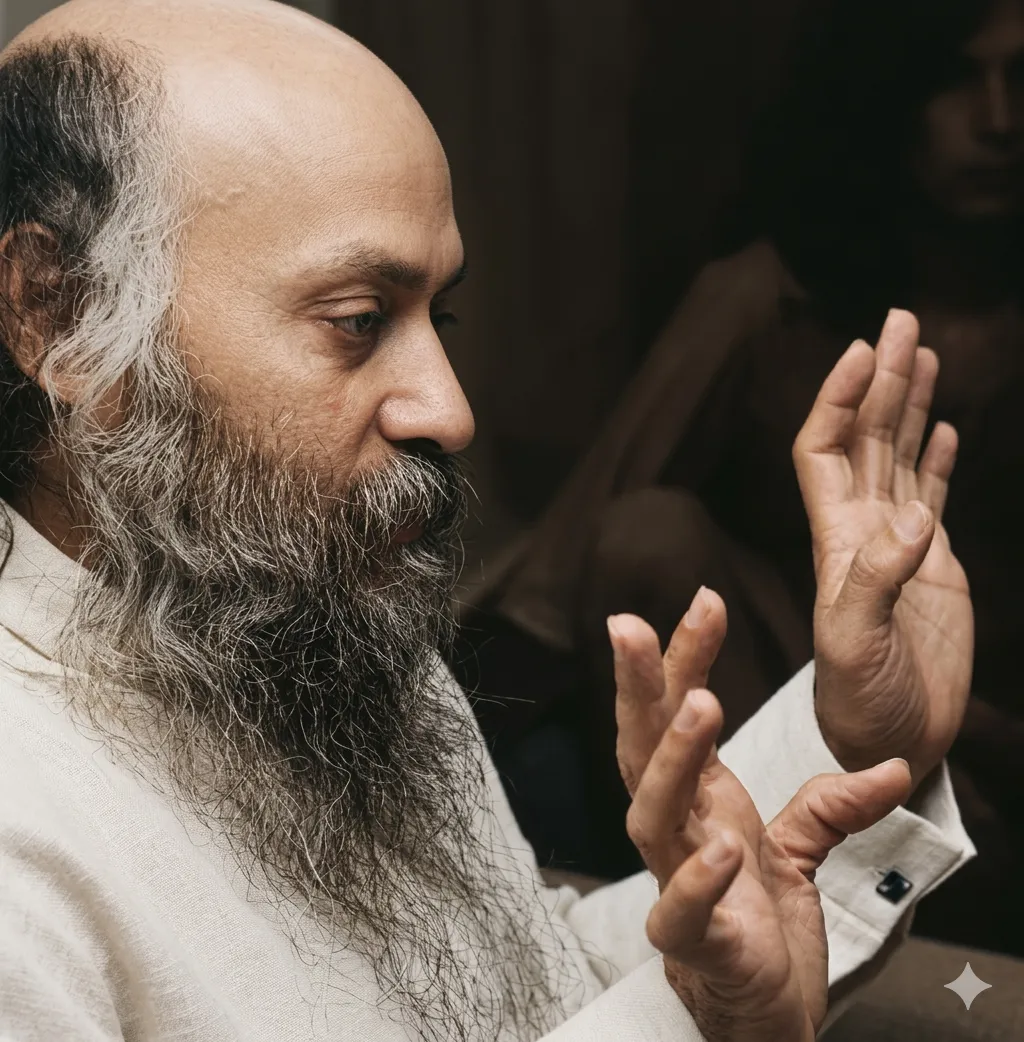
"Prem Nadi Ke Teera" delves into the nuanced teachings of Osho on the concept of awareness, challenging traditional notions of merging with the present moment. Contrary to popular spiritual admonitions to dissolve into the 'now,' Osho argues for a heightened state of awareness that maintains individual consciousness while engaging fully with the present. He dissuades followers from blurring the lines between awareness and identity, emphasizing that true engagement with the present does not require losing oneself in it. Instead, he advocates for a mindful acknowledgment of present circumstances, contextualizing future events as issues rooted in today's reality. Osho's discourse critically examines how our obsession with future outcomes can strip us of the richness of the present, urging a conscious recognition of current challenges, whether they seem distant or immediate. This perspective not only fosters a more effective and liberated approach to daily living but also aligns with the broader quest for self-understanding and authenticity. Within this framework, Osho invites seekers to embrace their awareness as a tool for clarity and presence, rather than as a path to absorption or passivity. The series articulately unravels the layers of awareness and presence, framing them as essential components of a spiritually conscious life.
-
Chapter 1
Death is both fixed and accidental; surrender dissolves the illusory 'I', stopping mind‑building so bliss, not conveniences, becomes life's true gift.
-
Chapter 2
Find your own inspiration, resist others' suggestions that make you a made-up self; use intense, voluntary action as tension to naturally arrive at nonaction.
-
Chapter 3
Trust the body's wisdom; freedom is negation of bonds, not a positive creed. Fulfill life's needs, transcend desires, and accept life wholly.
-
Chapter 4
Reject programs and traditions: accept natural opposition; love differs biologically - men often equate love with sex, women need whole-body care; honesty heals.
-
Chapter 5
Dharma is ever new; beliefs ossify into dogma and idolize forms. Remain a lifelong shishya, learn from every path—closed scriptures, gurus and parties breed conflict.
-
Chapter 6
Meditation is a causeless leap — a revolution that severs the old self; like Buddha's return, the inner birth breaks continuity and defies intellectual cause.
-
Chapter 7
Spirituality is one human dimension among many; insistence breeds hypocrisy—be true, allow diversity, and meet relationships with honesty and sympathy.
-
Chapter 8
Life is an end in itself - no goal beyond being; separating 'me' from life yields wrong questions; death is transformation, not annihilation.
-
Chapter 9
Belief ends where knowing begins — "I don't believe in God; I know." True spirituality disturbs wrong paths and insists on inner, experimental awareness.
-
Chapter 10
Authentic badness and its completion can awaken true goodness; strength and authenticity, not mediocre avoidance, free the soul—know where the mind won’t rest.
-
Chapter 11
Drop the causes that pull you outward—chiefly thought—practice brief passive thoughtlessness, then active awareness so emptiness stabilizes and life becomes meditation.
-
Chapter 12
Death is a sacred mystery, not a tragedy; labeling it restores illusion and fear—stand in silence, accept the unknown, and live with fearless intensity
-
Chapter 13
Pleasures gather consciousness at the senses; true Yoga gathers it inward, ascending chakras vertically toward lasting bliss - avoid stopping mid-way
-
Chapter 14
Truth is always new and personal: each person's knowing is unique. Unlearn borrowed knowledge, practice direct silent witnessing, and transform, don’t renounce.
-
Chapter 15
Awaken to the present—don't merge or fantasize into past/future; act from presence (buy today's ticket), live life as lila while responsibly meeting the future.